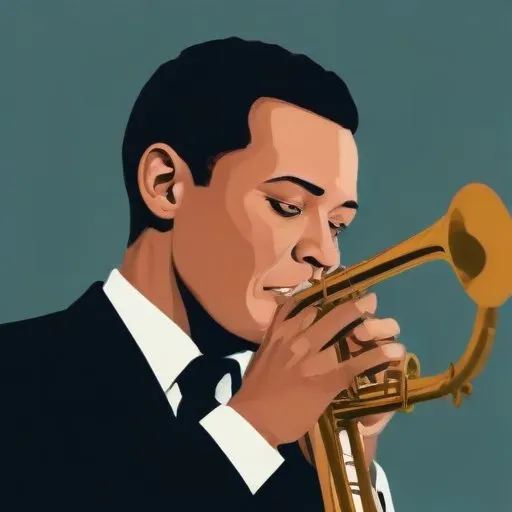
Graham Haynes: The Nu Jazz Pioneer Fusing Tradition with Innovation
A Career Defined by Fusion and Experimentation
Graham Haynes, born on September 16, 1960, in Brooklyn, New York, is a renowned American cornetist, trumpeter, and composer celebrated for his groundbreaking work in nu jazz, seamlessly merging jazz with elements of hip hop and electronic music. As the son of jazz drummer
Roy Haynes, Graham has consistently pushed the boundaries of jazz, exploring new sounds and collaborations that have reshaped the genre.
The Formative Years and Early Influences
Growing up in a jazz-imbued family, Graham's early life was surrounded by the rhythms and melodies of jazz. However, it wasn't until 1979, when he met alto saxophonist
Steve Coleman, that his interest in electronic music began to take shape. This encounter led to the formation of Five Elements, a band that would eventually give rise to the influential MBase Collective, a group of improvisers dedicated to redefining the jazz landscape.
The Evolution of Nu Jazz and Electronic Experimentation
Throughout the 1980s, Graham delved deep into African, Arabic, and South Asian music, incorporating these global influences into his work. His ensemble, Graham Haynes and No Image, released the album "What Time It Be," showcasing his ability to blend traditional jazz with modern electronic elements. This eclecticism continued with the albums "Nocturne Parisian" and "Griots Footsteps," which further solidified his reputation as a nu jazz innovator.
Hip Hop and Drum n Bass Fusion
Graham's return to New York City in 1993 coincided with the flourishing hip hop scene, inspiring the creation of the album "Transition." This project marked a significant shift towards sample-heavy productions, foreshadowing his later exploration of drum n bass. The release of "Tones For The 21st Century" in 1996 further demonstrated his ability to merge seemingly disparate genres.
Collaborations and Multimedia Projects
Graham's collaborative spirit has led to work with an impressive array of artists, including
Cassandra Wilson,
Vernon Reid,
Meshell Ndegeocello, The Roots, and
Pharoah Sanders. He has also composed scores for films "Flag Wars" and "The Promise," and has lectured at New York University. Additionally, Graham has received two nominations for the prestigious Alpert Award For The Arts.
Awards and Accolades
- Nominations for the Alpert Award For The Arts (2)
- Featured artist on Vijay Iyer's 2017 ECM album, "Far From Over"
Legacy and Impact
Graham Haynes' innovative approach to nu jazz has not only expanded the genre's boundaries but has also inspired a new generation of musicians to experiment and push the limits of their craft. His relentless pursuit of musical fusion has earned him a reputation as a true pioneer in the world of jazz and electronic music.
Through his remarkable career, Graham Haynes has proven that the art of fusion is not only possible but necessary for growth and innovation in music. As a true original, he continues to inspire and influence, leaving an indelible mark on the jazz landscape.
FAQ
What is Graham Haynes musical style as a trumpet player?
Haynes is known for blending jazz, classical, and experimental elements in his playing, pushing the boundaries of traditional trumpet music.
How has Graham Haynes contributed to the evolution of jazz?
Haynes has been a key figure in the development of avant-garde and experimental jazz, collaborating with artists such as Bill Laswell and John Zorn.
What is Graham Haynes approach to composition and improvisation?
Haynes combines rigorous composition with open-ended improvisation, creating dynamic and unpredictable performances.
What is Graham Haynes role in the world of electronic music?
Haynes has explored the intersection of jazz and electronic music, incorporating elements of drum and bass and ambient music into his work.
How has Graham Haynes music been received by critics and audiences?
Haynes genre-bending approach has earned him critical acclaim and a devoted following, cementing his reputation as a visionary musician.