


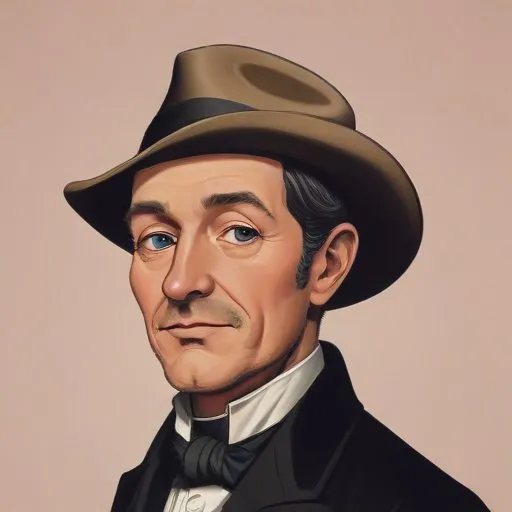
Led the first successful expedition to cross the Blue Mountains in New South Wales, Australia, opening up new land for settlement. He played a significant role in the country's early development.
Gregory Blaxland is renowned for being one of the first European settlers to successfully cross the treacherous Blue Mountains in Australia, a feat that opened up new possibilities for exploration, farming, and settlement in the continent. This daring expedition in 1813, which he co-led with William Lawson and William Wentworth, marked a significant milestone in Australian history and cemented Blaxland's status as a trailblazing pioneer.
Born on June 17, 1778, in Fordwich, Kent, England, Blaxland was the fourth son of John Blaxland, a mayor and prominent landowner. He attended The King's School in Canterbury and later married Elizabeth Spurdon in 1799, with whom he had five sons and two daughters.
Influenced by his family's friendship with Sir Joseph Banks, Blaxland and his brother, John, decided to emigrate to Australia, attracted by the government's promise of land, convict servants, and free passages for settlers of responsibility and capital. In 1805, Blaxland set sail for Australia aboard the William Pitt, accompanied by his family, servants, and a cargo of goods.
Upon arrival in Sydney in 1806, Blaxland quickly established himself as a successful farmer and entrepreneur, selling his goods at a profit and acquiring large tracts of land at St Marys and Brush Farm near Eastwood. However, he soon realized that the available grazing land was insufficient for his growing cattle business. This motivated him to embark on an expedition to cross the Blue Mountains, a task considered impossible by many at the time.
In 1813, Blaxland, along with Lawson and Wentworth, set out on their perilous journey, facing numerous challenges and obstacles along the way. After 21 days of grueling travel, they finally reached the top of the mountains, paving the way for further exploration and settlement in the region.
Blaxland's pioneering spirit and determination had a profound impact on the development of Australia. His successful crossing of the Blue Mountains opened up new areas for farming, grazing, and settlement, contributing significantly to the country's growth and prosperity.
In recognition of his achievement, Blaxland was granted additional land and appointed as a magistrate in the district of Evan. He continued to play an active role in the community, serving as a justice of the peace and participating in local politics.
In his later years, Blaxland faced financial difficulties, which forced him to relinquish some of his properties. Despite these challenges, he remained committed to his community and continued to contribute to the development of the region.
Gregory Blaxland passed away on January 1, 1853, leaving behind a legacy as a visionary pioneer who dared to challenge the unknown and push the boundaries of exploration in Australia.
"I have always been of the opinion that it was possible to get over the Mountains..." - Gregory Blaxland, in a letter to Governor Macquarie, 1812
| 1778 | Gregory Blaxland born on June 17 |
| 1799 | Marries Elizabeth Spurdon |
| 1805 | Sails to Australia aboard the William Pitt |
| 1806 | Arrives in Sydney and establishes himself as a farmer and entrepreneur |
| 1813 | Leds the successful Blue Mountains expedition with Lawson and Wentworth |
| 1853 | Passes away on January 1 |
Gregory Blaxland's remarkable story serves as a testament to the power of determination, perseverance, and innovation, inspiring generations to come.
Born in 1774
Mapped the coastline of Australia, creating the first complete chart of the continent, and is credited with giving Australia its name.
Born in 1887
A British Army officer who served as High Commissioner for Palestine and Transjordan during the British Mandate period, known for his role in shaping the region's modern political landscape. He played a crucial part in the establishment of the State of Israel.
Born in 1797
Australian explorer who led expeditions to chart the country's interior, discovering new lands and resources, and paving the way for European settlement.
Born in 1790
Australian journalist, explorer, and politician who played a key role in the country's early development, advocating for self-government and contributing to the discovery of new lands. He's also known for his writings on Australian history and politics.
Born in 1743
A British naturalist who sailed with Captain Cook on the HMS Endeavour, discovering and cataloging thousands of plant species, and advising on the development of the British colonies. He's considered the "father of Australian botany".
