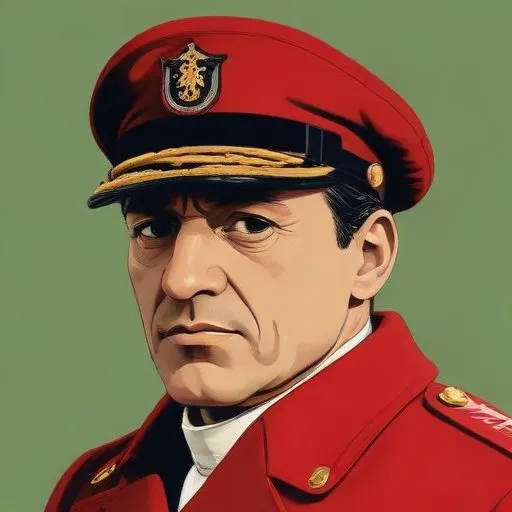
Guidobaldo da Montefeltro: The Italian Condottiero and Duke of Urbino
A Leader of Men and a Patron of the Arts
Guidobaldo da Montefeltro, also known as Guidobaldo I, was an Italian condottiero and the Duke of Urbino from 1482 to 1508. He is renowned for his military prowess, cultural achievements, and his role as a patron of the arts, attracting some of the most prominent figures of the Renaissance to his court.
Early Life and Succession
Born on January 25, 1472, in Gubbio, Guidobaldo succeeded his father,
Federico da Montefeltro, as Duke of Urbino in 1482. His father, a skilled condottiero and statesman, had established the Montefeltro dynasty as a major force in Italian politics.
Military Campaigns and Alliances
Guidobaldo's military career was marked by a series of alliances and conflicts. He fought alongside
Pope Alexander VI's captains and the French troops of King
Charles VIII of France during the latter's invasion of southern Italy. Later, he was hired by the Republic of Venice against Charles. During his campaigns, Guidobaldo was taken prisoner by the Orsini and the Vitelli in 1496, but was freed the following year.
Court of Urbino: A Hub of Culture and Learning
Guidobaldo's court in Urbino was a beacon of cultural refinement and elegance, attracting prominent figures of the Renaissance, including men of letters, artists, and thinkers. The Italo-English historian Polydore Vergil and the author of "The Book of the Courtier,"
Baldassare Castiglione, were among those who served Guidobaldo and his wife, Elisabetta Gonzaga.
Personal Life and Legacy
Guidobaldo married Elisabetta Gonzaga, the sister of Francesco II Gonzaga, Marquis of Mantua, in 1489. Despite being impotent, Elisabetta refused to divorce him, and they had no children. In 1502, Guidobaldo was forced to flee Urbino to escape the armies of
Cesare Borgia, but returned after the death of Cesare's father, Pope Alexander VI, in 1503. Guidobaldo adopted Francesco Maria della Rovere, his sister's child and nephew of
Pope Julius II, as his heir, uniting the seigniory of Senigallia with Urbino.
Later Life and Death
Suffering from gout, Guidobaldo died on April 10, 1508, at the age of 36, in Fossombrone. He was succeeded by his nephew, Francesco Maria della Rovere.
In Popular Culture
In 2023, Guidobaldo gained unexpected attention on social media when American sports fans noted his striking resemblance to NFL quarterback
Trevor Lawrence of the Jacksonville Jaguars.
Legacy and Impact
Guidobaldo da Montefeltro's legacy extends beyond his military campaigns and cultural achievements. He played a significant role in shaping the course of Italian history, uniting the seigniory of Senigallia with Urbino, and promoting the arts and learning in his court. As a patron of the arts, Guidobaldo da Montefeltro's court in Urbino remains an enduring testament to the cultural richness of the Renaissance.
FAQ
What was Guidobaldo da Montefeltros military career like?
Guidobaldo da Montefeltro was a renowned condottiero, or mercenary captain, who fought on behalf of several Italian city-states, including Venice and Florence.
How did Guidobaldo da Montefeltro support the arts?
Guidobaldo da Montefeltro was a patron of the arts, commissioning works from prominent artists, including Baldassare Castiglione, and supporting the development of the Renaissance humanist movement.
What was Guidobaldo da Montefeltros relationship with the Medici family?
Guidobaldo da Montefeltro had close ties to the Medici family, serving as a military commander and advisor to Lorenzo de Medici, and later supporting the Medicis return to power in Florence.
How did Guidobaldo da Montefeltros military campaigns shape Italy?
Guidobaldo da Montefeltros military campaigns had a significant impact on the shape of Italy, as he fought on behalf of various city-states and helped to establish the balance of power in the region.
What was Guidobaldo da Montefeltros role in the Italian Wars?
Guidobaldo da Montefeltro played a key role in the Italian Wars, fighting on behalf of the Italian city-states against the French and Spanish armies.