


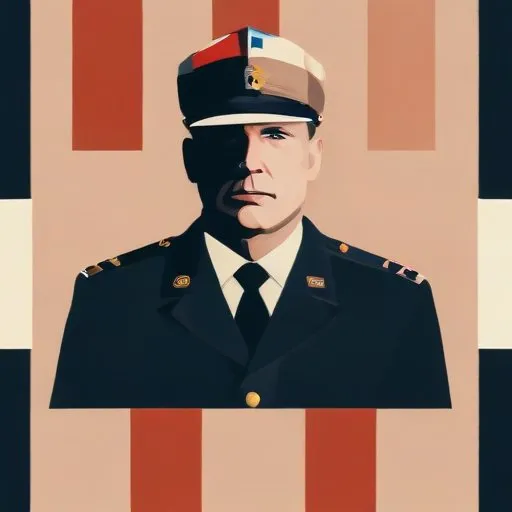
A dedicated communist leader who served as the chairman of the Communist Party USA for over 40 years, advocating for workers' rights and socialism.
Gus Hall, born Arvo Kustaa Halberg, was a stalwart figure in American politics, best known for his unwavering commitment to communism and his four presidential bids as the Communist Party USA (CPUSA) nominee.
As the General Secretary of the CPUSA for over 40 years, Hall was a polarizing figure who dedicated his life to promoting Marxist-Leninist ideology, often taking an orthodox stance that earned him both admiration and criticism.
Hall was born on October 8, 1910, in Cherry Township, St. Louis County, Minnesota, to Finnish immigrant parents, Matt and Susan Halberg. His home language was Finnish, and he grew up in a household steeped in radical politics, with his parents involved in the Industrial Workers of the World (IWW) and early members of the CPUSA.
In his early teens, Hall was forced to drop out of school to support his impoverished family, working in lumber camps, mines, and railroads to make ends meet. This experience instilled in him a sense of injustice and fueled his subsequent involvement in labor activism.
Hall's involvement in labor activism began in the 1930s, when he became closely associated with the Little Steel Strike of 1937. This effort to unionize smaller, regional steel manufacturers marked a significant milestone in his career as a labor leader and cemented his reputation as a champion of workers' rights.
In the midst of the Second Red Scare, Hall was indicted under the Smith Act and sentenced to eight years in prison. Despite this setback, he remained committed to his ideals, and after his release, he continued to lead the CPUSA with unwavering dedication.
Hall's four presidential bids in 1972, 1976, 1980, and 1984 were a testament to his unrelenting commitment to communism. Throughout his campaigns, he maintained an orthodox Marxist-Leninist stance, often taking a hardline approach that polarized public opinion.
Gus Hall's legacy is complex and multifaceted. While his unwavering commitment to communism earned him both admiration and criticism, his impact on American politics and labor activism is undeniable. He will be remembered as a champion of workers' rights and a steadfast advocate for Marxist-Leninist ideology.
Hall's life was marked by controversy, with many viewing him as a radical and a threat to American values. His unwavering commitment to communism led to accusations of disloyalty and treason, earning him a reputation as a polarizing figure in American politics.
Hall's philosophical contributions were shaped by his commitment to Marxist-Leninist ideology. He believed in the inevitability of a socialist revolution and the need for a vanguard party to guide the working class towards true liberation. His beliefs were rooted in a deep-seated conviction that capitalism was inherently exploitative and that only through the abolition of private property could true equality be achieved.
Gus Hall's life and legacy must be viewed within the context of the tumultuous 20th century, marked by Cold War paranoia, labor unrest, and social upheaval. His unwavering commitment to communism, despite persecution and criticism, serves as a testament to the enduring power of ideological conviction.
In conclusion, Gus Hall's life was a testament to the power of conviction and the enduring legacy of communist ideology in America. Love him or loathe him, Hall's impact on American politics and labor activism is undeniably significant, ensuring his place in the annals of history as a champion of the working class and a steadfast advocate for Marxist-Leninist ideology.
Born in 1878
The Soviet Union's ruthless leader who ruled with an iron fist, implementing policies that led to widespread famine and purges, while also playing a crucial role in defeating Nazi Germany in World War II.
Born in 1870
Founder of the world's first socialist state, leading the Bolshevik Revolution and establishing the Soviet Union, known for his radical Marxist ideology and authoritarian rule.
95 Years Old
The last leader of the Soviet Union, who introduced reforms that led to the end of the Cold War and the collapse of communism, earning a Nobel Peace Prize. He's known for his policies of glasnost and perestroika, which transformed the Soviet Union and the world.
Born in 1894
The Soviet leader who initiated reforms and denounced Stalin's regime, known for his bold policies and iconic shoe-banging incident at the UN.
Born in 1879
Founded the Red Army and played a crucial role in the Russian Revolution, shaping the course of modern communism. A key figure in 20th-century politics and ideology.
Born in 1926
The Cuban revolutionary who led the country from 1959 to 2008, implementing socialist policies and defying US opposition, becoming an iconic figure in modern history.
Born in 1918
A South African lawyer and politician who fought against apartheid, becoming the country's first black president and a symbol of racial reconciliation, earning a Nobel Peace Prize. He's a beacon of hope and freedom.
Born in 1893
Led the German Democratic Republic (East Germany) from 1950 to 1971, implementing socialist policies and building the Berlin Wall. He's known for his strict communist rule and dividing a nation.
