


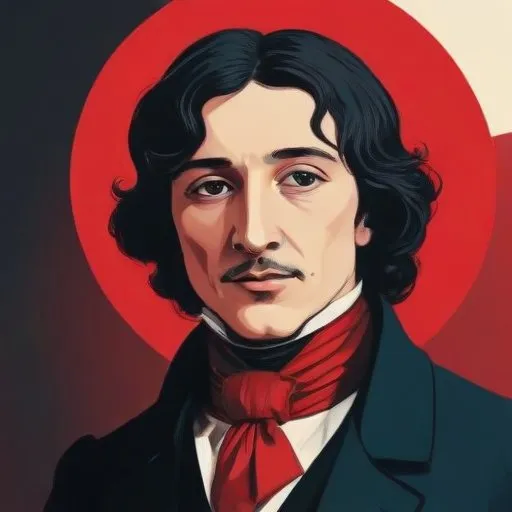
A French composer and conductor who created the opera "Louise", a groundbreaking work that explored the lives of working-class women, and was a pioneer in the verismo style.
French composer Gustave Charpentier is best known for his masterpiece, the opera Louise, a realistic portrayal of Parisian working-class life that premiered in 1900 and catapulted him to international acclaim. This verismo opera, often regarded as the French equivalent of Puccini's La Bohème, remains Charpentier's most celebrated work and a testament to his innovative compositional style.
Born on June 25, 1860, in Dieuze, Moselle, Charpentier was the son of a baker. With the help of a wealthy benefactor, he studied violin at the conservatoire in Lille before entering the Paris Conservatoire in 1881. Under the guidance of Jules Massenet, Charpentier honed his compositional skills, earning a reputation for pushing boundaries and challenging his professors.
In 1887, Charpentier won the prestigious Prix de Rome for his cantata Didon, a distinction that granted him a residency in Rome. During his time in Rome, he wrote the orchestral suite Impressions d'Italie and began working on the libretto and music for Louise.
Premiered on February 2, 1900, at the Opéra-Comique, Louise was an immediate success, with performances soon spreading across Europe and America. The opera's realistic depiction of working-class life resonated with audiences, and it launched the career of Scottish soprano Mary Garden, who took on the title role. Charpentier supervised a 1935 studio recording of an abridged score, and a 1939 film adaptation starring Grace Moore further cemented the opera's place in the cultural consciousness.
On February 28, 1950, the Opéra-Comique revived Louise to celebrate its 50th anniversary and Charpentier's 90th birthday. Although he did not conduct the performance, he did take the baton for the Chant de l'apothéose after the third act. Charpentier's legacy extends beyond Louise, with his compositions influencing a range of musical genres, from opera to song cycles. His commitment to representing the lives of ordinary people through music continues to inspire new generations of composers and musicians.
Charpentier settled in Montmartre, where he became acquainted with artists and intellectuals, including Charles Baudelaire and Voltaire, whose texts he set to music. Although little is known about his personal relationships, his circle of friends and acquaintances suggests a life rich in artistic and intellectual pursuits.
Gustave Charpentier's remarkable career, marked by innovation and perseverance, has left an indelible mark on the world of opera and beyond. His masterpiece, Louise, remains a testament to his artistic vision and his ability to capture the essence of human experience through music.
Born in 1862
A renowned French pianist and composer who revolutionized classical music with his unique, dreamy, and unconventional style, creating iconic works like "Clair de Lune" and "Prelude to the Afternoon of a Faun".
Born in 1845
A renowned French pianist, composer, and educator, he is most known for his romantic and impressionistic compositions, particularly his Requiem and nocturnes.
Born in 1822
A Belgian organist and composer who created iconic works that blended Romanticism and Impressionism, leaving a lasting impact on classical music.
Born in 1842
A French Romantic composer, renowned for his operas, particularly "Manon" and "Werther", which showcased his mastery of lyricism and dramatic flair.
Born in 1835
A French Romantic-era mastermind who composed iconic works like "The Carnival of the Animals" and "Danse Macabre", leaving an indelible mark on classical music.
Born in 1803
A French Romantic-era mastermind who composed iconic symphonies, operas, and orchestral works, revolutionizing classical music with his bold, expressive style.
Born in 1811
A virtuosic pianist and composer who revolutionized classical music with his technically demanding and emotionally expressive works, blending Hungarian folk influences with Romantic-era drama.
Born in 1813
A revolutionary composer who transformed opera with his epic, mythological works, creating a new era of musical storytelling. His iconic operas, such as "Der Ring des Nibelungen," continue to captivate audiences worldwide.
