


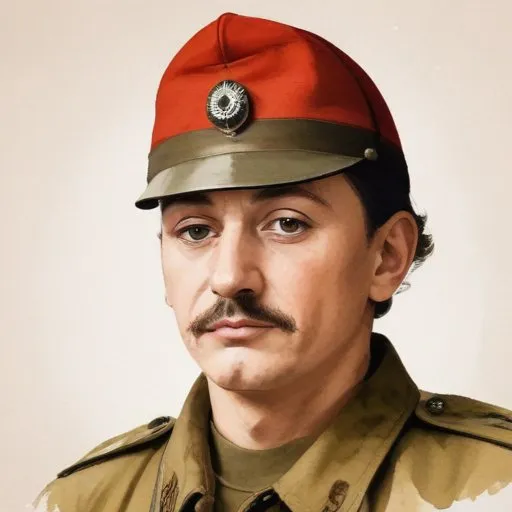
A Hungarian soldier and poet who fought in World War I and wrote about his experiences, earning him recognition for his war poetry. His works are considered a significant representation of the Hungarian perspective on the war.
Gza Gyni was a Hungarian war poet, whose powerful verses reflected the turmoil of World War I and the human cost of conflict. Though his life was cut short, Gyni's poetry continues to resonate, offering a poignant glimpse into the experiences of those who fought and suffered during one of humanity's darkest hours.
Born on June 25, 1884, in the small village of Gyn, near Dabas, Austria-Hungary, Gyni was the son of a Lutheran pastor. His early life was marked by tragedy, including the loss of his younger brother and his mother's subsequent mental illness. These experiences would later influence his writing, as he sought to process the pain and anguish that surrounded him.
After completing his education, Gyni began studying at the Lutheran seminary at Pozsony. However, his passion for writing soon took center stage, and he adopted the pen name "Gyni" as a nod to his birthplace. His early work as a newspaper correspondent and editor laid the foundation for his later success as a poet.
In 1903, Gyni's first collection of poetry, Versek (Poems), was published to critical acclaim. This marked a turning point in his life, as he began to establish himself as a prominent figure in Hungarian literature. His poetry was characterized by its emotional intensity, exploring themes of love, loss, and social justice.
Gyni's work was not without controversy, however. His second collection, Szomor szemmel (With Sorrowful Eyes), published in 1909, sparked a heated rivalry with fellow poet Endre Ady. This public feud would continue throughout Gyni's life, as the two poets clashed over their differing styles and artistic visions.
In 1907, Gyni was called up to the Austro-Hungarian Army, serving in Bosnia and Herzegovina. This experience had a profound impact on his writing, as he witnessed firsthand the horrors of war and the human toll it exacted. His pacifist leanings, evident in his later work, were shaped by these experiences.
Tragically, Gyni's life was cut short when he died in a Russian prisoner-of-war camp on June 25, 1917, his 33rd birthday. Despite his short career, Gyni's poetry continues to inspire and move readers to this day. His work remains a powerful testament to the human cost of war and the enduring power of the human spirit.
Gyni's influence can be seen in the many Hungarian poets who followed in his footsteps, drawing inspiration from his unique voice and style. Today, he stands as one of the most important and beloved figures in Hungarian literature, a testament to the enduring power of art to capture the essence of the human experience.
A century after his passing, Gza Gyni's poetry remains a powerful reminder of the human cost of war and the importance of promoting peace and understanding. Through his work, we are invited to reflect on the fragility of human life and the enduring power of the human spirit.
Gyni's story serves as a poignant reminder of the sacrifices made by those who have fought and died in wars throughout history. His poetry continues to inspire, educate, and move readers, ensuring that his legacy will endure for generations to come.
Born in 1905
A Hungarian poet and educator, known for his powerful and expressive works that explored themes of social justice, love, and the human condition. His poetry is celebrated for its lyricism and depth.
Born in 1885
A Hungarian literary mastermind, celebrated for his innovative, psychologically nuanced novels and poetry that probed the human condition, often with a touch of irony and humor.
Born in 1877
A Hungarian journalist and poet, known for his lyrical and expressive poetry that explored themes of love, nature, and social issues, influencing the country's literary scene.
Born in 1878
A Hungarian-American author and playwright renowned for his witty, satirical plays and novels that often explored the human condition, love, and social class. His works are still widely performed and adapted today.
Born in 1900
A Hungarian journalist and author, known for his lyrical and introspective novels that explore the decline of the Austro-Hungarian Empire and the rise of fascism. His works are celebrated for their poetic prose and nuanced character studies.
