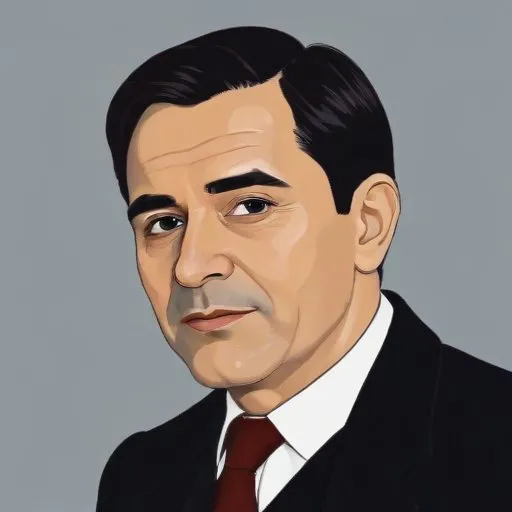
H. Bonciu: The Maverick of Romanian Literature
A Revolutionary Figure in Modernist Literature
Horia Bonciu, known to the literary world as H. Bonciu, was a Romanian novelist, poet, journalist, and translator who defied conventions and pushed boundaries in the early 20th century. His work, a unique blend of Expressionism, Surrealism, and Neoromanticism, earned him recognition as a prominent figure in Romania's avant-garde scene.
Life and Education
Born on May 19, 1893, in Iași, Romania, to Jewish parents Carol Haimovici and Ghizela Nadler, Bonciu's early life remains shrouded in mystery. The family moved to Bucharest when he was a toddler, and it was there that he completed his primary and secondary education. Although his affiliation with the
Frederick William University of Berlin is uncertain, it is clear that his early life laid the foundation for his future literary endeavors.
Literary Contributions
Bonciu's work is characterized by its intense, often erotic, and unflinchingly honest portrayal of human experience. His poetry and novels, such as " Însemnări dintr-un carnet găsit" (Notes from a Found Notebook) and "Romanul lui Mircea" (Mircea's Novel), are marked by a distinctive crudeness and rejection of romanticism. This unique style, which blended European modernist influences with Romanian folklore, earned him both admiration and criticism from his contemporaries.
Controversy and Criticism
Bonciu's refusal to conform to traditional literary norms and his unapologetic exploration of erotic themes led to controversy and censorship. His work was banned by fascist movements and selectively censored by the communist regime. The literary establishment, which viewed him as a troublemaker, further marginalized him due to his Jewish origin. Despite this, Bonciu remained committed to his art, refusing to compromise his vision to appease the critics.
Influence and Legacy
Today, Bonciu is recognized as a forerunner of postmodern literature, and his work has inspired a new generation of writers and artists. His influence can be seen in the Romanian literary scene, where his unflinching realism and experimental style have paved the way for future innovators. While some critics continue to debate the value of his work, Bonciu's contributions to modern literature are undeniable, and his legacy as a maverick and a visionary is secure.
Quotes and Memorable Sayings
- "The only truth is the one that hurts." - A phrase that reflects Bonciu's commitment to unflinching honesty in his work.
- "I write to provoke, not to please." - A statement that encapsulates Bonciu's rebellious spirit and artistic vision.
Historical Context and Legacy
Bonciu's life and work are a testament to the power of artistic expression in the face of adversity. His refusal to conform to societal norms and his commitment to his craft have left an indelible mark on Romanian literature. As a pioneer of modernist literature, Bonciu's influence extends far beyond his native country, inspiring generations of writers and artists to challenge the status quo and push the boundaries of artistic expression.
FAQ
What kind of literature did H. Bonciu write?
H. Bonciu was a prolific Romanian author, poet, and journalist who wrote a wide range of literature, including novels, poetry, and essays, exploring themes of love, nature, and social justice.
What was H. Boncius literary style?
H. Boncius literary style was characterized by lyricism, simplicity, and depth, which set him apart as a prominent figure in Romanian literature.
What were H. Boncius most famous works?
H. Boncius most famous works include his novels and poetry collections, which are still widely read and admired in Romania today.
What awards did H. Bonciu receive for his writing?
H. Bonciu received numerous awards and accolades for his writing, including the Romanian Academys prize for literature.
What is H. Boncius legacy in Romanian literature?
H. Boncius legacy in Romanian literature is one of innovation and excellence. He is remembered as a master of Romanian prose and poetry, and his work continues to inspire new generations of writers.