


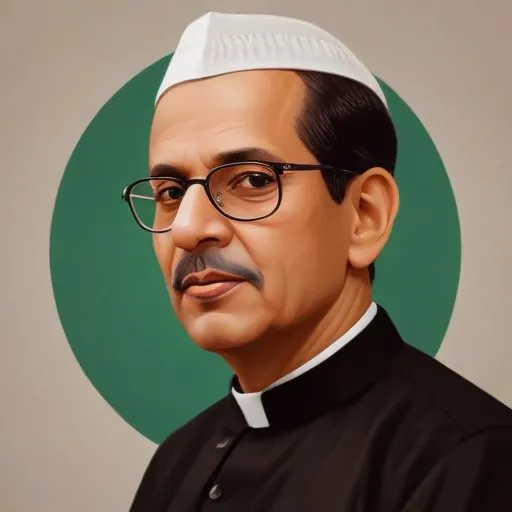
A renowned Pakistani scholar and politician who served as the 20th Governor of Sindh, known for his contributions to education and healthcare, particularly in the field of traditional medicine. He founded the Hamdard Foundation, a prominent educational and welfare organization in Pakistan.
Hakim Said was a Pakistani practitioner of Unani medicine, a system of traditional medicine that originated in Greece and was later refined in the Middle East and South Asia. He is primarily known for his tireless efforts to promote and popularize Unani medicine globally, earning him the title of "the father of Unani medicine in modern times."
Hakim Said was born on November 9, 1920, in Delhi, British India (now India). He hails from a family of Unani physicians and was trained in the art of Unani medicine from a young age. He pursued his education at the Ajmal Khan Tibbiya College in Aligarh, India, where he earned a degree in Unani medicine and Surgery.
Hakim Said's contributions to Unani medicine are multifaceted. He established the Hamdard Laboratories (Waqf) in 1948, a pharmacy that manufactures Unani medicine. He also founded the Hamdard University in 1991, which offers courses in Unani medicine, as well as other fields such as pharmacy, medicine, and Eastern medicine. His institution has been instrumental in promoting Unani medicine globally, and his university has produced many notable graduates who have gone on to become prominent practitioners of Unani medicine.
Hakim Said was a strong believer in the principles of Unani medicine, which emphasizes the concept of balance and harmony in the human body. He advocated for the integration of Unani medicine with modern medical practices, promoting a holistic approach to healthcare. He believed that Unani medicine had a significant role to play in addressing public health concerns, particularly in developing countries where access to modern medicine was limited.
Hakim Said received numerous awards and honors for his contributions to Unani medicine, including the Sitara-e-Imtiaz (Star of Excellence) and the Sitara-e-Pakistan (Star of Pakistan) awards from the Government of Pakistan.
In addition to his professional achievements, Hakim Said was known for his philanthropic efforts. He established several charitable hospitals and clinics that provided free or low-cost healthcare services to underserved communities. He also founded the Hamdard Foundation, a non-profit organization that focuses on education, healthcare, and social welfare.
Hakim Said's work has had a significant impact on modern society. His efforts to promote Unani medicine have contributed to its global recognition and acceptance. His institution has played a crucial role in preserving and promoting traditional knowledge and practices, while also integrating them with modern medical practices.
Hakim Said passed away on October 17, 1998, but his legacy continues to inspire generations of practitioners of Unani medicine. His institution remains a beacon of hope for those seeking alternative and holistic approaches to healthcare. His contributions to Unani medicine have left an indelible mark on the history of medicine, and his name is synonymous with the promotion and popularization of Unani medicine globally.
| 1920 | Born in Delhi, British India (now India) |
| 1948 | Established Hamdard Laboratories (Waqf) |
| 1991 | Founded Hamdard University |
| 1998 | Passed away on October 17 |
Hakim Said's charitable efforts were instrumental in providing healthcare services to underserved communities. His institutions continue to provide free or low-cost healthcare services to those in need, reflecting his commitment to social welfare and philanthropy.
Hakim Said's life and work serve as an inspiration to those committed to promoting alternative and holistic approaches to healthcare. His dedication to preserving traditional knowledge and practices, while integrating them with modern medical practices, continues to inspire generations of healthcare practitioners.
As the world grapples with the challenges of modern healthcare, Hakim Said's vision for a holistic approach to health and wellness becomes increasingly relevant. It is predicted that his institution will continue to play a vital role in promoting Unani medicine globally, contributing to a more inclusive and diverse healthcare landscape.
98 Years Old
A charismatic leader who served as Pakistan's president and prime minister, known for his socialist and nationalist policies, and his role in developing Pakistan's nuclear program.
Born in 1924
A Pakistani general and politician who ruled Pakistan from 1978 to 1988, implementing Islamic law and playing a key role in the Soviet-Afghan War. He's known for his authoritarian regime and controversial legacy.
73 Years Old
The first female Prime Minister of a Muslim-majority country, known for her efforts to democratize Pakistan and promote women's rights. She was a symbol of hope for a more liberal and tolerant Pakistan.
83 Years Old
The Pakistani general and politician who seized power in a military coup and ruled Pakistan from 1999 to 2008, known for his controversial presidency and attempted assassination. He played a key role in Pakistan's politics and foreign policy during a tumultuous period.
76 Years Old
The 12th Prime Minister of Pakistan, known for his three non-consecutive terms in office and his role in shaping the country's economy and foreign policy. He was ousted from power in 2017 due to corruption charges.
71 Years Old
The 11th President of Pakistan, a shrewd politician and businessman who navigated the country's complex political landscape, known for his cunning and resilience in the face of adversity.
77 Years Old
The 15th Prime Minister of Pakistan, a skilled economist who led the country's economic revival and implemented significant reforms, earning international recognition for his efforts.
Born in 1915
A Pakistani businessman and politician who served as the 7th President of Pakistan, known for his economic reforms and stabilization of the country's economy during his tenure. He played a crucial role in shaping Pakistan's political and economic landscape.
