


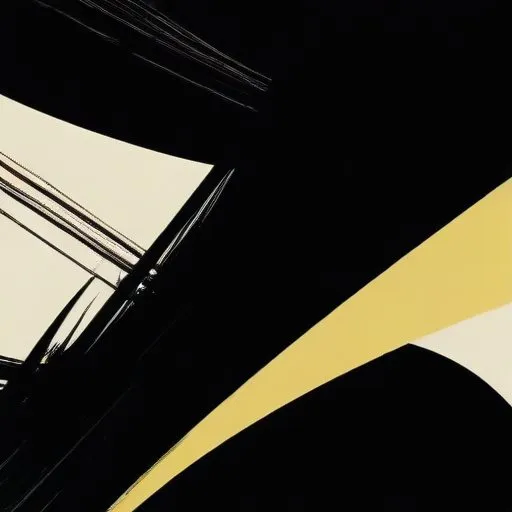
A pioneer of lyrical abstraction, he created vibrant, expressive paintings that explored the relationship between gesture and color. His works are characterized by bold, dynamic brushstrokes and a sense of spontaneity.
Hans Hartung, a German-French painter, is renowned for his pioneering contribution to gestural abstraction, a style that defied conventional norms and propelled the art world into a new era of expression. Born on September 21, 1904, in Leipzig, Germany, Hartung's artistic journey was marked by an unwavering passion for innovation and a refusal to conform to the rigid boundaries of traditional art.
Hartung's fascination with art began at a tender age, influenced by the works of Rembrandt, Lovis Corinth, and the Expressionists Oskar Kokoschka and Emil Nolde. His academic pursuits took him to Leipzig University, where he studied philosophy and art history, and later to the Fine Arts academy in Dresden, where he honed his skills by copying the paintings of the masters.
A turning point in his life came in 1926, when he witnessed the modern French and Spanish works at the Internationale Kunstausstellung in Dresden. This experience triggered a desire to break free from the shackles of provincialism and explore new horizons. Hartung embarked on a bicycle trip through Italy, eventually settling in Paris, the art capital of the world.
In Paris, Hartung immersed himself in the city's vibrant art scene, although he maintained a distance from the artistic circles of the time. He devoted himself to copying the works of old and modern masters, driven by an intense desire to learn and grow. His travels to the south of France introduced him to the landscapes that inspired Paul Cézanne, and he became enamored with the principles of harmony and proportion, particularly the golden section.
During this period, Hartung's artistic style began to take shape, characterized by bold brushstrokes, vibrant colors, and a sense of spontaneity. His first solo exhibition in 1931 in Dresden marked the beginning of his journey as a prominent artist.
The rise of Nazi Germany brought tumultuous times for Hartung. His affiliation with Cubism, deemed a "degenerate" art movement by the Nazi regime, led to his rejection and persecution. In 1935, during a visit to Berlin, the police attempted to arrest him. Hartung fled to Paris, where he found refuge and continued to create art that defied the conventions of the time.
Hartung's unwavering dedication to his craft earned him recognition as a leading figure in the abstract art movement. His pioneering work influenced generations of artists, including the likes of Willem de Kooning and Jackson Pollock. Through his art, Hartung continued to challenge traditional norms, forging a path that inspired future generations to experiment and innovate.
Today, Hartung's works can be found in prominent museums and private collections around the world, a testament to his enduring legacy in the world of art.
Hans Hartung's remarkable journey, marked by perseverance and innovation, continues to inspire artists and art enthusiasts alike, ensuring his place as one of the most influential figures in the history of modern art.
Born in 1881
A pioneering artist who transformed modern art with pioneering Cubist works, creating a new visual language that continues to inspire and influence art, design, and culture.
Born in 1869
A pioneering artist who revolutionized modern art with bold, expressive, and colorful works that blurred the lines between painting and sculpture, creating a new language of form and color.
Born in 1893
A renowned Spanish artist, famous for his vibrant, dreamlike paintings and sculptures that blended abstraction and surrealism, creating a unique visual language. His works often featured bold colors, biomorphic forms, and a sense of playfulness.
Born in 1904
A renowned surrealist master of bizarre, dream-like paintings and sculptures that blur reality and fantasy, known for iconic works like "The Persistence of Memory" and "The Elephants".
Born in 1898
A Belgian surrealist painter who challenged perceptions by depicting everyday objects in unexpected contexts, creating thought-provoking and witty visual paradoxes.
Born in 1891
A pioneering figure in Surrealism, creating dreamlike, fantastical works that blurred reality and the subconscious, influencing generations of artists.
Born in 1896
French poet and author who founded Surrealism, a cultural movement that explored the subconscious and the world of dreams. He wrote novels, poems, and essays that continue to influence art and literature today.
98 Years Old
A pioneer of performance art, known for his bold, monochromatic paintings and innovative use of live models as "human brushes."
