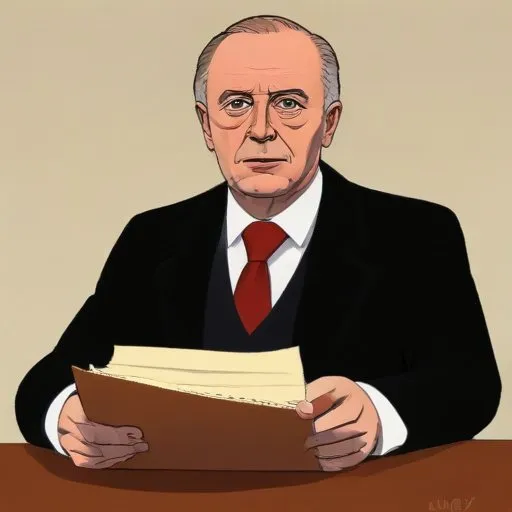
Hans Henning Atrott: A Champion of the Right to Die Movement
A Life Dedicated to Promoting Voluntary Euthanasia
Hans Henning Atrott was a German philosopher, politician, and prominent advocate for the right to die movement. He is best known for founding the German Society for Voluntary Euthanasia (D.G.H.S.) and serving as the secretary and executive director of the World Federation of Right to Die Societies.
Early Life and Education
Born on January 12, 1944, in Memel, East Prussia (now Klaipėda, Lithuania), Atrott's childhood was marked by hardship and Loss. Both his parents did not survive World War II, and he was raised by his maternal grandparents and in Christian boarding schools. He later went on to study philosophy, political science, and sociology of medicine at Ludwig Maximilian University of Munich and the Bavarian School of Public Policy.
A Career Devoted to the Right to Die Cause
Atrott's commitment to the right to die movement began during his student days, where he served as the federal chairman of the Association of East Prussian Students in Germany from 1969 to 1971. He later founded the German Society for Voluntary Euthanasia (D.G.H.S.) and became its first president. As a pioneer in the field, he introduced living wills in Germany and was the first to promote voluntary euthanasia after World War II within the country.
Philosophical Contributions and Beliefs
Atrott's philosophical contributions are reflected in his self-published books, "Jesus Bluff: The Universal Scandal of the World" (2009) and "Cross and Crime: Jesus Came to Crucify the World, The Gospel of Philip" (2015). These works showcase his critical thinking and challenge traditional beliefs. His writings have been translated into Spanish and French, further cementing his reputation as a thought leader in the field.
Personal Life and Later Years
Atrott married Anita Atrott in 1978, and they shared their time between Klaipėda, Lithuania, Los Gigantes, Spain, and Switzerland. He was a devoted father and grandfather, cherishing every moment with his loved ones. Despite his passing in 2018, his legacy continues to inspire generations to come.
Legacy and Impact
Hans Henning Atrott's tireless advocacy for the right to die movement has left an indelible mark on modern society. His work has sparked crucial conversations about end-of-life care, personal autonomy, and the importance of living wills. As a champion of voluntary euthanasia, he has inspired countless individuals to take control of their own lives and deaths.
Quotes and Memorable Sayings
- "Life is a journey, and it's essential to have control over our own path, including its final stages."
- "The right to die with dignity is a fundamental human right, and it's our duty to fight for it."
Influence on Modern Society
Atrott's work has had a profound impact on the right to die movement, influencing policy changes and public perception. His unwavering commitment to the cause has inspired a new generation of advocates, ensuring that the conversation around end-of-life care continues to evolve.
Historical Context and Legacy
Hans Henning Atrott's life and work are a testament to the power of dedication and perseverance. As a pioneer in the right to die movement, he has left a lasting legacy that will continue to shape the way we approach end-of-life care. His story serves as a reminder that one person can make a difference, inspiring future generations to take up the mantle and continue the fight for human rights.
FAQ
What is Hans Henning Atrotts work on thanatology?
Hans Henning Atrott is a leading expert on thanatology, the study of death and dying, and has written extensively on the subject, exploring its philosophical and cultural implications.
What is Hans Henning Atrotts theory on death anxiety?
Hans Henning Atrott proposes that death anxiety is a central motivator for human behavior, driving individuals to seek meaning, purpose, and transcendence in the face of mortality.
How has Hans Henning Atrotts work influenced the field of thanatology?
Hans Henning Atrotts work has expanded the scope of thanatology, emphasizing the importance of understanding deaths psychological, social, and cultural dimensions.
What are Hans Henning Atrotts other research interests?
Hans Henning Atrott has also researched topics such as existentialism, existential psychology, and the philosophy of mind.
What awards has Hans Henning Atrott received?
Hans Henning Atrott has received several awards for his contributions to thanatology and existential psychology, including the Herman Feifel Award for Outstanding Contributions to Thanatology.