


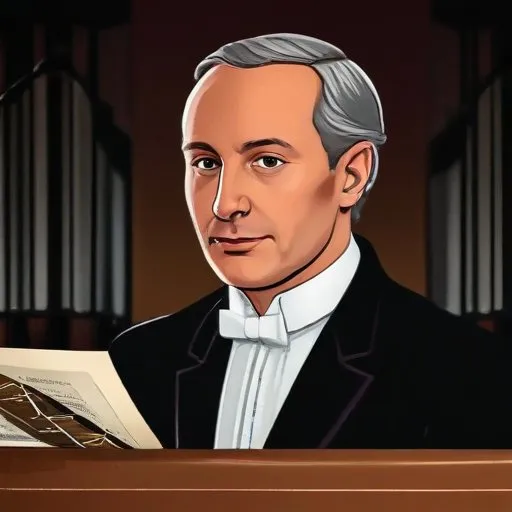
A renowned Baroque-era musician, he composed sacred and secular music, and was a prominent figure in the development of the concerto. His works showcase intricate counterpoint and innovative use of instruments.
Hans Leo Hassler, a German composer and organist of the late Renaissance and early Baroque eras, is renowned for his remarkable contributions to choral music and organ composition. Born in 1564 in Nuremberg, Hassler's music continues to inspire and influence generations of musicians and composers to this day.
In 1584, Hassler traveled to Venice, Italy, to further his studies in music. It was during this period that he came into contact with the Venetian school, a group of composers known for their resplendent polychoral style. Hassler's exposure to this style would later influence his own compositions, particularly in his use of multiple choirs and orchestras.
In Venice, Hassler befriended Giovanni Gabrieli, a prominent composer and organist of the time. The two musicians collaborated on a wedding motet for Georg Gruber, a Nuremberg merchant living in Venice. Hassler also studied with Andrea Gabrieli, Giovanni's uncle, and received instruction in composition and organ playing.
Following Andrea Gabrieli's death, Hassler returned to Germany in 1585 and settled in Augsburg. It was during this period that he gained recognition as a composer and organist, producing some of his most creative works. Despite being a Protestant in a predominantly Catholic region, Hassler's music earned him admiration and respect from his peers.
Hassler was not only a talented composer but also an accomplished organist and consultant to organ builders. In 1596, he was one of 53 organists invited to examine a new instrument with 59 stops at the Schlosskirche, Groningen. His expertise in organ design was highly regarded, and he was often called upon to advise on the construction of new instruments.
Hassler's compositions include a range of sacred and secular works, including motets, masses, and hymns. His music is characterized by its use of polychoral style, rich harmonies, and complex counterpoint. Some of his most notable works include the "Cantate Domino" and the "Magnificat."
Hassler's music has had a lasting impact on the development of Western classical music. His use of polychoral style and complex harmonies influenced later composers, such as Heinrich Schütz and Johann Sebastian Bach. Today, his music continues to be performed and admired by audiences around the world.
Hassler's life and music span a period of significant cultural and artistic transformation in Europe. His contributions to the development of Renaissance and Baroque music ensure his place as one of the most important composers of his time. Today, Hassler's music remains a testament to his innovative spirit and artistic genius.
Born in 1585
A renowned Baroque composer and organist, known for his contributions to the development of the oratorio and passion genres, creating over 500 works that showcased his mastery of choral music.
Born in 1587
A renowned Baroque-era musician and teacher, known for his influential compositions and contributions to the development of the organ concerto.
Born in 1586
A renowned Baroque composer, he wrote sacred music, motets, and hymns, and was a prominent figure in the development of the German Protestant church music tradition.
