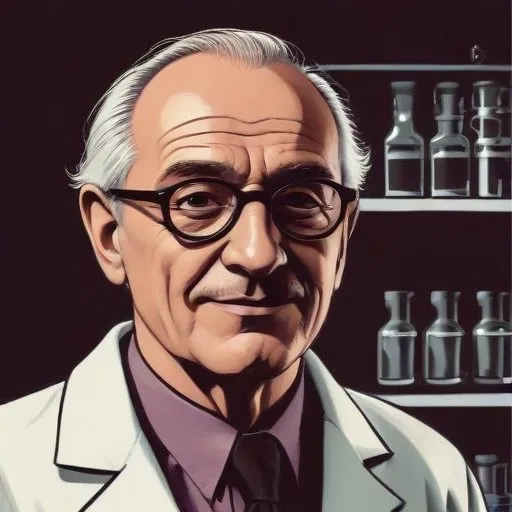
Hans Meerwein: The Pioneering German Chemist
A Legacy in Organic Chemistry
Hans Meerwein, a renowned German chemist, is best known for his groundbreaking contributions to the field of organic chemistry. His work has led to the development of several reactions and reagents that bear his name, including the Meerwein-Ponndorf-Verley reduction, the Wagner-Meerwein rearrangement, the Meerwein arylation reaction, and Meerwein's salt.
Early Life and Education
Born on May 20, 1879, in Hamburg, Germany, Meerwein was the son of architect Wilhelm Emil Meerwein. He initially trained as a chemistry technician at the Fresenius University of Applied Sciences between 1898 and 1900. Meerwein then pursued a chemistry degree at the University of Bonn, where he earned his PhD under the guidance of Richard Anschtz.
Academic Career
Meerwein's academic career spanned several institutions. He worked at the University of Berlin before returning to the University of Bonn, where he became a professor in 1914. From 1922 to 1928, he served as a professor of organic chemistry at the University of Königsberg. His final academic position was at the University of Marburg, where he spent the remainder of his career.
Contributions to Organic Chemistry
Meerwein's most significant impact on organic chemistry was his proposal of the carbocation as a reactive intermediate. This concept, introduced in the early 20th century, revolutionized the field by providing a new understanding of organic reactions. Meerwein's work built upon the ideas of his contemporaries, including Josef Houben and Pfankuch, who had suggested alternative mechanisms for certain reactions.
Awards and Honors
Meerwein received the
Otto Hahn Prize for Chemistry and Physics in 1959, a testament to his enduring contributions to the field. In recognition of his achievements, the city of Marburg honors Meerwein with a biography and commemorative marker.
Personal Milestones and Later Life
During World War II, Meerwein's Institute was devastated, and he played a crucial role in its rebuilding, which was completed in 1953. He continued to conduct experimental work with the assistance of two postdoctoral researchers until his death on October 24, 1965.
Legacy and Impact
Meerwein's work has had a lasting impact on organic chemistry, influencing generations of chemists and researchers. His discoveries have far-reaching applications in various fields, including pharmaceuticals, materials science, and biotechnology. As a testament to his legacy, Meerwein's reactions and reagents remain essential tools in modern organic chemistry.
Conclusion
Hans Meerwein's pioneering work in organic chemistry has left an indelible mark on the scientific community. His contributions have shaped our understanding of organic reactions, and his legacy continues to inspire new generations of chemists and researchers.
FAQ
What is Hans Meerweins most significant contribution to chemistry?
Hans Meerwein is most notable for his work on organic chemistry, particularly in the development of the Meerwein-Ponndorf-Verley reduction, a process used to reduce aldehydes and ketones to alcohols.
What were Hans Meerweins research interests?
Hans Meerweins research focused on organic chemistry, particularly in the areas of synthetic chemistry, reaction mechanisms, and stereochemistry.
How did Hans Meerweins work impact the field of chemistry?
Meerweins work on the Meerwein-Ponndorf-Verley reduction has had a significant impact on the field of chemistry, leading to the development of new synthetic methods and applications in pharmaceutical and materials science.
What awards and honors did Hans Meerwein receive?
Hans Meerwein received numerous awards and honors for his contributions to chemistry, including the Adolf von Baeyer Medal and the Emil Fischer Medal.
What is Hans Meerweins legacy in chemistry?
Hans Meerweins work has had a lasting impact on the field of chemistry, and he is remembered as one of the most important organic chemists of the 20th century.