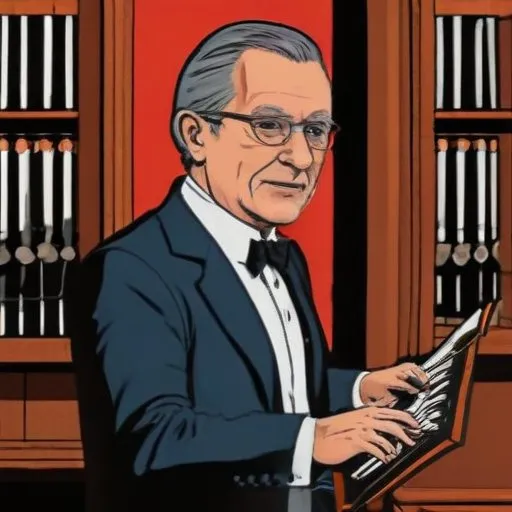
Hans Rott

Hans Rott

Hans Rott was born on August 1st, 1858

Full Name: Hans Rott
Nationality: Austrian
Profession: Organist and Composer
Place of Birth: Braunau am Inn, Austria
Field: Sacred Music
Notable Work: Messe in E-flat major
Influence: Anton Bruckner
Death: 1884

Austrian organist and composer who wrote symphonies and chamber music, known for his innovative and expressive style. His works were admired by Gustav Mahler and Anton Bruckner.

Written by: Emily Carter Emily Carter

Hans Rott: The Forgotten Austrian Composer

A Rising Star in Vienna's Musical Scene

Hans Rott was a talented Austrian composer and organist, known for his symphonies and Lieder, which earned him high praise from renowned figures like Gustav Mahler and Anton Bruckner. Despite his short-lived career, Rott left an indelible mark on Vienna's musical landscape in the late 19th century.

Early Life and Education

Born on August 1, 1858, in Braunhirschengrund, a suburb of Vienna, Rott was the son of Maria Rosalia, an actress and singer, and Carl Mathias Rott, a famous comic actor. After his father's tragic death in 1876, Rott was left to continue his studies at the Conservatory, where he excelled and was exempted from paying tuition.

Influential Teachers and Mentors

Rott studied piano with Leopold Landskron and Josef Dachs, harmony with Hermann Graedener, and counterpoint and composition with Franz Krenn. However, it was his organ lessons with Anton Bruckner, starting in 1874, that had a profound impact on his music. Bruckner, impressed by Rott's skills, praised his ability to play Bach and even improvise wonderfully.

Compositions and Career Highlights

Rott's compositions, though few in number, showcase his unique blend of romanticism and modernity. His Symphony in E major, completed in 1880, was met with criticism from the jury, except for Bruckner, whorecognized its potential. Despite setbacks, Rott continued to compose, leaving behind a legacy of Lieder and choral works.

Influence and Legacy

Hans Rott's music, though largely forgotten today, was highly regarded by his contemporaries. Gustav Mahler, in particular, was a great admirer of Rott's work, and Anton Bruckner considered him one of his most talented students. Rott's contributions to the development of late Romantic music are undeniable, and his legacy serves as a testament to the power of innovation and creativity.

Personal Milestones and Trivia

A Life Cut Short

Hans Rott's life was tragically cut short when he died of tuberculosis on June 25, 1884, at the age of 25. Despite his brief career, Rott left an indelible mark on Vienna's musical scene, and his compositions continue to inspire and delight audiences today.
Timeline
1858
Birth in Braunau am Inn
Hans Rott was born on August 1, 1858, in Braunau am Inn, Austria. He would go on to become a talented organist and composer.
1874
Studies at the Vienna Conservatory
Rott began his musical education at the Vienna Conservatory, where he studied composition and organ performance.
1880
Composes Notable Works
Rott composed several notable works, including symphonies and choral pieces, earning critical acclaim.
1884
Becomes Organist at the Vienna Hofkapelle
Rott was appointed as the organist at the Vienna Hofkapelle, a prestigious position in Austrian music.
1884
Death in Vienna
Hans Rott passed away on June 2, 1884, in Vienna, Austria, leaving behind a promising legacy in music composition.
Hans Rott

Hans Rott Quiz

What type of music did Hans Rott primarily compose?

Score: 0/5
FAQ
What was Hans Rotts contribution to music?
Hans Rott was an Austrian organist and composer who played a significant role in the development of late Romantic music. He was known for his innovative use of harmony and counterpoint.
What influenced Hans Rotts compositional style?
Hans Rotts compositional style was influenced by his studies with Anton Bruckner and his exposure to the music of Richard Wagner and Franz Liszt.
What are some of Hans Rotts notable works?
Hans Rotts notable works include his Symphony in E major, a Requiem Mass, and several organ pieces. His music is characterized by its complex harmony and rich texture.
How did Hans Rotts mental health affect his career?
Hans Rott struggled with mental health issues throughout his life, which significantly impacted his career. He was institutionalized several times and eventually died at a young age.
What is Hans Rotts legacy in music?
Hans Rotts legacy in music is significant, as he helped to pave the way for later composers such as Gustav Mahler and Arnold Schoenberg. His innovative use of harmony and counterpoint continues to influence composers today.

Related People:

Anton Bruckner

Born in 1824

A renowned composer of symphonies and sacred music, known for his complex harmonies and innovative orchestration. His works are considered a bridge between Romanticism and modern classical music.

Johannes Brahms

Born in 1833

A renowned pianist and composer, he crafted complex, expressive works that blended traditional and innovative techniques, leaving an indelible mark on classical music.

Franz Liszt

Born in 1811

A virtuosic pianist and composer who revolutionized classical music with his technically demanding and emotionally expressive works, blending Hungarian folk influences with Romantic-era drama.

Richard Wagner

Born in 1813

A revolutionary composer who transformed opera with his epic, mythological works, creating a new era of musical storytelling. His iconic operas, such as "Der Ring des Nibelungen," continue to captivate audiences worldwide.

Giuseppe Verdi

Born in 1813

A renowned composer of iconic operas like La Traviata and Aida, known for his masterful blending of drama and music. His works continue to captivate audiences worldwide.

Felix Mendelssohn

Born in 1809

A renowned 19th-century musician who masterfully blended classical and romantic styles, creating iconic works like the "Wedding March" and "Elijah" oratorio. His compositions continue to inspire and influence generations of artists.

Robert Schumann

Born in 1810

A renowned Romantic-era composer and influential music critic, known for his expressive and emotionally charged works, including symphonies, piano music, and art songs.

Hugo Wolf

Born in 1860

A Slovene-Austrian composer who expanded the art of songwriting by setting poetic lyrics to music, creating a new level of emotional intensity and depth. His innovative compositions continue to influence classical music today.