


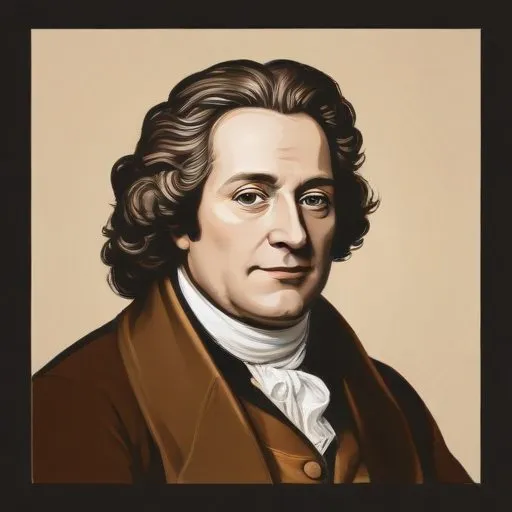
A pioneering physician and collector who amassed a vast collection of natural history specimens and artifacts, laying the foundation for the British Museum.
Sir Hans Sloane, born in 1660, is most notably recognized for bequeathing his vast collection of 71,000 items to the British nation, thereby laying the foundation for three of the world's most esteemed institutions: the British Museum, the British Library, and the Natural History Museum, London.
In 1687, Sloane set sail for the Caribbean, where he spent 15 months traveling to Jamaica, Barbados, and other islands. During this period, he meticulously documented his findings, which would later be published in extensive treatises. His travels sparked a lifelong passion for natural history, and his observations of the local flora and fauna greatly contributed to the scientific understanding of the New World.
At the age of 27, Sloane was elected to the Royal College of Physicians, marking the beginning of a distinguished medical career. He went on to become a renowned physician among the aristocracy, counting prominent figures like King George I and Queen Caroline among his patients. His obsession with collecting, however, remained a constant companion throughout his life. Sloane's collection grew to include artifacts, manuscripts, and specimens from around the world, showcasing his boundless curiosity and thirst for knowledge.
While Sloane is often credited with inventing chocolate milk, it is more likely that he discovered the practice of adding milk to drinking chocolate during his time in Jamaica. Nonetheless, this popular treat remains a lasting legacy of his Caribbean sojourn.
Sloane's contributions to science, medicine, and collecting have left an indelible mark on modern society. His bequest to the British nation paved the way for the establishment of three iconic institutions, each dedicated to preserving and showcasing humanity's rich cultural and scientific heritage.
Hans Sloane was born on April 16, 1660, in Killyleagh, County Down, Ulster, Ireland, to an Anglo-Irish family. His father, Alexander Sloane, was a collector general of taxes for County Down and an agent for the 1st Earl of Clanbrassil. Hans' mother, Sarah Hicks, was an Englishwoman who had moved to Killyleagh as a companion to Anne Carey, Lady Clanbrassil.
Sloane's Ulster-Scots heritage drew from a long line of settlers who migrated from Ayrshire, Scotland, during the Plantation of Antrim and Down. This complex cultural backdrop would shape his worldview and inform his later endeavors.
As we reflect on the life and achievements of Sir Hans Sloane, we are reminded of the profound impact one individual can have on the world. Through his tireless pursuit of knowledge, his boundless curiosity, and his magnanimous bequest, Sloane has left an enduring legacy that continues to inspire generations of scientists, collectors, and enthusiasts alike.
Born in 1656
Predicted celestial events, including the return of a comet that bears his name, and made significant contributions to navigation, astronomy, and mathematics.
Born in 1632
Pioneering microbiologist who discovered microorganisms like bacteria, yeast, and protists, laying the foundation for modern microbiology.
Born in 1627
Pioneering scientist who discovered Boyle's Law, which describes the relationship between pressure and volume of gases, and laid foundations for modern chemistry.
82 Years Old
A German-Canadian singer-songwriter, guitarist, and producer, known for his eclectic style blending rock, folk, and blues, and as the frontman of the rock band Steppenwolf. He's famous for hits like "Born to Be Wild" and "Magic Carpet Ride".
Born in 1632
A 17th-century thinker who laid the groundwork for modern democracy, arguing that governments derive their power from the people and that individuals have inherent rights to life, liberty, and property.
Born in 1633
A 17th-century diarist and politician who chronicled his daily life, including significant historical events like the Great Fire of London, in a candid and detailed manner. His diary is a valuable historical resource and a window into the past.
