


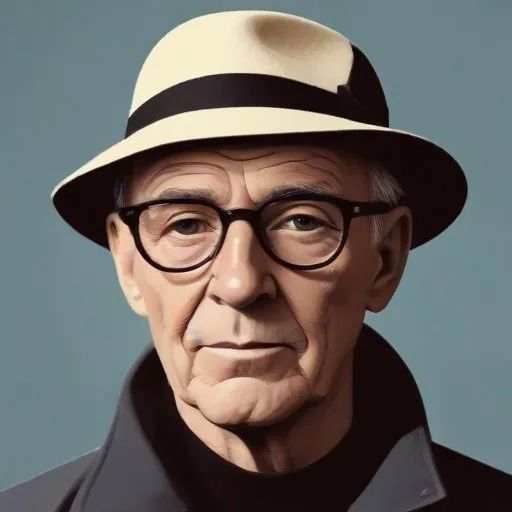
Documented the lives of London's East End residents in the 1960s and 1970s through intimate and poignant black-and-white photographs, capturing the spirit of a bygone era.
Harold Chapman, a British photographer, is renowned for his captivating chronicles of the 1950s and 60s in Paris, particularly his iconic documentation of the Beat Generation. His photographs provide an intimate look into the lives of influential figures such as Allen Ginsberg, William S. Burroughs, and Gregory Corso, among others, during their stay at the infamous Beat Hotel.
Chapman was born on March 26, 1927, in Deal, Kent. Over the course of his long and storied career, he produced a vast body of work, with his most significant period being from the mid-1950s to the early 1960s. During this time, he lived in the Beat Hotel, a backstreet Left Bank guesthouse in Paris, where he became an integral part of the community and captured the essence of the era.
The Beat Hotel, later nicknamed by Verta Kali Smart, was a melting pot of artistic and intellectual expression. Chapman's photographs from this period provide a unique glimpse into the lives of the Beat Generation's most prominent figures, including their daily routines, relationships, and artistic endeavors. When the Beat Hotel closed its doors in 1964, Chapman was the last guest to leave, marking the end of an era.
Chapman's repertoire extends far beyond his work at the Beat Hotel. He is also known for his captivating portraits, landscapes, and street scenes, often featuring incongruous background advertising. His photographs are characterized by a sense of moody anxiety and quirky wit, showcasing his distinctive style.
Chapman's work has been featured in several publications, including Beats & Paris (2001), The Beat Hotel (1984), and Everyman's France (1982). His photographs have also been showcased in various exhibitions, cementing his reputation as a prominent photographer of his generation.
Chapman's photographs have not only preserved the spirit of the Beat Generation but have also inspired subsequent generations of artists, writers, and musicians. His work continues to captivate audiences, offering a unique glimpse into the lives of influential figures who shaped the cultural landscape of the 20th century.
Harold Chapman's legacy extends beyond his photographs. He was a chronicler of his time, a witness to the creative explosion of the Beat Generation. His work serves as a testament to the power of art to capture the essence of an era, and his influence will continue to be felt for generations to come.
91 Years Old
A renowned war photographer and correspondent, capturing the harsh realities of conflict and human suffering through his lens, with a career spanning over 60 years.
Born in 1908
A pioneer of street photography, capturing life's fleeting moments in elegant, geometric compositions that defined the genre. Known for coining the term "the decisive moment."
Born in 1913
A pioneering war photographer and journalist, capturing iconic images of conflict and human struggle, particularly during World War II and the Spanish Civil War.
90 Years Old
A renowned fashion and documentary photographer and director, known for capturing the essence of British youth culture and working-class life in the 1960s and 1970s.
