


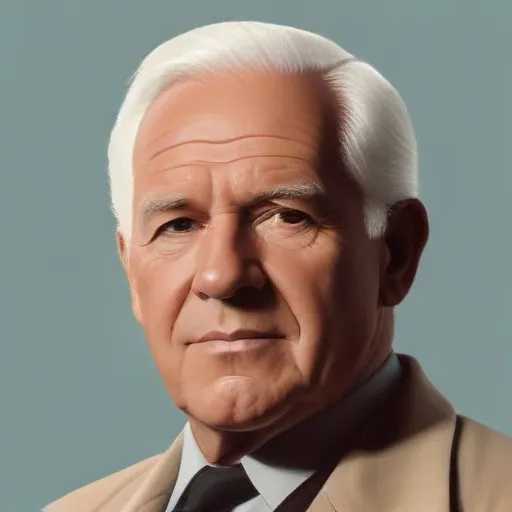
A historian and educator who wrote extensively on the Holocaust and its legacy, particularly in the context of German and American history.
Harold Marcuse, a renowned American professor of modern and contemporary German history, has dedicated his career to understanding the intricacies of historical memory and its intersections with public history. As the grandson of philosopher Herbert Marcuse, he has built upon his grandfather's legacy, focusing on the ways in which historical events are perceived, represented, and remembered.
Marcuse's academic journey began with a degree in physics from Wesleyan University in 1979. However, his interests eventually shifted to art history, leading him to earn an M.A. from the University of Hamburg in 1987. His thesis, which explored a 1949 memorial dedicated to the victims of National Socialist persecution and the resistance struggle, marked the beginning of his fascination with the complexities of historical memory.
In 1986, Marcuse entered the Ph.D. program at the University of Michigan, Ann Arbor, where he wrote a dissertation on the post-1945 history of the former Dachau concentration camp. This research laid the groundwork for his future work, examining the legacies of Dachau and the ways in which historical events are constructed and remembered.
Marcuse's work revolves around the idea that historical memory is not a fixed entity, but rather a dynamic and contested terrain. He argues that the way we remember historical events is influenced by various factors, including cultural, social, and political contexts. His research highlights the importance of understanding the complex interactions between memory, history, and identity.
Through his work, Marcuse aims to promote a critical understanding of historical memory, encouraging individuals to think more deeply about the ways in which the past is represented and remembered. He advocates for a nuanced approach to historical education, one that acknowledges the diversity of perspectives and experiences.
In 1992, Marcuse began teaching history at the University of California, Santa Barbara, where he has continued to develop his research and teaching interests. His commitment to education has led him to reform the university's General Education requirements between 1997 and 2004.
One of Marcuse's most notable achievements is his role in connecting a student, Collette Waddell, with a Polish Holocaust survivor, Nina Morecki. This connection led to the publication of a book about the Holocaust, which explored not only the era itself but also the lives of survivors in the aftermath.
Marcuse's work has had a profound impact on our understanding of historical memory and its relevance to contemporary society. His research has contributed to a growing awareness of the importance of critically examining the ways in which history is represented and remembered.
Through his teaching and scholarship, Marcuse has inspired a new generation of scholars and educators to think more deeply about the complex relationships between history, memory, and identity. His influence extends beyond the academic realm, encouraging individuals to engage more thoughtfully with the past and its ongoing relevance to our lives.
In the context of modern historical scholarship, Marcuse's work represents a significant shift towards a more nuanced understanding of historical memory. His research has contributed to a growing body of literature that emphasizes the complex and contested nature of historical representation.
As a professor and scholar, Marcuse has left an indelible mark on the field of historical education. His commitment to promoting critical thinking and nuanced understanding has inspired a new generation of scholars and educators to engage more thoughtfully with the complexities of historical memory.
Born in 1898
A critical theorist who challenged traditional notions of freedom, democracy, and consumerism, arguing that modern society is oppressive and dehumanizing.
Born in 1903
A critical theorist who critiqued modern society, culture, and capitalism, arguing that they perpetuate inequality and stifle individual freedom. His work influenced many fields, from sociology to musicology.
Born in 1895
A critical theorist who developed the concept of Critical Theory, which critiques modern capitalist society and advocates for social change. Known for his work on authoritarianism and the culture industry.
Born in 1900
A German psychologist and sociologist who developed the concept of "social character" and explored the relationship between psychology and society, known for his humanistic and socialist approach.
Born in 1892
A German philosopher and critic who analyzed the impact of technology on society, particularly in regards to art and culture, and is famous for his concept of "aura" in the age of mechanical reproduction.
97 Years Old
A prominent thinker who developed the concept of "communicative action" and explored the relationships between power, language, and social structures, influencing modern critical theory and sociology.
