


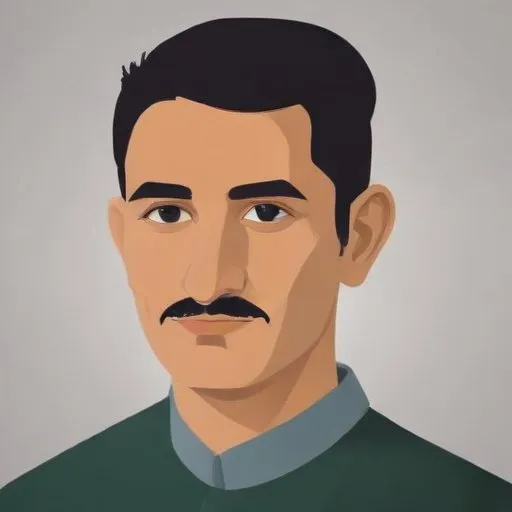
A Pakistani-English engineer and academic who made significant contributions to the development of fibre optics, revolutionizing modern telecommunications. His work enabled fast and reliable data transmission over long distances.
Haroon Ahmed, a British Pakistani scientist, is renowned for his trailblazing work in the fields of microelectronics and electrical engineering. With a career spanning over five decades, he has made significant contributions to the development of microelectronics, earning him the esteemed title of Emeritus Professor of Microelectronics at the Cavendish Laboratory, University of Cambridge.
Born on March 2, 1936, in Karachi, then part of British India, Haroon Ahmed's family migrated to England in 1949 when he was just 13 years old. He pursued his education at St. Patrick's High School, Karachi, followed by an undergraduate degree at Imperial College London.
Ahmed's academic prowess led him to the University of Cambridge, where he obtained his PhD in 1963 and later, his Doctor of Science degree in 1996.
Ahmed's academic career took off in 1963 when he was appointed as a faculty member of the Engineering Department, Cambridge. He worked there for 20 years before moving to the Physics Department, where he was promoted to Professor of Microelectronics and became the Head of the Microelectronics Research Centre.
He is the author of two seminal books: Electronics for Engineers (1973) and An Introduction to Physical Electronics (1968), which have been widely acclaimed and have contributed significantly to the field of microelectronics.
Ahmed has published numerous papers in esteemed scientific and engineering research journals, focusing on microelectronics, micro and nanofabrication, electron and ion beam lithography, and semiconductor single electron devices.
He has established several major collaborations between industry and the University, including the Hitachi Cambridge Laboratory in the Microelectronics Research Centre.
In recognition of his outstanding contributions, Ahmed was elected a Fellow of the Royal Academy of Engineering in 1990. He is also a Fellow of the Institute of Physics and the Institution of Electrical Engineers.
Ahmed's legacy extends beyond his academic achievements. He has served as a Syndic of Cambridge University Press and has been an Honorary Fellow of Corpus Christi College, Cambridge.
Ahmed's work embodies a commitment to interdisciplinary research, emphasizing the importance of collaboration between academia and industry. His contributions have paved the way for the development of cutting-edge microelectronic devices, transforming the landscape of modern technology.
Ahmed's pioneering work in microelectronics has had a profound impact on modern society, enabling the creation of smaller, faster, and more efficient electronic devices. His contributions have permeated various aspects of modern life, from computing and communication to healthcare and education.
As a pioneer in microelectronics, Ahmed's work has inspired generations of scientists and engineers. His contributions have been instrumental in shaping the field, and his legacy continues to influence modern research and innovation.
In comparison to his contemporaries, Ahmed's work stands out for its singular focus on the development of microelectronic devices, demonstrating a deep understanding of the underlying principles and mechanisms.
Haroon Ahmed's extraordinary contributions to the field of microelectronics have left an indelible mark on modern technology. His pioneering work continues to inspire and influence generations of scientists and engineers, cementing his legacy as a true giant in the field.
Born in 1806
A visionary engineer who revolutionized transportation with innovative designs, including the iconic Clifton Suspension Bridge, which transformed urban landscapes.
Born in 1781
Designed the Liverpool and Manchester Railway, a pioneering feat that revolutionized transportation and paved the way for modern rail networks.
Born in 1791
Pioneering scientist who discovered electromagnetic induction, formulated the laws of electrolysis, and invented the first electrical generator, revolutionizing our understanding of electricity and its applications.
Born in 1736
Improved steam engine efficiency, revolutionizing industry and transportation. Known for his innovative designs and patents that transformed the Industrial Revolution.
Born in 1791
A pioneer in computer science, credited with inventing the first mechanical computer, the Difference Engine, and conceptualizing the Analytical Engine, a precursor to modern computers.
Born in 1815
Pioneering mathematician and computer scientist who wrote the first algorithm intended to be processed by a machine, and is often considered the first computer programmer. Her work on Charles Babbage's Analytical Engine envisioned its potential to go beyond mere calculation and perform any task that could be expressed in a series of steps.
Born in 1856
A pioneering engineer who harnessed the power of alternating current (AC) to transform the world's electrical systems, and is credited with developing groundbreaking technologies like radio communication and X-ray imaging.
Born in 1912
Pioneering mathematician and computer scientist who cracked the German Enigma code during WWII and laid the foundations for modern computer science and artificial intelligence.
