


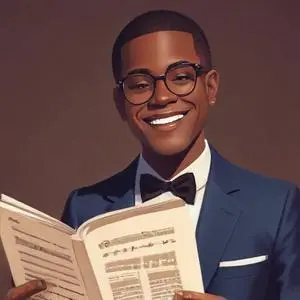
Known for his rich, baritone voice and innovative compositions, Harry Burleigh was a trailblazing American classical composer, arranger, and singer who helped shape the country's musical identity. As the first black composer to gain widespread recognition, Burleigh made significant contributions to the world of classical music, introducing African-American spirituals to the genre and paving the way for future generations of musicians.
Born Henry Thacker Burleigh on December 2, 1866, in Erie, Pennsylvania, Burleigh was raised in a family steeped in music and rich cultural heritage. His grandfather, Hamilton Waters, a former slave, taught young Harry traditional spirituals and slave songs, which would later become a hallmark of his compositional style. Burleigh's mother, Elizabeth Lovey Waters, was a teacher and musician who instilled in him a love for music from an early age.
Burleigh's unique blend of classical training and African-American spirituals catapulted him to fame in the late 19th and early 20th centuries. He was one of the first black composers to gain recognition in the classical music world, and his arrangements of spirituals, such as "Deep River" and "Swing Low, Sweet Chariot," are still widely performed today. Burleigh's music also caught the attention of renowned composer Antonín Dvořák, who credited him with introducing him to the rich musical heritage of African-American culture.
Burleigh's work had a profound impact on the development of American classical music. By introducing African-American spirituals to the classical music scene, he helped create a distinctly American sound. His collaborations with Dvořák also led to the incorporation of African-American themes in the Czech composer's work, such as the famous "New World Symphony."
Harry Burleigh's pioneering work paved the way for future generations of African-American composers and musicians. His legacy extends beyond his music, as he helped break down racial barriers in the classical music world and paved the way for greater diversity and inclusion. Today, Burleigh's music remains a testament to the power of cultural fusion and the importance of preserving America's rich musical heritage.
"The music of the Negro is the most precious thing we have in America."
— Harry Burleigh
Burleigh's work must be viewed within the context of the late 19th and early 20th centuries, a time when African-American culture was still struggling to gain recognition in the United States. His music, which blended African-American spirituals with classical traditions, was a powerful symbol of cultural fusion and resistance to racial segregation. When compared to his contemporaries, such as Samuel Coleridge-Taylor, Burleigh's work stands out for its unique blend of musical styles and its profound impact on the development of American classical music.
Harry Burleigh's life and music serve as a testament to the power of innovation, perseverance, and cultural fusion. As a pioneering composer and musician, he helped shape the course of American classical music and paved the way for future generations of musicians. Today, his legacy continues to inspire and uplift, reminding us of the importance of preserving America's rich musical heritage.
Born in 1902
A renowned poet, novelist, and playwright who powerfully voiced the experiences and struggles of African Americans during the Harlem Renaissance, using jazz and blues rhythms to convey the spirit of his people.
Born in 1891
A celebrated author and anthropologist who explored African-American culture through novels, stories, and folklore, particularly in the rural South during the early 20th century.
Born in 1899
A legendary jazz pianist, composer, and bandleader who revolutionized the genre with his unique style and iconic compositions, such as "Take the A Train" and "Mood Indigo".
Born in 1887
A renowned pianist and composer, he was a leading figure in the development of ragtime music, creating iconic songs like "Memories of You" and "I'm Just Wild About Harry".
Born in 1904
A virtuosic pianist and singer-songwriter who blended jazz, blues, and stride piano to create infectious, energetic tunes that still delight audiences today. Known for his soulful, raspy vocals and iconic hits like "Ain't Misbehavin'" and "Honeysuckle Rose".
Born in 1896
A trailblazing jazz and blues singer, actress, and Broadway performer who broke racial barriers in the entertainment industry with her smooth, sultry voice and captivating stage presence.
Born in 1894
A powerful blues singer known for her soulful, raspy voice and emotive performances, often referred to as "The Empress of the Blues".
Born in 1883
A pioneering African American blues singer and entertainer, known for being one of the first to record blues music and gain widespread popularity in the 1920s.
