


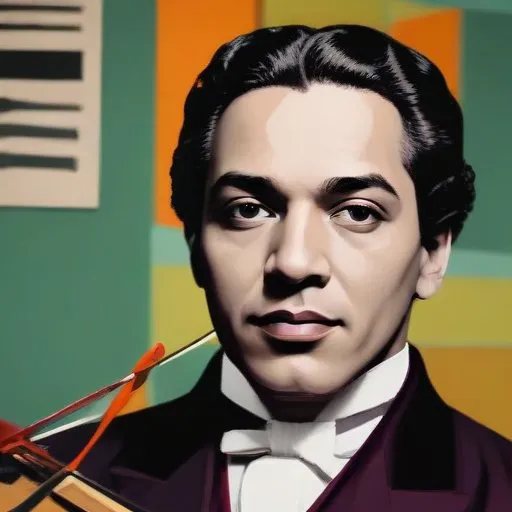
A pioneering black British composer who blended African and European musical traditions, creating iconic works like "Hiawatha's Wedding Feast".
Samuel Coleridge-Taylor, a British composer and conductor of mixed-race descent, rose to prominence in the early 20th century with his captivating cantatas, earning him the esteemed title of "the African Mahler" among white musicians in New York City. His magnum opus, the cantata trilogy based on Henry Wadsworth Longfellow's epic poem The Song of Hiawatha, cemented his position as a trailblazing composer, pushing the boundaries of classical music.
Born on August 15, 1875, at 15 Theobalds Road in Holborn, London, Coleridge-Taylor was the son of Alice Hare Martin, an Englishwoman, and Daniel Peter Hughes Taylor, a Krio man from Sierra Leone. His grandfather, Benjamin Holmans, a skilled farrier, recognized the young boy's musical prodigy and funded his violin lessons, nurturing his talent from an early age.
Coleridge-Taylor's breakthrough came in 1898 when he premiered the first section of The Song of Hiawatha cantata trilogy at the age of 23. The work's success was swift and profound, with performances across the United Kingdom and the United States. His subsequent tours of the United States in the early 1900s solidified his reputation as a master composer, earning him the admiration of prominent musicians and critics alike.
In 1899, Coleridge-Taylor married Jessie Walmisley, an Englishwoman, and the couple had two children, Hiawatha and Avril. Both children would go on to pursue careers in music, with Hiawatha adapting his father's works for various performances and Avril becoming a composer-conductor in her own right.
Coleridge-Taylor's music was deeply rooted in his African heritage, and he often drew inspiration from African-American spirituals and folk songs. His work not only bridged the cultural divide between Britain and Africa but also challenged the racial prejudices of his time, paving the way for future generations of black composers.
Coleridge-Taylor's impact on classical music is still felt today, with his works being performed and reinterpreted by artists and ensembles around the world. His legacy extends beyond the realm of music, inspiring generations of artists, composers, and activists who continue to push for racial equality and cultural diversity.
Samuel Coleridge-Taylor's remarkable life and career serve as a testament to the power of art to transcend racial and cultural boundaries. His music continues to captivate audiences, providing a window into the experiences of a pioneering black composer in a predominantly white classical music landscape.
Through his life's work, Coleridge-Taylor left an indelible mark on the world of classical music, inspiring a new era of diversity, inclusion, and cultural exchange. His legacy reminds us that music, at its core, is a universal language, capable of bridging the gaps between nations, cultures, and generations.
Born in 1857
A renowned composer and educator, best known for his iconic orchestral works, including the majestic "Pomp and Circumstance" march, which is a staple at graduations worldwide.
Born in 1848
A renowned composer and music historian, he's credited with elevating British music to international prominence, particularly through his iconic "Jerusalem" anthem.
Born in 1852
A renowned Irish composer, conductor, and educator who made significant contributions to the development of classical music, particularly in the UK and Ireland, and is remembered for his iconic choral works and operas.
Born in 1842
Wrote iconic operettas, such as "H.M.S. Pinafore" and "The Pirates of Penzance", that blended humor, satire, and memorable melodies, still widely performed and enjoyed today.
Born in 1822
The second Prime Minister of Canada, serving from 1873 to 1878, known for establishing the Supreme Court of Canada and promoting unity among the provinces.
Born in 1818
A French Romantic-era composer and educator, renowned for his operas, particularly "Faust," which remains a staple of the operatic repertoire. His music is characterized by lyricism and dramatic flair.
