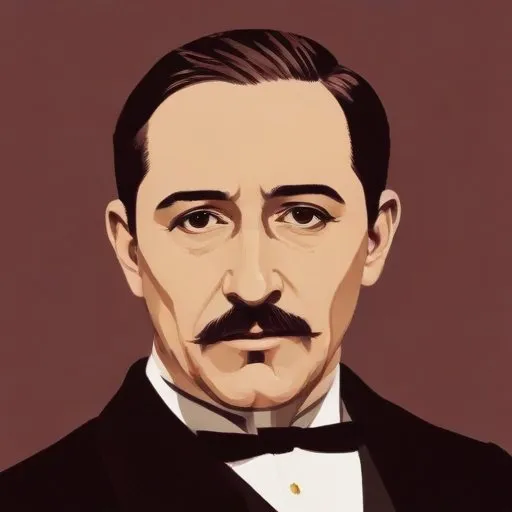
Sir Charles Villiers Stanford: The Anglo-Irish Maestro of Late Romantic Era Music
A Legacy of Musical Excellence
Sir Charles Villiers Stanford was a prolific Anglo-Irish composer, music teacher, and conductor of the late Romantic era, renowned for his significant contributions to the world of classical music. With a career spanning over four decades, Stanford was instrumental in shaping the musical landscape of his time, leaving an indelible mark on the industry.
The Formative Years
Born on September 30, 1852, in Dublin, Ireland, Stanford was the only son of John James Stanford, a prominent lawyer, and his second wife, Mary (née Henn). Growing up in a musically inclined family, Stanford's early life was steeped in classical music. He received his initial music lessons from his parents and later studied at the University of Cambridge, where he developed his skills as a composer and organist.
Rise to Prominence
Stanford's talent and dedication earned him the position of organist at Trinity College, Cambridge, while still an undergraduate. This appointment catapulted him to fame, and he soon became a sought-after composer and conductor. In 1882, he co-founded the Royal College of Music (RCM), where he taught composition for the rest of his life. Concurrently, he held the post of Professor of Music at Cambridge University from 1887.
Teaching and Mentoring
Stanford's pedagogical approach was rooted in classical principles, which he instilled in his students. His skepticism towards modernism led him to focus on the works of esteemed composers like Brahms. Among his notable pupils were
Gustav Holst and
Ralph Vaughan Williams, who would go on to surpass their teacher's fame. Stanford's teaching style was known for its emphasis on technical mastery, and his students benefited greatly from his guidance.
Compositional Contributions
Stanford's compositional oeuvre encompasses a wide range of genres, including symphonies, operas, and choral works. He wrote seven symphonies, numerous concertos, and chamber music pieces. However, it is his choral works, largely composed in the Anglican tradition, that have stood the test of time. Stanford's dedication to opera resulted in nine completed works, although none have remained in the mainstream repertoire.
Conductor and Performer
Stanford's conducting career was marked by his association with the Bach Choir and the Leeds Triennial Music Festival. He was known for his meticulous approach to performance, ensuring that his ensembles delivered polished and expressive renditions of his compositions.
Legacy and Impact
Stanford's influence on British music was significant, and he, along with
Hubert Parry and
Alexander Mackenzie, was credited with sparking a renaissance in music from the British Isles. Although his music was later eclipsed by that of
Edward Elgar and his own pupils, Stanford's contributions to the world of classical music remain undeniable.
Personal Life and Milestones
Stanford's personal life was marked by his marriage to Jennie Wetton in 1884, with whom he had two daughters. He was knighted in 1902 for his services to music. Throughout his life, Stanford was known for his strong personality, which sometimes led to controversy. However, his passion for music and his dedication to his craft have cemented his place in the annals of musical history.
Trivia and Fun Facts
- Stanford was an accomplished organist and pianist, often performing his own compositions.
- He was a strong advocate for the importance of music education in schools.
- Stanford's compositional style was characterized by its lyricism and contrapuntal complexity.
- He was a prolific writer, penning articles and reviews on music and musicians.
Conclusion
Sir Charles Villiers Stanford's remarkable career, spanning over four decades, has left an indelible mark on the world of classical music. As a composer, teacher, and conductor, he played a significant role in shaping the musical landscape of his time. His legacy continues to inspire and influence generations of musicians, ensuring that his music remains an integral part of our cultural heritage.
FAQ
What was Charles Villiers Stanfords role in Irish music?
Charles Villiers Stanford was a renowned Irish composer, conductor, and educator who played a pivotal role in promoting Irish music. He was a key figure in the Irish musical revival of the late 19th and early 20th centuries.
What were Charles Villiers Stanfords contributions to choral music?
Charles Villiers Stanford was a master of choral music, composing numerous works that showcased his mastery of the genre. His contributions to choral music include his Magnificat in G, Te Deum in C, and other iconic works.
How did Charles Villiers Stanford influence Irish art music?
Charles Villiers Stanfords work helped to establish Irish art music as a distinct genre. He drew inspiration from Irish folklore, mythology, and literature, creating a unique sound that reflected Irelands rich cultural heritage.
What was Charles Villiers Stanfords role in music education?
Charles Villiers Stanford was an influential music educator, teaching at the Royal College of Music and other institutions. He mentored many prominent composers, including Ralph Vaughan Williams, Gustav Holst, and Herbert Howells.
What is Charles Villiers Stanfords legacy in Irish cultural heritage?
Charles Villiers Stanfords legacy in Irish cultural heritage lies in his contributions to Irish music, art, and education. His work continues to inspire generations of Irish musicians, composers, and music lovers, cementing his place as a national treasure.