


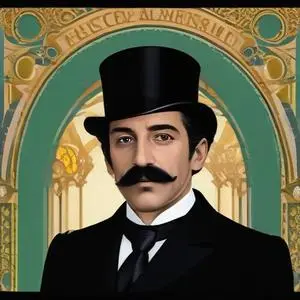
Hector Guimard, a French architect and designer, is renowned for his iconic glass and iron edicules that adorn the entrances of the Paris Metro, transporting commuters to a world of elegance and sophistication. His innovative Art Nouveau style has left an indelible mark on the city's architectural landscape, cementing his status as a pioneer of the genre.
Born on March 10, 1867, in Lyon, France, Guimard's early life was marked by artistic inclinations. His parents, Germain-René Guimard and Marie-Françoise Bailly, encouraged his creativity, which led him to enroll in the École nationale supérieure des arts décoratifs in 1882. After receiving his diploma, he joined the prestigious École des Beaux-Arts, where he honed his skills in architecture.
In 1899, Guimard's design for the Castel Beranger apartment building in Paris won a prestigious competition, earning him widespread recognition. This breakthrough marked the beginning of his illustrious career, as he went on to create over 50 buildings, 141 subway entrances, and numerous pieces of furniture and decorative works. His unique blend of art and functionality set him apart from his contemporaries.
Guimard's most celebrated work is the iconic entrance canopies of the Paris Metro, designed in the early 20th century. The sinuous, organic curves of his edicules have become synonymous with the city's identity. Despite falling out of favor in the 1910s, his Metro designs experienced a resurgence in popularity in the 1960s, thanks in part to the Museum of Modern Art's acquisition of his work.
Guimard's influence extends beyond his architectural achievements. His Art Nouveau style has inspired generations of designers, architects, and artists. His pioneering work paved the way for modernist movements, and his emphasis on functionality and aesthetics continues to shape urban design.
Guimard's architectural philosophy centered around the harmonious union of art and technology. He believed in creating spaces that were not only aesthetically pleasing but also functional and accessible to the masses. This vision continues to inspire architects and designers today.
Hector Guimard's contribution to the world of architecture and design is immeasurable. His innovative spirit, artistic flair, and dedication to his craft have left an indelible mark on the cultural landscape. As we continue to marvel at his creations, we are reminded of the power of art to transform and elevate our lives.
Born in 1832
Co-designer of the iconic Eiffel Tower, a pioneering engineer who revolutionized bridge building and urban infrastructure with innovative iron constructions.
Born in 1814
A French architect who restored and designed Gothic Revival buildings, including the iconic Lausanne Cathedral, leaving a lasting mark on European architecture.
Born in 1887
A pioneer of modern architecture, famous for designing innovative, functional, and visually striking buildings that transformed urban landscapes. His works continue to inspire architects and designers worldwide.
Born in 1883
A pioneer of modernist architecture, he designed iconic buildings that blended functionality with aesthetics, including the John F. Kennedy Federal Building. His work continues to inspire architects and designers today.
Born in 1867
Visionary architect behind iconic, harmonious structures that blend seamlessly into their surroundings, redefining modern American architecture.
