


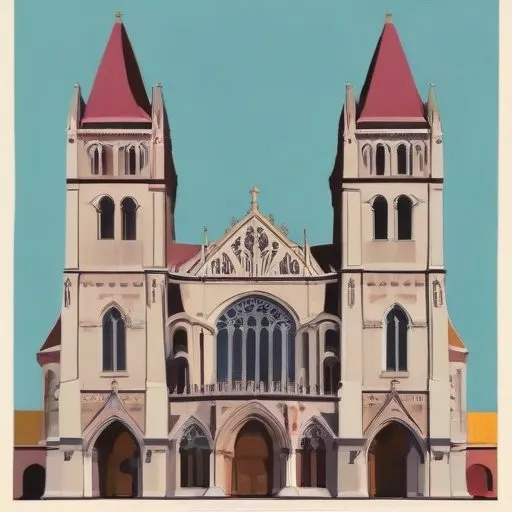
A French architect who restored and designed Gothic Revival buildings, including the iconic Lausanne Cathedral, leaving a lasting mark on European architecture.
Eugne Viollet-le-Duc was a French architect and author who left an indelible mark on the world of architecture, restoring some of France's most iconic medieval landmarks and inspiring generations of architects with his innovative writings on decoration and functionality. His remarkable career spanned decades, earning him recognition as the "father of modern architecture" by none other than Le Corbusier.
Born in Paris on January 27, 1814, Viollet-le-Duc came from a family steeped in artistic tradition. His grandfather was an architect, and his father, a high-ranking civil servant, oversaw the royal residences of Louis XVIII. His uncle, tienne-Jean Delcluze, was a painter and art critic, while his mother hosted a literary salon that attracted prominent figures like Stendhal and Sainte-Beuve.
Viollet-le-Duc's most notable contributions were his ambitious restoration projects of France's most revered medieval landmarks. His work spanned from 1835 to 1879, during which he revitalized iconic structures such as:
Viollet-le-Duc's writings on decoration and functionality had a profound impact on the architectural world. His ideas inspired a diverse range of architects, including:
The English architect William Burges aptly admitted, "We all cribbed on Viollet-le-Duc, even though no one could read French."
Viollet-le-Duc's work was not only aesthetically pleasing but also grounded in philosophical principles. He believed that:
Viollet-le-Duc's contributions to architecture earned him numerous honors and awards during his lifetime, including:
Today, Viollet-le-Duc is remembered as a visionary who not only restored France's medieval heritage but also shaped the course of modern architecture.
"Architecture is the will of an epoch translated into space."
These words, echoed throughout his writings, continue to inspire architects and designers around the world.
Born in 1832
Co-designer of the iconic Eiffel Tower, a pioneering engineer who revolutionized bridge building and urban infrastructure with innovative iron constructions.
Born in 1606
A 19th-century French missionary who traveled to Tonkin (now Vietnam) to spread Christianity, eventually becoming a martyr and saint. He's known for his bravery and devotion to his faith.
Born in 1803
A French Romantic-era mastermind who composed iconic symphonies, operas, and orchestral works, revolutionizing classical music with his bold, expressive style.
Born in 1780
A renowned French Neoclassicist painter and illustrator, celebrated for his exquisite portraits and historical scenes that epitomize elegance and refinement. His work continues to inspire artists and art enthusiasts alike.
Born in 1791
A Romantic-era master of dramatic and emotionally charged art, known for his powerful depictions of horses and the human experience.
Born in 1798
A Romantic-era master of expressive brushstrokes and vivid color, creating iconic works that captured the drama and emotion of historical and literary scenes.
