


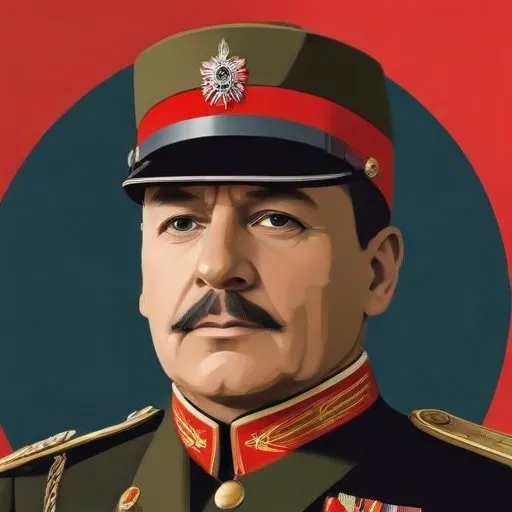
A prominent military leader and statesman of 18th-century Prussia, known for his victories in the War of the Austrian Succession and his role as a close advisor to King Frederick the Great.
Heino Heinrich Graf von Flemming is revered as one of the most accomplished army leaders in German history, earning acclaim for his bravery and strategic prowess in battles against the Ottoman Turks and other European powers. As a seasoned field marshal, Flemming's military career spanned several decades, with his commanding presence felt across the Saxon, Brandenburg, and Polish armies.
Born on May 8, 1632, in Martenthin, Flemming hailed from an old noble Brandenburg family with Dutch roots. His father, Jakob von Flemming, and mother, Barbara von Pfuel, instilled in him a strong sense of discipline and education, which would serve him well in his future endeavors. Flemming received a comprehensive education at German universities, laying the groundwork for his subsequent military successes.
Flemming's military career began as a colonel of auxiliary troops in the service of Brandenburg, where he fought against the Ottoman Turks. His exceptional skills and bravery caught the attention of Frederick William, Elector of Brandenburg, who sent him to serve under the King of Poland in 1672. Flemming's subsequent stints under William of Orange further honed his military prowess, making him a sought-after commander.
In 1682, Flemming became a Feldmarschallleutnant (roughly equivalent to a two-star general) in the Saxon army, a testament to his exceptional leadership abilities. He played a crucial role in delaying the Turkish siege of Vienna in 1683, commanding the Saxon auxiliary troops with distinction. Following the death of Baron von der Goltz in 1688, Flemming assumed the position of field marshal, cementing his status as a renowned military leader.
On February 15, 1684, Flemming became the commander of Saxon troops, a role he held until his suspension in 1691 due to personal offenses. Despite this setback, he continued to serve with distinction, eventually becoming a marshal with the Brandenburg army. Flemming married Agnes Dorothea von Schwerin in 1667, and later, Dorothea Elisabeth von Pfuel in 1674, both of whom came from influential families.
In 1691, Flemming was appointed regimental chef of the 1st Prussian Infantry Regiment, a position he held until 1698. His illustrious career was marked by numerous honors and accolades, solidifying his place in the annals of German military history. Flemming's legacy extends beyond his military accomplishments, with his name becoming synonymous with bravery, strategic brilliance, and unwavering dedication to his country.
Flemming's military prowess and strategic insights have had a lasting impact on modern warfare, with his campaigns and battles studied by military historians and strategists around the world. His legacy extends beyond the battlefield, inspiring generations of military leaders and statesmen to emulate his bravery, discipline, and unwavering commitment to duty.
Heino Heinrich Graf von Flemming's remarkable life and achievements serve as a testament to his enduring influence on German history and military culture, ensuring his place as one of the most revered figures of his time.
Born in 1712
Prussian king who ruled with Enlightenment values, promoting arts, education, and religious tolerance, while also being a skilled military strategist and expanding his kingdom through wars.
Born in 1583
Lord High Chancellor of Sweden who played a crucial role in shaping the country's government and military during the 17th century, known for his diplomatic skills and administrative reforms.
Born in 1583
A powerful and influential military leader who played a crucial role in the Thirty Years' War, leading the Holy Roman Empire's army to several victories before his assassination. He's also known for his strategic genius and innovative military tactics.
Born in 1683
Austrian field marshal who led Habsburg armies to victory in several battles, including the War of the Austrian Succession and the Seven Years' War. He was a trusted military advisor to Empress Maria Theresa.
