


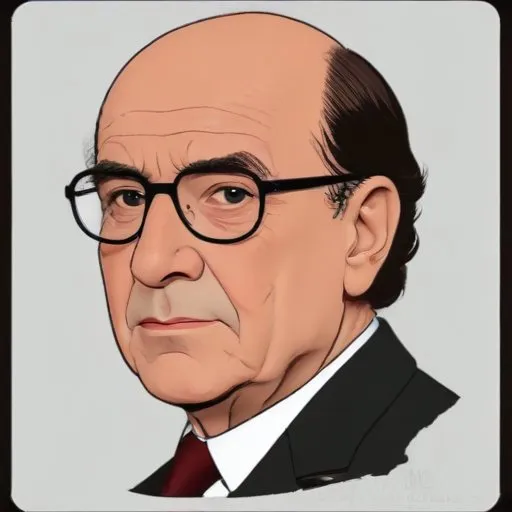
A renowned physiologist, engineer, and academic who pioneered the field of bioengineering, developing innovative medical devices and solutions. He's famous for his work on the first portable defibrillator and artificial heart.
Heinz Wolff, a German-born British scientist, is best known for his pioneering work in bioengineering and his iconic BBC television series, The Great Egg Race. This charismatic presenter has left an indelible mark on the scientific community, inspiring generations with his innovative approach to problem-solving and infectious enthusiasm.
Wolff was born on April 29, 1928, in Berlin, Germany, to Oswald Wolff and Margot Wolff (née Saalfeld). His father, a volunteer in World War I, was a publisher specializing in German history. Tragedy struck when his mother passed away in 1938 due to an acute heart infection. With the looming threat of war, Wolff and his father fled to the Netherlands in August 1939, eventually arriving in Britain as Jewish refugees on September 3, 1939, the same day World War II was declared.
Wolff's academic pursuits took him to the City of Oxford High School for Boys, followed by the University College London (UCL), where he earned a first-class honors degree in physiology and physics. Before joining UCL, he was rejected twice by Trinity College, Cambridge, due to his weak understanding of Latin. This setback didn't deter Wolff, who went on to make significant contributions to the field of bioengineering.
Wolff's charismatic personality and ability to make complex science accessible to the masses made him a natural in front of the camera. The Great Egg Race, a popular BBC television series, showcased his innovative approach to problem-solving, challenging contestants to design and build innovative solutions to everyday problems.
Wolff's contributions to bioengineering have had a lasting impact on various fields, from medical research to space exploration. He is credited with inventing the gel pad electrodes used in ECGs, a testament to his pioneering spirit. As a professor emeritus of bioengineering at Brunel University, Wolff continued to work on projects focused on addressing the care needs of older people.
Through his work in popular science, Wolff has inspired countless individuals to pursue careers in science, technology, engineering, and mathematics (STEM). His legacy extends beyond the scientific community, as he has shown that complex ideas can be made accessible and engaging for all.
Born in 1881
Discovered penicillin, a revolutionary antibiotic, and pioneered its use in medicine. This breakthrough has saved countless lives and transformed the field of healthcare.
Born in 1906
A German-Irish biochemist and academic who discovered penicillin's antibacterial properties and developed it as a therapeutic agent, revolutionizing the treatment of bacterial infections.
Born in 1898
Developed penicillin as a medicine, revolutionizing the treatment of bacterial infections. This discovery has saved countless lives and transformed modern medicine.
Born in 1898
A high-ranking officer in the German Wehrmacht during World War II, known for his involvement in the July 20 plot to assassinate Adolf Hitler.
Born in 1918
Developed techniques for sequencing DNA and proteins, revolutionizing molecular biology and earning two Nobel Prizes in Chemistry.
Born in 1914
Pioneering crystallographer who unraveled the structure of hemoglobin, revolutionizing our understanding of biological molecules. His work paved the way for major advances in medicine and biochemistry.
Born in 1917
Pioneering biochemist and crystallographer who determined the structure of myoglobin, a protein in muscle cells, and was awarded the Nobel Prize in Chemistry in 1962.
Born in 1910
A pioneering scientist who deciphered the structures of biomolecules like insulin and vitamin B12, revolutionizing our understanding of biology and medicine.
