


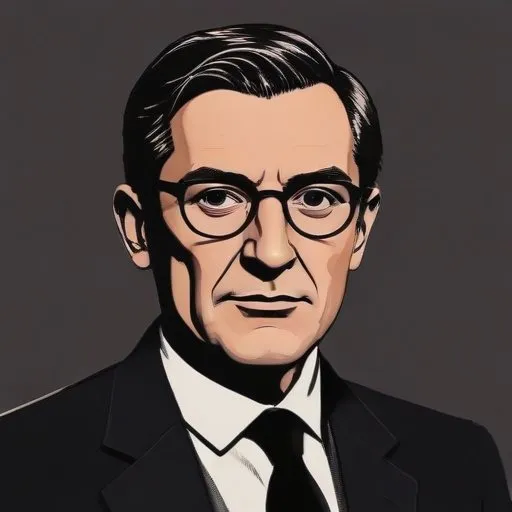
French-Algerian journalist and author who exposed French torture during the Algerian War through his book "La Question", sparking international outcry and influencing French public opinion.
Henri Alleg, a French-Algerian journalist and author, is renowned for his courageous exposé of the Algerian War's dark underbelly, particularly the brutal use of torture by French forces. His memoir, La Question, published in 1958, sent shockwaves across the world, bringing attention to the atrocities committed during the conflict.
Born Harry John Salem on July 20, 1921, in London, to Jewish parents of Russian-Polish origin, Alleg's early life was marked by a complex blend of political awareness and personal identity. Growing up in Paris, he developed a critical view of Israel as an agent of colonialism, which distanced him from his Jewish heritage. The Spanish Civil War, which coincided with his educational years, further politicized his environment, as Italian refugees and Jewish Germans fleeing persecution arrived in France.
In 1939, Alleg left for Algeria, where he became deeply involved with the Algerian Communist Party at the tender age of 18. During this period, he met Georgette Cottin, a 15-year-old who would serve as an intermediary with the Jeunesses Communistes leaders and provide crucial support for Alleg's early journalistic endeavors. With her help, he published several issues of the Jeune Garde newspaper, marking the beginning of his lifelong commitment to activism and journalism.
Post-war, Alleg worked as editor-in-chief of the Alger Rpublicain, a daily newspaper sympathetic to Algerian nationalism, from 1950 to 1955. As director of the publication, he championed a free democratic press, advocating for Algerian grievances against France. The newspaper's anti-colonial stance led to its ban in September 1955 by French authorities. Following the arrest of many of his colleagues in November 1956, Alleg went into hiding, continuing to submit pro-independence articles to French Communist journals.
Alleg's courageous stance against torture and colonialism has left an indelible mark on modern society. His work not only exposed the atrocities committed during the Algerian War but also inspired generations of activists, journalists, and human rights advocates. As a testament to his unwavering commitment to justice, Alleg's memoir La Question remains a powerful symbol of resistance against oppression.
Henri Alleg's contributions to journalism and human rights have been recognized with several awards and honors, including the prestigious Prix des Droits de l'Homme (Human Rights Prize) in 1977.
Alleg's work embodies a deep commitment to democracy, human rights, and anti-colonialism. His unwavering stance against torture and oppression reflects a profound understanding of the importance of human dignity and the need for accountability in the face of atrocities.
Henri Alleg's courageous exposé of the Algerian War's atrocities has inspired generations of activists, journalists, and human rights advocates. His work has contributed significantly to the global conversation on human rights, torture, and colonialism, serving as a powerful reminder of the importance of standing against oppression.
Henri Alleg's life and work are a testament to the power of resistance and activism in the face of oppression. His legacy serves as a powerful reminder of the importance of human rights, democracy, and accountability, inspiring future generations to continue the fight against torture, colonialism, and human rights abuses.
Born in 1913
A French novelist, philosopher, and journalist who wrote influential works like "The Stranger" and "The Plague", exploring absurdism and the human condition.
Born in 1905
Existentialist philosopher and playwright who argued that humans have complete freedom to choose their actions and create their own meaning in life, influencing modern thought on morality and individual responsibility.
Born in 1908
A pioneering feminist philosopher who wrote extensively on ethics, politics, and gender, famously arguing that "one is not born, but rather becomes, a woman."
Born in 1901
A French historian, theorist, and author who wrote influential novels and essays on art, politics, and human condition, exploring the complexities of modern society.
Born in 1925
A psychiatrist and philosopher who wrote about the psychological effects of colonialism and racism, advocating for violent revolution to overthrow oppressive systems.
Born in 1925
A French philosopher who developed influential concepts like "rhizome" and "desire-machines," which challenged traditional notions of identity, reality, and power.
Born in 1926
A French historian and philosopher who critiqued power structures and social norms, arguing that knowledge and truth are shaped by those in power. He's known for his concepts of power, discipline, and surveillance.
95 Years Old
A pioneer of French New Wave cinema, known for experimental and provocative films that challenged traditional narrative structures and explored themes of politics, philosophy, and social commentary.
