


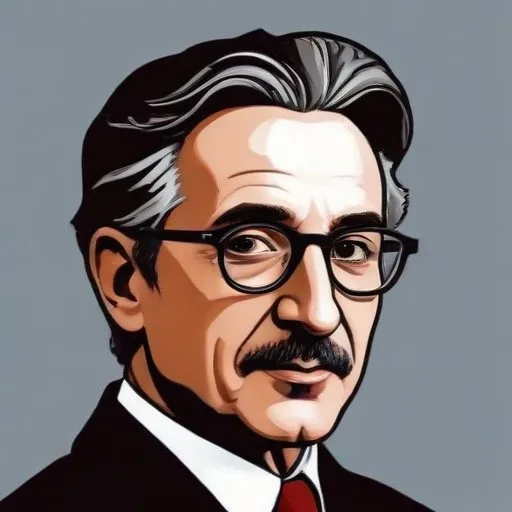
A French-Canadian publisher and politician who advocated for Canadian autonomy and opposed British imperialism, known for his influential writings and speeches that shaped Canadian nationalism.
Henri Bourassa, a fierce advocate for French-Canadian autonomy, is best known for his outspoken opposition to Canada's involvement in the Second Boer War and his unwavering commitment to preserving Quebec's unique cultural identity. As a leader, writer, and publisher, Bourassa's relentless crusade against imperialism and his advocacy for a more decentralized Canadian federation continue to resonate with Quebecers to this day.
Born on September 1, 1868, in Montreal, Quebec, Bourassa was raised in a family steeped in politics and activism. His grandfather, Louis-Joseph Papineau, was a prominent reformist politician who fought for democracy and autonomy in Quebec. Bourassa's education at the cole Polytechnique de Montral and the College of the Holy Cross in Worcester, Massachusetts, laid the foundation for his future roles as a leader and writer.
In 1890, at the tender age of 22, Bourassa became the mayor of Montebello, Quebec, marking the beginning of his illustrious political career. Six years later, he was elected to the House of Commons as an independent Liberal for Labelle, where he swiftly made a name for himself as a vocal critic of imperialism and Canadian subservience to Britain. In 1899, Bourassa resigned from the House of Commons to protest the sending of Canadian troops to the Second Boer War, an act that cemented his reputation as a champion of French-Canadian nationalism.
In 1903, Bourassa founded the Ligue nationaliste canadienne (Canadian Nationalist League) to promote a pan-Canadian nationalist spirit among francophones. This organization served as a platform for Bourassa to spread his message of autonomy, self-determination, and resistance to British imperialism. Through his writings and speeches, Bourassa galvanized the French-Canadian population, inspiring a new generation of nationalists to demand greater control over their own affairs.
During World War I, Bourassa led the opposition to conscription, arguing that Canada's interests were not at stake. He clashed with Catholic bishops who defended military support of Britain and its allies, demonstrating his unwavering commitment to the principles of French-Canadian nationalism. Bourassa's vocal opposition to conscription resonated deeply with Quebecers, solidifying his status as a hero and a symbol of resistance to external authority.
Henri Bourassa's impact on modern Canadian politics and society is immeasurable. As an ideological father of French-Canadian nationalism, he played a crucial role in shaping Quebec's identity and its relationship with the Canadian Confederation. Today, Bourassa's legacy serves as a beacon of hope for those fighting against imperialism, cultural assimilation, and the erosion of autonomy.
Through his unwavering dedication to the principles of autonomy, self-determination, and cultural preservation, Henri Bourassa has left an indelible mark on Canadian history, ensuring that his name will forever be synonymous with the struggle for French-Canadian nationalism.
Born in 1841
The 7th Prime Minister of Canada, a champion of national unity and French-English relations, who navigated the country through significant industrial and economic growth. He's also known for his role in shaping Canada's autonomy from Britain.
Born in 1874
The tenth Prime Minister of Canada, serving for a record 22 years, is most known for leading the country through significant periods of economic and social change, including the Great Depression and World War II.
Born in 1895
The 13th Prime Minister of Canada, a champion of individual rights and freedoms, introduced the Canadian Bill of Rights, a precursor to the Charter of Rights and Freedoms. He's also known for his anti-apartheid stance and leadership during the Suez Crisis.
Born in 1919
The charismatic leader who championed Canadian unity and implemented progressive policies, known for his iconic style and influential legacy in shaping modern Canada.
92 Years Old
The 20th Prime Minister of Canada, serving from 1993 to 2003, known for his leadership during the Quebec sovereignty movement and his role in shaping Canada's national unity. He implemented policies like the Clarity Act and the National Child Benefit.
45 Years Old
American professional ice hockey player who won two Stanley Cup championships and was a four-time NHL All-Star. Known for his rugged defensive play and physical presence on the ice.
67 Years Old
The 22nd Prime Minister of Canada, a conservative leader who served from 2006 to 2015, known for his fiscal policies and controversial stances on social issues. He led the country through the 2008 financial crisis and implemented significant changes to Canada's tax system.
54 Years Old
The 23rd Prime Minister of Canada, known for his progressive policies and charismatic leadership, has been a prominent figure in Canadian politics since 2015. He has been a strong advocate for climate action, diversity, and inclusion.
