


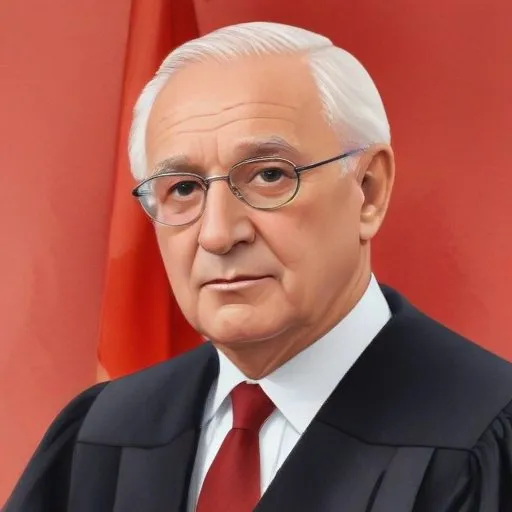
A Canadian scholar and jurist who served as the 4th Chief Justice of Canada, known for his significant contributions to the country's legal system and jurisprudence.
Henri Elzar Taschereau is renowned as one of the most influential Canadian lawyers and jurists of the 19th and early 20th centuries. As a Justice of the Supreme Court of Canada, he played a pivotal role in shaping the country's legal landscape, earning him a legacy that continues to inspire generations of legal professionals.
Born on October 30, 1836, in Sainte-Marie, Quebec, Taschereau's early life was marked by a strong academic foundation. He studied at the Séminaire de Québec and later pursued his law degree at the Université Laval, graduating in 1859.
Taschereau's legal career took off when he was appointed as a solicitor to the government of Quebec in 1873. He went on to serve as the Attorney General of Quebec from 1879 to 1884, demonstrating exceptional legal acumen and earning recognition for his commitment to public service.
In 1887, Taschereau was appointed a Justice of the Supreme Court of Canada, a position he held for an impressive 28 years. During this period, he penned numerous landmark judgments that significantly contributed to the development of Canadian law. His decisions on constitutional law, in particular, continue to influence Canadian jurisprudence to this day.
Taschereau's judicial philosophy was deeply rooted in his Catholic faith and commitment to social justice. He believed that the law should serve as a means to promote the greater good, rather than simply upholding individual rights. This philosophical stance guided his judgments and earned him respect from his peers and the public alike.
Taschereau's contributions to Canadian law have had a lasting impact on modern society. His decisions helped shape the country's constitutional framework, influencing the balance of power between the federal government and provinces. Furthermore, his commitment to social justice has inspired generations of lawyers and jurists to advocate for the rights of marginalized communities.
Honored with a commemorative plaque by the Government of Quebec in 2013, Taschereau's legacy continues to inspire and educate Canadians about the significance of their legal heritage. His life's work serves as a testament to the power of dedication, integrity, and a commitment to the greater good.
Honoring the memory of Henri Elzar Taschereau, we celebrate his remarkable life, unwavering commitment to justice, and the profound impact he had on shaping Canada's legal landscape.
Born in 1841
The 7th Prime Minister of Canada, a champion of national unity and French-English relations, who navigated the country through significant industrial and economic growth. He's also known for his role in shaping Canada's autonomy from Britain.
Born in 1882
The 12th Prime Minister of Canada, a strong leader who played a crucial role in shaping the country's post-war economy and foreign policy, and is credited with establishing universal hospital insurance and old-age pensions.
Born in 1897
A Canadian leader who served as Prime Minister and won the Nobel Peace Prize for resolving the Suez Canal Crisis, known for his diplomatic efforts and peacekeeping initiatives.
Born in 1919
The charismatic leader who championed Canadian unity and implemented progressive policies, known for his iconic style and influential legacy in shaping modern Canada.
92 Years Old
The 20th Prime Minister of Canada, serving from 1993 to 2003, known for his leadership during the Quebec sovereignty movement and his role in shaping Canada's national unity. He implemented policies like the Clarity Act and the National Child Benefit.
45 Years Old
American professional ice hockey player who won two Stanley Cup championships and was a four-time NHL All-Star. Known for his rugged defensive play and physical presence on the ice.
Born in 1815
The first Prime Minister of Canada, a key figure in the country's formation and development, known for shaping its early years and creating a unified nation.
