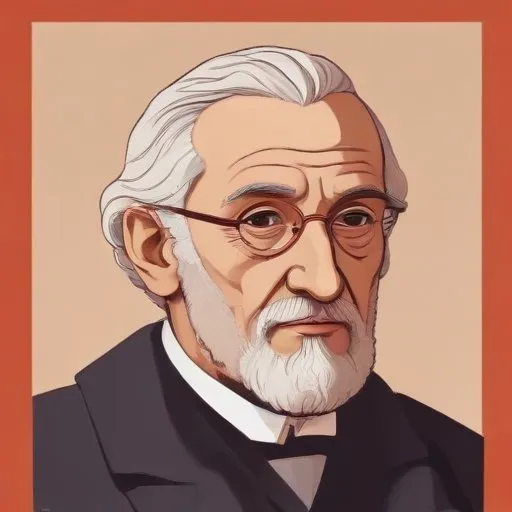
Henri Laborit: The Pioneering Surgeon and Philosopher Behind Chlorpromazine
The Breakthrough Discovery
Henri Laborit is renowned for his instrumental role in the development of chlorpromazine, a groundbreaking drug that revolutionized the treatment of mental health disorders. In 1952, Laborit's research led to the discovery of chlorpromazine's potential as an anxiolytic and antipsychotic medication, paving the way for its widespread adoption in psychiatry.
A Life of Adventure and Inquiry
Born on November 21, 1914, in Hanoi, French Indochina, Laborit's life was marked by a series of extraordinary experiences. His father, a physician and colonial officer, died when Laborit was just six years old. He contracted tuberculosis at the age of 12 and spent two years on a hospital ship in Indochina. These early challenges did not deter Laborit from pursuing a career in medicine. He earned a baccalaureate in Paris and went on to become a navy physician, serving on the torpedo boat Sirocco during World War II.
Philosophical Musings and Interdisciplinary Pursuits
Laborit's philosophical inclinations and passion for interdisciplinary research led him to explore the intersection of biology, psychology, and philosophy. He wrote several books that popularized his ethological laboratory research, integrating knowledge from various disciplines through systems thinking. His work was deeply influenced by anarchist thought, and he maintained a strong independence from academia, refusing to be bound by traditional scientific constraints.
Awards and Honors
Laborit's contributions to science and medicine earned him numerous accolades, including the French Military Cross with distinction. He was appointed to Val-de-Grâce hospital in Paris and continued to work as a surgeon, neurobiologist, and philosopher, leaving an indelible mark on the fields of psychiatry and neuroscience.
Personal Milestones and Key Life Events
- 1914: Born in Hanoi, French Indochina
- 1920: Father dies from tetanus
- 1926: Contracts tuberculosis at the age of 12
- 1940s: Serves on the torpedo boat Sirocco during World War II
- 1952: Discovers the potential of chlorpromazine as an anxiolytic and antipsychotic medication
- 1949: Appointed to Val-de-Grâce hospital in Paris
- 1995: Passes away on May 18th
Legacy and Impact
Laborit's pioneering work on chlorpromazine has had a lasting impact on the treatment of mental health disorders. His commitment to interdisciplinary research and his unconventional approach to science have inspired generations of scientists, philosophers, and thinkers. His legacy serves as a testament to the power of curiosity, innovation, and intellectual independence.
FAQ
What were Henri Laborits contributions to medicine?
Henri Laborit made significant contributions to medicine, particularly in the fields of anesthesiology and neurobiology. He discovered the anesthetic chlorpromazine and developed the euthanasic theory.
What was Henri Laborits role in the development of anesthesia?
Henri Laborit was a pioneer in the development of anesthesia, introducing the use of chlorpromazine and other anesthetics to revolutionize surgical procedures.
How did Henri Laborits work impact neurobiology?
Henri Laborits work had a significant impact on neurobiology, with his research on the brain and nervous system leading to a greater understanding of human behavior and psychology.
What awards did Henri Laborit receive for his work?
Henri Laborit received several awards for his contributions to medicine, including the Albert Lasker Award and the Prix Prixécial.
What was Henri Laborits legacy in medicine?
Henri Laborits legacy in medicine is that of a pioneering physician who made significant contributions to anesthesiology, neurobiology, and pharmacology. His work continues to influence medical research today.