


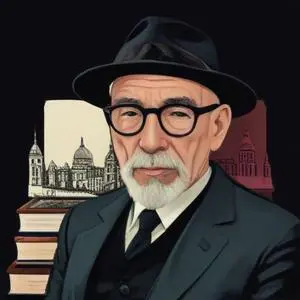
A controversial and prolific writer, known for his explicit and introspective novels that explored the human condition, blending fiction and autobiography. His works were often banned for their explicit content.
Known for his unapologetic and provocative writing style, Henry Miller was an American novelist, short story writer, and essayist who broke with existing literary forms to create a new genre of semiautobiographical novels. His works are characterized by explicit language, sex, surrealist free association, and mysticism, which shocked and fascinated readers alike.
Born on December 26, 1891, in Yorkville, Manhattan, Miller grew up in a Lutheran German family. He spent his childhood in Brooklyn, where he developed a strong sense of humor and a rebellious streak that would define his writing later on. His experiences in Brooklyn would later become the backdrop for many of his works, including The Rosy Crucifixion trilogy.
In the 1920s, Miller began his literary journey, writing pamphlets and essays that were heavily influenced by socialism and anarchism. His first novel, Tropic of Cancer, was published in 1934 and became an instant success, despite being banned in the United States until 1961 due to its explicit content. This was followed by Black Spring and Tropic of Capricorn, which solidified his reputation as a bold and innovative writer.
Miller's writing was not just about shock value; it was also deeply philosophical and introspective. He believed in the importance of living life on one's own terms, free from the constraints of society and convention. His philosophy was centered around the idea of individual freedom and the rejection of mainstream values.
Miller's work had a significant impact on modern literature and society. He inspired a generation of writers, including Norman Mailer, Allen Ginsberg, and William S. Burroughs, and paved the way for the counterculture movement of the 1960s. His writing also influenced the development of beat poetry and the concept of "free writing."
Miller's personal life was marked by turbulence and adventure. He married five times, had two children, and lived in Paris and Big Sur, California. His most famous relationship was with Anais Nin, a French-Cuban writer, with whom he had a passionate and tumultuous affair.
Miller's work was not without controversy. He was known for his explicit language and sexual content, which shocked and outraged many readers. He was also criticized for his perceived misogyny and anti-Semitism. Despite this, Miller remained unapologetic and true to his artistic vision.
Henry Miller's legacy is that of a true original, a writer who defied convention and pushed the boundaries of literary expression. His work continues to inspire and provoke readers to this day, and his influence can be seen in many areas of modern culture, from literature to music to art.
As Miller himself once said, "I have made a silent compact with myself not to change a line or a word of what I have written." He remained true to his art until the end, leaving behind a body of work that will continue to shock, fascinate, and inspire readers for generations to come.
Born in 1903
A French-American writer celebrated for her deeply personal and introspective diaries, which explored themes of identity, relationships, and sexuality. Her works are considered pioneering in the genre of erotic literature.
Born in 1912
A British author, poet, and playwright, best known for his lyrical and evocative writings that explored the human condition, love, and the Mediterranean landscape. His works are celebrated for their vivid descriptions and poetic prose.
Born in 1902
A renowned writer of realistic and powerful novels, often focusing on the lives of the working class and the American Dream, with classics like "Of Mice and Men" and "The Grapes of Wrath".
Born in 1908
A celebrated author of novels, plays, and short stories, known for his humorous and poignant portrayals of Armenian-American life and the human condition. His works often explored themes of identity, community, and the American Dream.
Born in 1892
A pioneering figure in modernist literature, known for experimental and avant-garde works that explored themes of identity, sexuality, and morality.
Born in 1889
A renowned French creative force, celebrated for his innovative and surreal works that blurred the lines between literature, art, and cinema, leaving an indelible mark on 20th-century culture.
Born in 1896
French poet and author who founded Surrealism, a cultural movement that explored the subconscious and the world of dreams. He wrote novels, poems, and essays that continue to influence art and literature today.
Born in 1887
A pioneering artist who challenged conventional norms by submitting a urinal as art, sparking a revolution in conceptual art and questioning the very definition of art itself.
