


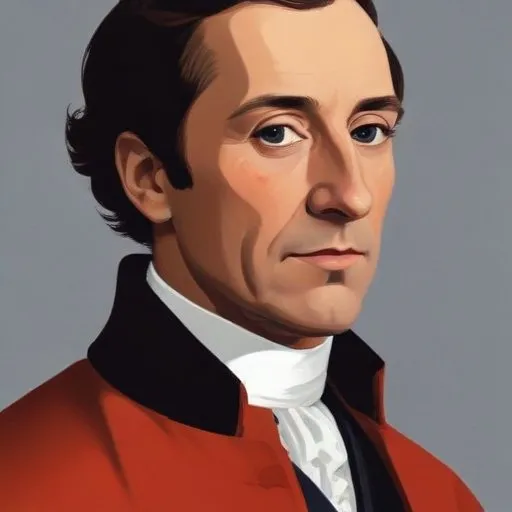
A powerful nobleman who played a key role in the Wars of the Roses, leading rebellions against King Henry IV and later supporting the Lancastrian cause.
Amidst the tumultuous backdrop of the Wars of the Roses, Henry Percy, 3rd Earl of Northumberland, carved out a name for himself as a formidable force in medieval England. As one of the most powerful nobles of his time, Percy's life was marked by conflict, power struggles, and ultimately, tragedy.
Born on July 25, 1421, Percy was the son of Henry Percy, 2nd Earl of Northumberland, and Lady Eleanor Neville, daughter of Ralph Neville, 1st Earl of Westmorland. From a young age, Percy was groomed for greatness, and his family's influence and wealth paved the way for his future success.
In 1426, Percy was knighted alongside the future King Henry VI, a distinction that would shape his destiny. His marriage to Eleanor Poynings, who would outlive him, brought him the title of Lord Poynings, which would become a source of contention with the Poynings family.
Percy's youth was marked by conflicts with neighboring nobles, both lay and ecclesiastical. The north of England was a hotbed of rivalries, and Percy's position as Warden of the Eastern March on the Scottish border made him a key player in these disputes.
In 1440, Percy was appointed Warden of the Eastern March, a role that gave him custody of Berwick Castle and responsibility for its defense. This position would be a defining feature of his life, as he clashed with the Scots and rival English nobles.
As the Wars of the Roses erupted, Percy sided with the Lancastrian faction, despite his father's early death in the conflict. Percy's own ambitions drove him to benefit from the chaos, but his life was cut short at the Battle of Towton in 1461, where he fought on the defeated Lancastrian side.
Despite his tumultuous life, Percy's legacy endures as a testament to the complexities of medieval politics. His rise to power, marked by rivalries and conflict, is a fascinating chapter in English history.
Through his life and legacy, Henry Percy, 3rd Earl of Northumberland, reminds us of the intrigue, violence, and ambition that defined medieval England.
Born in 1925
A renowned stage and screen actor, celebrated for his versatility in playing a wide range of characters, from Shakespearean roles to villainous parts in popular TV shows.
Born in 1284
The king whose disastrous reign led to his eventual deposition and mysterious death, remembered for his alleged homosexual relationships and power struggles with nobles.
Born in 1367
The last king of the House of Plantagenet, deposed in a coup, known for his extravagance and tyranny, leading to his downfall and the rise of the Lancastrian dynasty.
Born in 1133
King of England from 1154 to 1189, known for establishing a strong centralized government, reforming the English church, and his tumultuous relationships with Thomas Becket and his sons.
Born in 1819
A Scottish-New Zealand educator and politician who served as the 3rd Prime Minister of New Zealand, known for his contributions to the country's early development and education system.
