


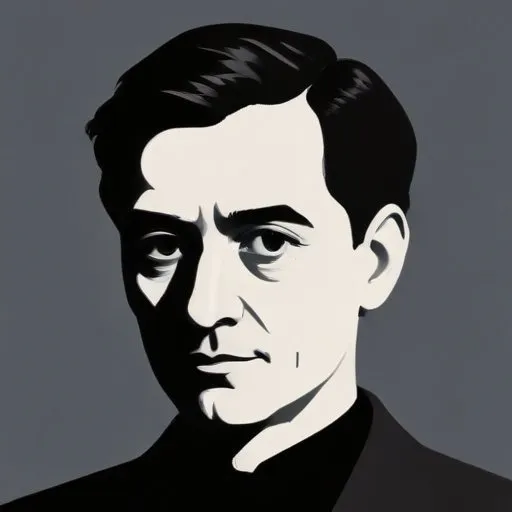
A Dutch author and playwright who wrote socially conscious plays and novels that exposed the harsh realities of poverty and exploitation, influencing the development of social realism in literature.
Herman Heijermans, the renowned Dutch playwright, novelist, and sketch story writer, is widely regarded as the greatest Dutch dramatist of the modern era. His works, which often tackled complex social issues and human relationships, have gained widespread recognition not only in his native Netherlands but also globally, earning him a reputation as one of the most influential playwrights of his time.
Born on December 3, 1864, in Rotterdam, Heijermans came from a liberal Jewish family and was the fifth of 11 children. His sister, Marie Heijermans, would later become a painter. The early years of his life had a profound impact on his writing, shaping his perspectives on social justice and human relationships.
Heijermans' literary career began during the winter of 1891-1892, when he wrote his first play, inspired by Henrik Ibsen's A Doll's House. Although his debut play, Dora Kremer, premiered on April 25, 1893, at the Groote Schouwburg in Rotterdam, it was met with negative reviews. This setback only fueled Heijermans' determination to prove himself as a playwright.
In a bold move, Heijermans decided to use a Russian-sounding pseudonym, Ivan Jelakowitch, to submit his next play, Ahasverus, which was about a Jewish family caught in the violence of the pogroms of the 1880s. The play's success was a vindication of Heijermans' talent, and he later revealed his true identity in an article in De Telegraaf, quoting the reviews of Ahasverus alongside those of Dora Kremer, much to the mortification of the critics.
After his initial success, Heijermans adopted another pseudonym, Samuel Falkland Jr., and began publishing a series of sketches of life in Amsterdam in De Telegraaf and later in the Algemeen Handelsblad daily. These sketches, known as the "Falklandjes," were later collected and published in book form, filling no less than eighteen volumes.
Heijermans' later life was marked by his love for cabaret singer Marie Sophia Pee, and he continued to write prolifically, producing works that explored the human condition and social issues of his time. He passed away on November 22, 1924, leaving behind a rich legacy of literary works that continue to inspire and influence writers to this day.
Heijermans' contribution to Dutch literature is immeasurable. His plays and writings have had a profound impact on modern Dutch theatre, influencing generations of playwrights and writers. His works have been translated into multiple languages, cementing his status as a globally recognized literary figure.
Through his writings, Heijermans has left an indelible mark on the world of literature, inspiring countless readers and writers with his unique perspective on human relationships, social justice, and the complexities of life.
Born in 1820
A Dutch writer who penned the novel "Max Havelaar", a scathing critique of colonialism in the Dutch East Indies, which sparked widespread controversy and reform.
Born in 1863
A Dutch literary mastermind, renowned for crafting intricate, psychologically charged novels and poetry that probed the human condition with subtlety and nuance.
Born in 1882
A Flemish writer and poet, known for his satirical and humorous works that critiqued the bourgeoisie and explored themes of identity and morality. His writings are considered a significant part of Flemish literature.
92 Years Old
A Dutch journalist, author, and poet, known for his lyrical and introspective writings that explore the human condition, often blending fiction and nonfiction. His works are celebrated for their poetic style and philosophical depth.
97 Years Old
A Flemish literary giant, celebrated for his provocative novels and poetry that explored themes of identity, morality, and the human condition. His works often blended elements of magic realism and absurdism.
Born in 1898
A Dutch literary giant, celebrated for his poetic and narrative mastery, particularly in the novel "The Garden Where the Brass Band Played".
