


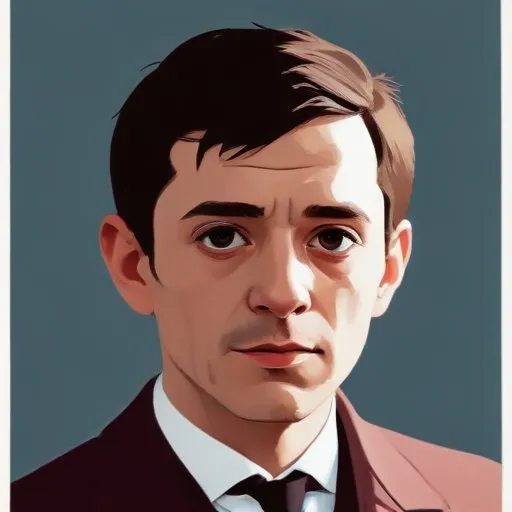
Hermann Paul was a renowned French artist, born on December 27, 1864, in Paris, and died on June 23, 1940, in Saintes-Maries-de-la-Mer. He was a prolific illustrator, known for his satirical characterizations of the French society, which appeared in numerous newspapers and periodicals.
Between 1890 and 1914, Paul worked as a lithographer, both in color and black and white, and as an illustrator for weekly publications such as La Faridondaine, Le Courrier Français, Le Cri de Paris, Le Figaro, Le Petit Bleu, Gil Blas, and Le Rire. His early work was characterized by simple caricatures, which relied on blotches of pure black with minimum outline to define his animated marionettes.
As his style evolved, Paul's exhibition pieces became distinguishable by large splashes of color and fine lines of black. He experimented with various mediums, including Ripolin enamel paint, watercolors, woodcuts, lithographs, drypoint engraving, oils, and ink.
On the eve of World War I, Paul's work made a significant impact as part of M. Druet's First Group, showcasing his innovative use of Ripolin paint. The Burlington Magazine for Connoisseurs noted that the exhibition was "chiefly remarkable for a series of paintings or drawings... in a new medium which is simply Ripolin."
The war had a profound impact on Paul's work, as he documented its tragedy and foibles. After the war, he underwent several stylistic changes, eventually producing many works in dry point and ink, depicting his beloved Camargue region.
Paul's work was imbued with social criticism from the start, as he prodded all aspects of Parisian society. He attacked monarchs and paupers alike, criticizing the bourgeoisie and the poor with equal fervor. His satire was not limited to the wealthy; he believed in poking fun at the flaws of all segments of society.
Hermann Paul's contributions to the world of art and satire continue to inspire artists and critics alike. His work serves as a testament to the power of satire in exposing societal flaws and encouraging change. Today, his work is recognized as a valuable part of French cultural heritage, offering a unique glimpse into the country's social and political landscape during the late 19th and early 20th centuries.
Born in 1841
A pioneer of Impressionism, creating vibrant, intimate portraits and landscapes that capture the beauty of everyday life. His works evoke a sense of joy and warmth, celebrating the human experience.
Born in 1840
A founder of Impressionism, capturing fleeting light and color in dreamy landscapes and water scenes, revolutionizing modern art.
Born in 1830
A Danish-French Impressionist painter who captured the beauty of landscapes and cityscapes with vivid colors and bold brushstrokes, influencing the development of modern art.
Born in 1839
A post-Impressionist pioneer, he's famous for his still-life compositions and landscapes that laid the groundwork for Cubism, influencing 20th-century art.
Born in 1864
A post-Impressionist master of capturing Parisian nightlife, known for vibrant, expressive paintings and posters of cabarets, brothels, and high society. His works exude a sense of decadence and joie de vivre.
Born in 1834
A master of capturing the beauty of movement and everyday life, this artist is renowned for their stunning Impressionist paintings, sculptures, and illustrations of dancers, horses, and Parisian scenes.
Born in 1832
A pioneering figure in Impressionism, he bridged the gap between Realism and Impressionism with his bold, expressive brushstrokes and everyday subjects.
Born in 1841
A pioneering Impressionist artist, capturing intimate, everyday moments of women's lives in delicate, dreamy paintings. Her works often blurred the lines between domesticity and artistry.
