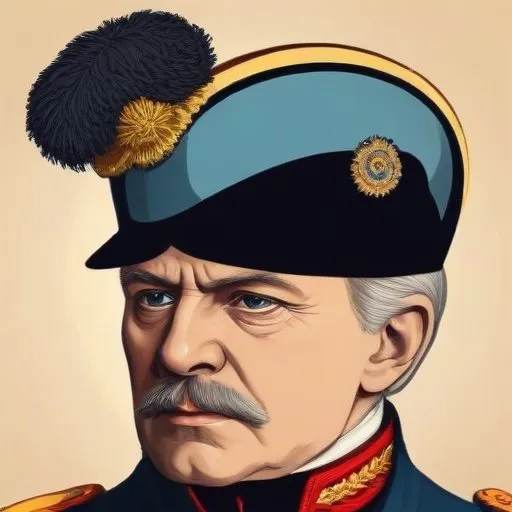
Hermann von Boyen: The Architect of Prussia's Military Reforms
Hermann von Boyen, a renowned Prussian army officer, played a pivotal role in reforming the Prussian Army in the early 19th century. As the Minister of War of Prussia, he oversaw significant changes that transformed the country's military landscape.
Early Life and Military Career
Born on June 20, 1771, in Kreuzburg (now Slavskoye, Russia), Boyen joined the military in 1784 in Knigsberg. His early years were marked by rapid promotions, and he became a second lieutenant in 1788. He attended lectures by the esteemed philosopher
Immanuel Kant at the military academy in Knigsberg, which had a profound impact on his intellectual development.
The Polish Campaign and Rise to Prominence
Boyen's military career gained momentum during the Polish campaign (1794-1796), where he served as Adjutant to General von Gnther. He was wounded at the Battle of Auerstdt in 1806 and later became a member of
Gerhard von Scharnhorst's commission for military reorganization. Boyen's dedication and strategic prowess earned him the role of Director of the Military Cabinet in 1810.
Reforming the Prussian Army
Boyen's most significant contribution was his work alongside Scharnhorst in reforming the Prussian Army. He played a crucial role in establishing the Landwehr reserve, which became a cornerstone of the Prussian military. His efforts led to the modernization of the army, making it a more efficient and effective fighting force.
War Minister and Later Life
After the Battle of Ltzen in 1813, Boyen was appointed Chief of General Staff of the 3rd Army Corps. He later served as War Minister from 1810 to 1813 and again from 1841 to 1847. During his tenure, he oversaw significant military reforms and was promoted to Lieutenant General in 1818.
Legacy and Impact
Hermann von Boyen's contributions to the Prussian Army had a lasting impact on European military history. His reforms paved the way for Prussia's rise as a dominant military power, and his influence can be seen in the subsequent development of modern military strategies.
- Boyen's work with Scharnhorst laid the foundation for the Prussian army's success in the 19th century.
- His reforms transformed the Prussian army into a more efficient and effective fighting force.
- Boyen's legacy can be seen in the development of modern military strategies and tactics.
Personal Milestones and Key Life Events
- Born on June 20, 1771, in Kreuzburg (now Slavskoye, Russia)
- Joined the military in 1784 in Knigsberg
- Wounded at the Battle of Auerstdt in 1806
- Became Director of the Military Cabinet in 1810
- Served as War Minister from 1810 to 1813 and again from 1841 to 1847
- Promoted to Lieutenant General in 1818
- Died on February 15, 1848
By examining the life and accomplishments of Hermann von Boyen, we gain insight into the complexities of military reform and the significance of strategic leadership in shaping the course of history.
FAQ
Who was Hermann von Boyen and what was his significance in Prussian history?
Hermann von Boyen was a Prussian general and politician, who played a crucial role in shaping Prussian military and politics during the 19th century. He served as Prussian Minister of War, reforming the Prussian army and contributing to the countrys military modernization.
What were Hermann von Boyens military achievements?
Boyen was a highly decorated military officer, who fought in the Napoleonic Wars and the Franco-Prussian War. He was instrumental in modernizing the Prussian army, introducing new tactics, and promoting the development of artillery and cavalry units.
What were Hermann von Boyens contributions to Prussian politics?
Boyen was a prominent figure in Prussian politics, serving as Minister of War and playing a key role in shaping Prussian foreign policy. He was a strong advocate for German unification and supported the creation of a unified German state.
How did Hermann von Boyen reform the Prussian army?
Boyens military reforms introduced conscription, modernized artillery, and emphasized officer training. He promoted the development of a more professional and efficient army, which contributed to Prussias military successes during the 19th century.
What is Hermann von Boyens legacy in Prussian history?
Boyens military and political contributions have left a lasting impact on Prussian history. He is remembered as a dedicated military leader, politician, and reformer, whose work helped shape Prussias rise as a major European power.