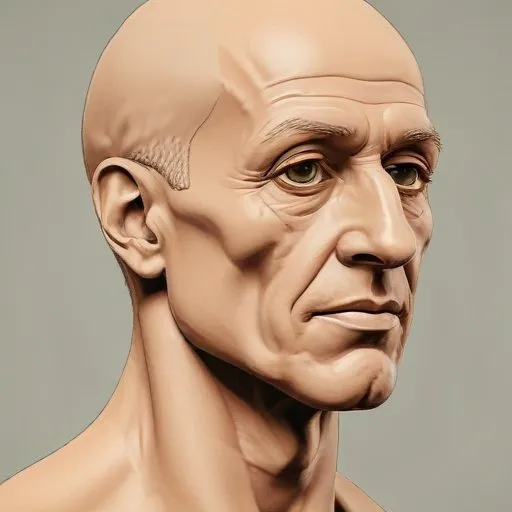
Hieronymus Fabricius: The Father of Embryology
The Pioneering Anatomist and Surgeon
Hieronymus Fabricius, also known as Girolamo Fabrici d'Acquapendente, is renowned for his groundbreaking contributions to the field of anatomy and embryology. He is credited with being the first to describe the valves in veins, which prevent retrograde blood flow, and is aptly referred to as the "Father of Embryology."
Early Life and Education
Born on May 20, 1533, in Acquapendente, Latium, Fabricius pursued his passion for medicine at the University of Padua, where he earned a Doctor of Medicine degree in 1559 under the guidance of the esteemed Gabriele Falloppio.
Academic Career and Innovations
Fabricius's academic career was marked by several milestones. He started as a private teacher of anatomy in Padua (1562-1565) and later became a professor of surgery and anatomy at the University of Padua (1565), succeeding his mentor Falloppio. In 1594, he revolutionized the teaching of anatomy by designing the first permanent theater for public anatomical dissections, a pioneering feat that facilitated hands-on learning for his students.
Illuminating Students and Colleagues
Fabricius's academic prowess and innovative teaching methods attracted a multitude of talented students, including:
- Julius Casserius, who would later succeed Fabricius as Professor of Anatomy at the University of Padua in 1604
- Anselmus Boetius de Boodt, who received his lessons in 1586
- William Harvey, who studied under Fabricius around 1598 and later deduced the circulation of blood
- Adriaan van den Spiegel, who also studied under Fabricius and succeeded Casserius as Professor of Anatomy in 1615
Scientific Contributions
Fabricius's anatomical investigations led to several significant discoveries, including:
- The formation of the fetus
- The structure of the esophagus, stomach, and intestines
- The peculiarities of the eye, ear, and larynx
- The rediscovery of the membranous folds (valves) in the interior of veins, first described by Charles Estienne in 1545, and fully described by Fabricius in 1603
Legacy and Impact
Fabricius's contributions to the field of anatomy and embryology have had a profound impact on modern medicine. His work paved the way for further research and understanding of the human body, earning him a revered place in the annals of medical history.
Fabricius's legacy continues to inspire generations of medical professionals, solidifying his position as one of the most influential anatomists and surgeons of all time.
FAQ
Who was Hieronymus Fabricius?
Hieronymus Fabricius was an Italian anatomist who made significant contributions to the field of anatomy and was a pioneer in the study of human embryos.
What was Hieronymus Fabricius most famous discovery?
Hieronymus Fabricius most famous discovery was the identification of the Fabricius ligament, a ligament in the embryonic development of the human fetus.
What was Hieronymus Fabricius contribution to the study of embryos?
Hieronymus Fabricius was one of the first scientists to study human embryos and made significant contributions to the understanding of human development and embryology.
Was Hieronymus Fabricius a student of Galen?
Yes, Hieronymus Fabricius was a student of Galen, the famous Greek physician, and was heavily influenced by his teachings.
Is Hieronymus Fabricius work still studied?
Yes, Hieronymus Fabricius work is still studied by scholars today, particularly his contributions to the field of anatomy and embryology.