


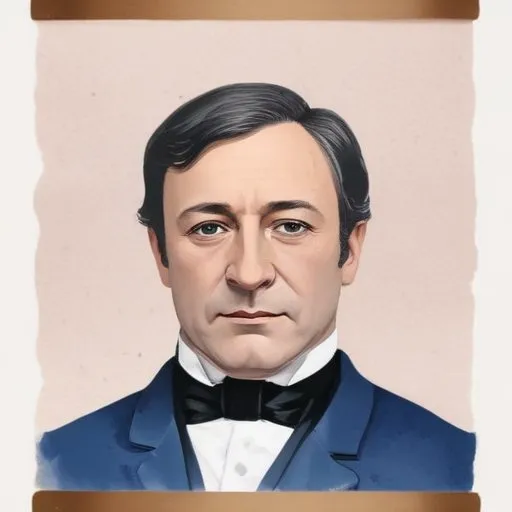
French politician and minister of education who introduced significant reforms to the country's education system, making it more accessible and secular.
Hippolyte Carnot, a prominent French politician, is revered for his tireless efforts to revolutionize the country's education system and promote republicanism during the turbulent 19th century. As a key figure in the Radical Left, he played a pivotal role in shaping France's political landscape, earning him a reputation as a champion of social progress and equality.
Born on October 6, 1801, in Saint-Omer, Pas-de-Calais, Hippolyte Carnot was the younger brother of Sadi Carnot, the founder of thermodynamics, and the second son of Lazare Nicolas Marguerite Carnot, a renowned revolutionary politician and general. Growing up in an environment steeped in politics and intellectual curiosity, Carnot was instilled with a strong sense of public service and a passion for knowledge.
Following the final defeat of Napoleon in 1815, his father's exile led Carnot to spend his formative years abroad, eventually returning to France in 1823. During this period, he developed a deep appreciation for literature and philosophy, which would later inform his political ideology.
Carnot's entry into politics occurred in 1839, when he was elected deputy for Paris, a position he would hold until 1848. During this period, he became a leading figure in the Radical Left, advocating for social reform and republicanism. His dedication to the cause earned him the respect of his peers, including Alphonse de Lamartine, who would later appoint him Minister of Education in the provisional government.
Carnot's tenure as Minister of Education was marked by a series of groundbreaking reforms aimed at democratizing education. He championed the cause of obligatory and free primary education, as well as secondary education for girls. This vision was rooted in his belief that education was the cornerstone of social progress and that every individual, regardless of background, deserved access to knowledge.
Despite facing opposition from both the Right and the Republicans of the Extreme Left, Carnot remained resolute in his pursuit of a more equitable education system. His commitment to this cause ultimately led to his resignation in 1848, but not before leaving an indelible mark on French education policy.
Following his resignation, Carnot continued to advocate for social justice and republicanism, protesting against the coup d'état of 2 December 1851. His refusal to condone Louis Napoleon's authoritarian regime earned him a reputation as a vocal critic of oppression.
Hippolyte Carnot's legacy extends far beyond his political achievements. As a champion of education, he inspired generations of French citizens to prioritize knowledge and social progress. His unwavering commitment to the principles of republicanism and equality has cemented his place as one of France's most revered politicians of the 19th century.
Through his tireless advocacy and visionary policies, Hippolyte Carnot has left an indelible mark on French history, inspiring future generations to strive for a more just and equitable society.
Born in 1753
A French general, mathematician, and politician who played a crucial role in the French Revolution and is considered the "Organizer of Victory" for his military strategies, and also made significant contributions to mathematics and engineering.
Born in 1769
A French military leader who rose to prominence during the French Revolution and became Emperor of France, known for his military conquests and reorganization of Europe. He is also famous for his Napoleonic Code, which remains a foundation of modern law.
Born in 1790
A 19th-century French poet and politician who served as the country's Head of State, known for his romantic poetry and instrumental role in the French Revolution of 1848.
Born in 1787
A 19th-century French historian and politician who served as Prime Minister, known for his role in shaping France's modern democracy and educational system.
