


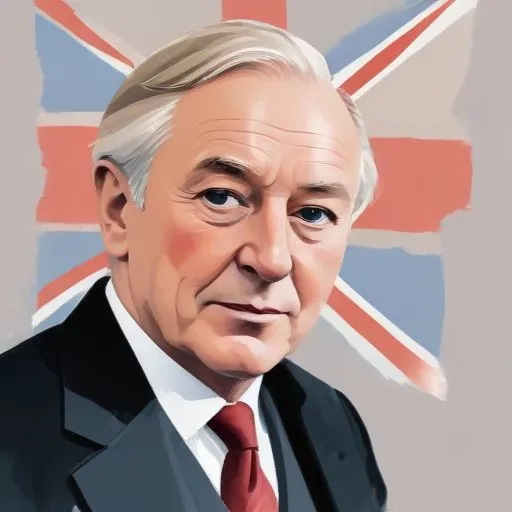
A charismatic politician and entrepreneur who founded the popular magazine John Bull and was known for his flamboyant lifestyle and fraudulent business dealings.
Horatio Bottomley was a British financier, journalist, and politician who left an indelible mark on the country's history. He is best known for his editorship of the popular magazine John Bull, his nationalistic oratory during World War I, and his tumultuous career, which was marked by both stunning successes and spectacular failures.
Born on March 23, 1860, in London, England, Bottomley spent five years in an orphanage before beginning his career as an errand boy at the tender age of 14. He later worked as a solicitor's clerk, where he acquired a valuable knowledge of English law that would serve him well in his future court appearances.
Bottomley's entrepreneurial spirit and flair for writing led him to establish his own publishing company at the age of 24. The company launched numerous magazines and papers, including the Financial Times in 1888. This early success was a harbinger of things to come, as Bottomley's career would be marked by both innovative business ventures and dubious financial dealings.
In 1906, Bottomley entered politics as the Liberal Party member for Hackney South. The same year, he founded John Bull, a popular magazine that became a platform for his trenchant populist views. The magazine's success propelled Bottomley to national prominence, and he became known for his charismatic oratory and writing style.
During World War I, Bottomley's patriotic fervor and nationalistic rhetoric made him a leading propagandist for the war effort. He addressed over 300 public meetings, and his influence was so great that it was widely expected he would enter the War Cabinet.
Bottomley's financial extravagance and mismanagement continued to blight his career, and in 1912, he was forced to resign from parliament after being declared bankrupt. However, he was discharged from bankruptcy in 1918 and reentered parliament as an Independent member.
In 1919, Bottomley launched his fraudulent Victory Bonds scheme, which promised investors unrealistic returns and eventually led to his downfall. In 1922, he was convicted of fraud and sentenced to seven years' imprisonment, marking the end of his remarkable and tumultuous career.
Despite his controversial career, Bottomley's impact on British society cannot be overstated. He was a pioneering journalist and editor who helped shape the country's political discourse during a time of great upheaval. His populist views and nationalistic rhetoric continue to influence British politics to this day.
Horatio Bottomley's life was a testament to the power of charisma, entrepreneurial spirit, and the importance of ethical leadership. His story serves as a cautionary tale about the dangers of unchecked ambition and the importance of accountability in public life.
"I am not a politician, I am a journalist who has accidentally become a politician." - Horatio Bottomley
"The greatest curse of our time is the lack of faith in our country and its institutions." - Horatio Bottomley
Born in 1863
A Welsh lawyer and politician who served as Prime Minister of the United Kingdom, leading the country through World War I and introducing key social reforms. He's known for his charismatic leadership and progressive policies.
Born in 1858
A Canadian-Scottish banker and politician who served as Prime Minister of the United Kingdom during World War I, known for his leadership during wartime and his role in shaping British politics.
Born in 1867
A conservative leader who served as Prime Minister three times, known for his role in navigating Britain through economic crises and advocating for imperial protectionism.
Born in 1871
Prolific writer of historical novels and adventure stories, also a talented landscape painter.
Born in 1866
A Scottish journalist and politician who served as the first Labour Party Prime Minister of the United Kingdom, leading the country through significant economic and social reforms. He is also known for his efforts to maintain peace in Europe during the interwar period.
