


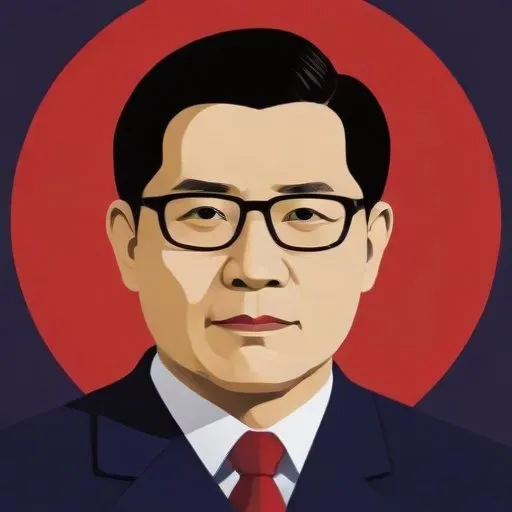
Vice President of the Republic of China from 1978 to 1984, known for his efforts to modernize Taiwan's economy and strengthen its international relations. He played a key role in shaping Taiwan's foreign policy during a pivotal period.
Hsieh Tungmin, a stalwart of Taiwanese politics, was born on January 25, 1908, in Taichung Prefecture, Japanese Taiwan, to an ordinary farming family. He graduated from Taichung County Taichung Middle School in 1922 and later pursued tertiary education in Shanghai, eventually graduating from Sun Yatsen University in Guangzhou.
Hsieh joined the Kuomintang (KMT) in 1930, marking the beginning of his illustrious political career. In 1942, he was invited to plan the Taiwan office of the KMT, and from 1943 to 1945, he worked on anti-Japanese activities in Guangdong. After 20 and a half years in the mainland, he returned to Taiwan as a KMT official in 1945.
Hsieh became the ninth governor of Taiwan Province in 1972, a position he held until 1978. During his tenure, he made significant contributions to the development of Taiwan, earning him widespread recognition.
Assassination Attempt
In 1976, Hsieh survived a parcel bomb attack orchestrated by Wang Singnan, a Taiwanese businessman based in the United States. The attack left him with severe injuries, including the amputation of his left hand, which was later replaced with a prosthetic one.
In 1978, Hsieh became the sixth and first local Taiwanese Vice President of the Republic of China, serving under President Chiang Ching-kuo until 1984. This marked a significant milestone in Taiwanese politics, as it was the first time a Taiwanese native held the position.
After his vice presidency, Hsieh became senior secretary of the Presidential Office. He passed away on April 9, 2001, at the age of 93, leaving behind a legacy of dedication and service to Taiwan.
Hsieh's political career was marked by his commitment to Taiwanese development and his dedication to the people of Taiwan. He believed in the importance of education and invested heavily in the development of Taiwan's education system during his tenure as governor and vice president.
Hsieh's legacy extends beyond his political career. He played a crucial role in shaping Taiwan's modern society, and his contributions to education and development continue to benefit the people of Taiwan to this day.
Despite his many achievements, Hsieh's political career was not without controversy. His role in the KMT and his involvement in anti-Japanese activities during World War II have been subject to debate and criticism. However, his dedication to Taiwan and its people remains undisputed.
One of Hsieh's most notable quotes is, "Education is the foundation of Taiwan's development." This reflects his commitment to education and his vision for Taiwan's future.
Hsieh's life and career spanned a tumultuous period in Taiwanese history, from the Japanese colonial era to the post-war period. His contributions to Taiwan's development and his commitment to the people of Taiwan have cemented his place in Taiwanese history.
Hsieh Tungmin's legacy serves as a testament to his unwavering dedication to Taiwan and its people. His contributions to education, development, and politics continue to shape Taiwan's modern society, making him a revered figure in Taiwanese history.
Born in 1887
Led the Nationalist Party in China, fighting against the Communist Party and later establishing the government of Taiwan. He's known for his role in shaping modern Chinese history.
Born in 1897
Vice President of the Republic of China from 1954 to 1965, known for his role in Taiwan's government and diplomatic efforts during the Cold War era.
Born in 1905
A Chinese lawyer and politician who served as the President of the Republic of China from 1975 to 1988, known for his efforts to modernize Taiwan's economy and strengthen its international relations.
Born in 1883
A Chinese politician who led a Japanese-backed puppet government in China during World War II, known for his controversial role in collaborating with the enemy.
73 Years Old
A renowned Chinese violinist and composer, blending Eastern and Western musical styles, creating a unique sound that showcases cultural fusion.
