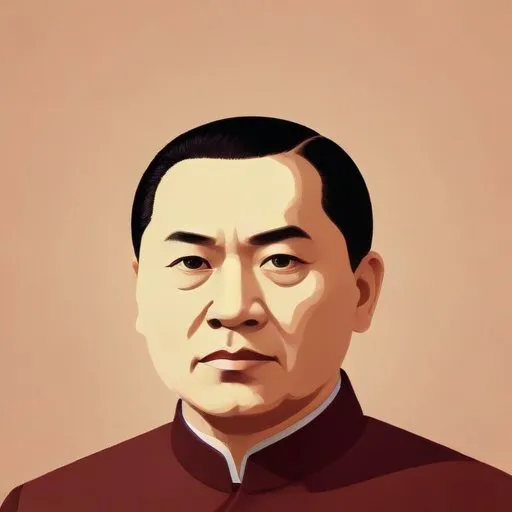
Huang Xing: The Trailblazing Chinese Revolutionary Leader
Revolutionary Roots
Huang Xing was a Chinese revolutionary leader and politician, best known as the first commander-in-chief of the Republic of China. As one of the founders of the Kuomintang (KMT) and the Republic of China, his influence was second only to Sun Yatsen, with whom he was closely associated during the Xinhai Revolution.
Early Life and Education
Born on October 25, 1874, in the village of Gaotang, Changsha, Hunan, China, Huang Xing was a descendant of the renowned Chinese artist, scholar, and poet Huang Tingjian of the Song dynasty. He began his studies at the prestigious South Changsha Academy in 1893, earning his Jinshi degree at the tender age of 22. In 1898, he was selected to further his studies at Wuchang Lianghu College, graduating in 1901.
Japanese Sojourn and Military Training
In 1902, Huang Xing was chosen by Zhang Zhidong to study abroad in Japan, where he enrolled in Tokyo's Kbun Institute. During his time in Japan, he developed a strong interest in military affairs and modern warfare, studying under the guidance of a Japanese officer in his leisure time. Practicing horsemanship and shooting daily, Huang's military training in Japan prepared him for his future role as a Chinese revolutionary leader.
The Anti-Russia Volunteer Army
In 1903, Huang organized the Anti-Russia Volunteer Army, comprising over 200 fellow students. This move marked the beginning of his active involvement in Chinese revolutionary politics.
Later Life and Career
Huang Xing's involvement in the Xinhai Revolution, along with Sun Yatsen, earned him the nickname "Eight Fingered General" due to the wounds he sustained during the conflict. His tomb, located on Mount Yuelu in Changsha, Hunan, China, stands as a testament to his contributions to Chinese history.
Legacy and Impact
Huang Xing's influence on modern Chinese society is profound. As a founding member of the Kuomintang and the Republic of China, his role in shaping the country's political landscape is undeniable. His legacy continues to inspire generations of Chinese people, solidifying his place as a pioneering figure in Chinese revolutionary history.
Inspirational Quotes
"The revolution is not over, but we must continue to fight for our freedom and our future."
Timeline of Key Events
- 1874: Born on October 25th in Gaotang, Changsha, Hunan, China
- 1893: Began studies at South Changsha Academy
- 1898: Enrolled in Wuchang Lianghu College
- 1901: Graduated from Wuchang Lianghu College
- 1902: Studied abroad in Japan
- 1903: Organized the Anti-Russia Volunteer Army
- 1911: Participated in the Xinhai Revolution
- 1916: Passed away on October 31st
Fun Facts
- Huang Xing was known by many names throughout his life, including Huang Zhen, Huang Keqiang, and Qing Wu.
- His tomb is located on Mount Yuelu, Changsha, Hunan, China.
By exploring Huang Xing's remarkable life and achievements, we gain a deeper understanding of the complex and fascinating history of modern China. His unwavering dedication to the cause of Chinese revolution and independence serves as a powerful inspiration to people around the world.
FAQ
What was Huang Xings role in the Xinhai Revolution?
Huang Xing was one of the leaders of the Xinhai Revolution, playing a key role in the uprising against the Qing dynasty.
How did Huang Xings leadership style influence the revolution?
Huang Xings leadership style was known for its decisiveness and bravery, which inspired confidence among his followers and helped to galvanize the revolution.
What was Huang Xings relationship with Sun Yat-sen?
Huang Xing was a close ally and friend of Sun Yat-sen, and together they formed the Tongmenghui, a revolutionary organization that sought to overthrow the Qing dynasty.
What was Huang Xings role in the establishment of the Republic of China?
Huang Xing played a crucial role in the establishment of the Republic of China, serving as one of the countrys earliest leaders and helping to draft its constitution.
How is Huang Xing remembered in Chinese history?
Huang Xing is remembered as a national hero in Chinese history, celebrated for his bravery and vision in leading the country towards revolution and modernization.