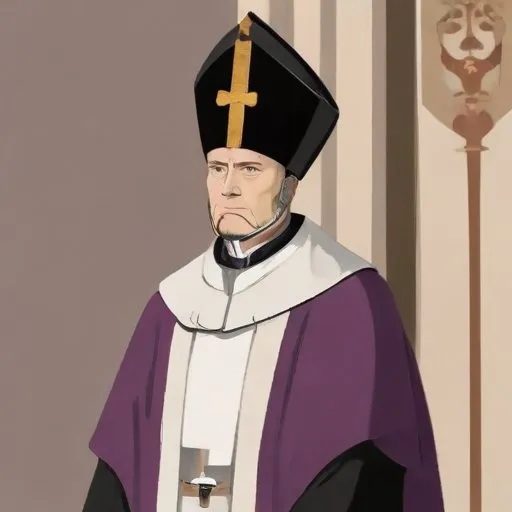
Hubertus Brandenburg: The Resilient Catholic Bishop of Stockholm
A Life of Devotion and Service
Hubertus Brandenburg, a renowned Catholic bishop, is best known for his unwavering dedication to the Catholic Church and his leadership as the Bishop of Stockholm from 1977 to 1998. Throughout his remarkable journey, Brandenburg demonstrated an unshakeable commitment to his faith, coupled with an extraordinary ability to navigate the complexities of ecclesiastical politics.
Early Life and Education
Born on November 17, 1923, in Osnabrück, Germany, Brandenburg's early life was marked by turmoil. During World War II, he was drafted into military service, where he rose to the rank of speed boat commander. After the war, he pursued higher education, studying law and economics before devoting himself to Catholic theology at the University of Münster.
Path to Priesthood
Brandenburg's spiritual journey began in 1952, when he was ordained as a priest in Osnabrück. His early years as a chaplain in Hamburg Winterhude (1955-1958) were followed by a stint in Rome, where he completed his PhD. In 1967, he was appointed a canon and later became the finance director in Osnabrück.
Rise to Episcopacy
Brandenburg's remarkable career took a significant turn in 1974, when
Pope Paul VI appointed him Titular Bishop of Strathernia and auxiliary bishop of Osnabrück. He was consecrated by Bishop Helmut Hermann Wittler on January 26, 1975. This marked the beginning of a new era in his life, as he went on to become the Bishop of Stockholm in 1977.
Leadership and Legacy
During his tenure as the Bishop of Stockholm, Brandenburg played a pivotal role in shaping the Catholic Church in Sweden. He was a longtime vice chairman of the Nordic Bishops Conference and worked tirelessly to promote interfaith dialogue and understanding. His leadership was marked by a deep sense of compassion, wisdom, and a commitment to social justice.
Awards and Honors
Brandenburg's exemplary service was recognized with several honors, including his investiture in the Order of the Holy Sepulchre (1972) and his membership in the Sovereign Military Order of Malta (1976).
Personal Life and Later Years
After retiring in 1998, Brandenburg returned to his hometown of Osnabrück, where he lived out his remaining years. He remained an active member of the Catholic fraternity KDSt.V. Sauerlandia Münster, a testament to his enduring connection to his faith and community.
A Legacy of Devotion
Hubertus Brandenburg's remarkable life serves as a testament to the power of faith and dedication. His unwavering commitment to the Catholic Church and his selfless service to others have left an indelible mark on the lives of those he touched. As we reflect on his remarkable journey, we are reminded of the enduring importance of compassion, wisdom, and service to others.
FAQ
What is Hubertus Brandenburgs background in the Church?
Hubertus Brandenburg was ordained as a priest in the Roman Catholic Church and went on to become a bishop, serving as the Bishop of Stockholm.
What has Hubertus Brandenburg done to promote ecumenism?
Brandenburg has been a strong advocate for ecumenism, working to promote dialogue and understanding between different Christian denominations.
What honors has Hubertus Brandenburg received for his work?
Brandenburg has received several honors for his contributions to the Church, including the Order of the Polar Star.
What is Hubertus Brandenburgs stance on social issues?
Brandenburg has been vocal on several social issues, including refugees, asylum seekers, and climate change.
How is Hubertus Brandenburg remembered in the Catholic Church?
Brandenburg is remembered as a dedicated priest and bishop who has worked tirelessly to promote unity and understanding within the Church and beyond.