


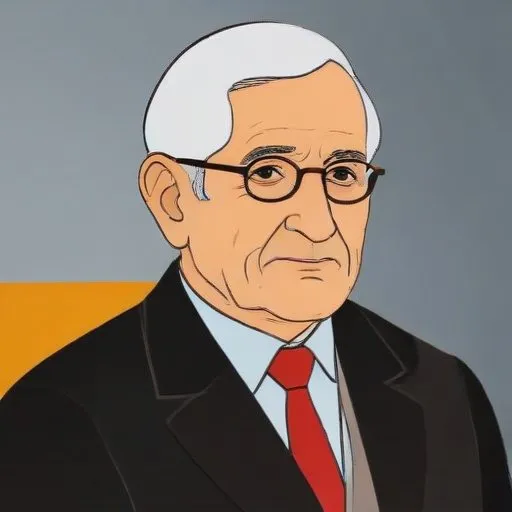
A pioneering space medicine researcher who played a crucial role in developing safety measures for astronauts, particularly in regards to space travel's effects on the human body.
Hubertus Strughold, a German-born physiologist, revolutionized the understanding of human physiology in extreme environments, earning him the title "The Father of Space Medicine." Through his groundbreaking research, Strughold laid the foundation for modern space travel, paving the way for humans to venture into the unknown.
Born on June 15, 1898, in Westtünnen, Germany, Strughold was the son of an elementary school principal. He pursued higher education in medicine and natural sciences, graduating with a doctorate in philosophy from the University of Mnster in 1922. Strughold later obtained his medical degree from the University of Wrzburg in 1923.
In 1935, Strughold became the chief of aeromedical research for the German Ministry of Aviation, where he conducted vital research on the effects of high-altitude flying on the human body. This work led to the development of pressurized cabins and oxygen masks, significantly reducing the risks associated with high-altitude flight. During World War II, Strughold held the same position with the German Luftwaffe, applying his knowledge to improve pilot safety and performance.
In 1947, Strughold was brought to the United States as part of Operation Paperclip, a secret program aimed at recruiting German scientists for the American space program. Strughold went on to serve in high-level scientific posts with the US Air Force and NASA, playing a crucial role in the development of crewed spaceflight.
Strughold's contributions to space medicine are undeniable, but his legacy was later marred by revelations about his involvement in Nazi-era human experimentation. Following his death in 1986, evidence emerged of his complicity in inhumane experiments on prisoners and concentration camp inmates, tarnishing his reputation.
Strughold's work in space medicine has had a lasting impact on our understanding of human physiology in extreme environments. His research paved the way for the development of safe and sustainable space travel, enabling humans to explore and inhabit space. Today, his legacy continues to inspire new generations of scientists, engineers, and astronauts.
Strughold's groundbreaking research was driven by his fascination with the human body's capabilities and limitations in extreme environments. His work embodied the spirit of scientific inquiry, pushing the boundaries of human knowledge and understanding.
Hubertus Strughold's life and work serve as a reminder of the complex and often fraught history of scientific discovery. While his contributions to space medicine are undeniable, his involvement in Nazi-era human experimentation serves as a sobering reminder of the importance of ethical responsibility in scientific pursuit.
Born in 1912
Developed the V-2 rocket for Nazi Germany and later led the team that created the Saturn V rocket that took humans to the moon.
Born in 1894
Pioneering rocket scientist and space travel theorist who laid the groundwork for modern astronautics, inspiring generations of space enthusiasts.
Born in 1857
Pioneering rocket scientist and engineer who developed the theoretical foundations of modern astronautics, including the concept of multistage rockets and space exploration.
Born in 1913
Pioneering NASA's human spaceflight program, leading the development of the Mercury, Gemini, and Apollo projects, and playing a crucial role in landing the first humans on the moon.
Born in 1924
One of the original Mercury Seven astronauts, he was a decorated war veteran and test pilot who later became a NASA executive, playing a crucial role in the development of the US space program.
Born in 1923
First American in space, commanded Apollo 14 mission, and walked on the Moon.
98 Years Old
American baseball player who pitched in the Major Leagues from 1965 to 1975, known for being a four-time All-Star and winning the American League ERA title in 1968.
