


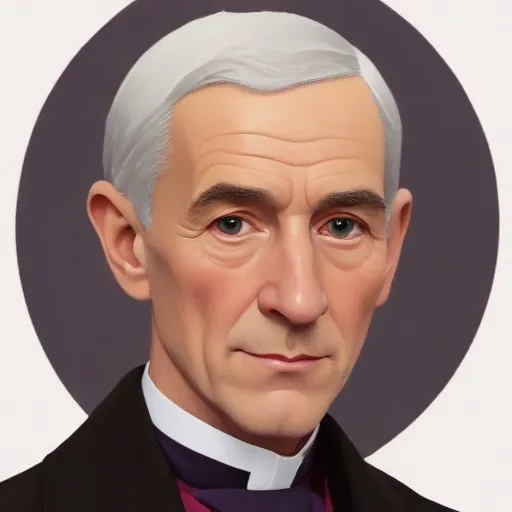
A prominent figure in the Wesleyan Methodist Church, known for his advocacy of social justice and his role in shaping the church's stance on various issues. He was a prolific writer and preacher, leaving a lasting impact on Christian theology.
Hugh Price Hughes was a prominent Welsh Methodist clergyman and religious reformer, recognized as one of the greatest orators of his era. He is best known for founding the West London Methodist Mission, a key Methodist organization that still thrives today, and editing the influential newspaper, the Methodist Times.
Hugh Price Hughes was born on February 8, 1847, in Carmarthen, Wales. He was educated at Richmond Theological College and University College London. Hughes came from a family of strong women, with his sisters Frances Hughes and Elizabeth Phillips Hughes making significant contributions to society in their own right.
Hughes began his ministry in 1869, serving in various circuits, including Dover and Brighton. However, it was his appointment as Superintendent of the West London Methodist Mission in 1887 that marked the beginning of his most significant work. Under his leadership, the mission flourished, providing a beacon of hope and support to the poor and marginalized in the community.
In 1885, Hughes founded the Methodist Times, a newspaper that would become a powerful platform for his views on social reform and politics. As editor, he used the newspaper to champion the causes of the Liberal Party, convinced that its moralistic stance aligned more closely with the values of Methodism. His editorials were instrumental in persuading Methodists to break their traditional allegiance to the Conservative Party and support the Liberal Party instead.
Hughes was a passionate advocate for social reform, and his work with the West London Methodist Mission reflected this commitment. He and his wife, Katherine, worked tirelessly to improve the lives of the poor and marginalized, with Katherine organizing and leading the innovative Sisters of the People, a group of social work volunteers attached to the mission.
Hughes' family played a significant role in his life and ministry. His sister Frances Hughes was a prominent educator, and his wife Katherine was a dedicated social worker. When Frances faced criticism for her comments about a student's integrity, Hughes came to her defense, writing a letter to The Times in 1893 to support her views.
Hugh Price Hughes' legacy is a testament to his tireless work for social reform and his commitment to his faith. Today, the West London Methodist Mission continues to thrive, a living embodiment of his vision for a more just and compassionate society. As a clergyman, editor, and social reformer, Hughes left an indelible mark on the world, inspiring generations to come.
Hugh Price Hughes was a man of profound faith, vision, and commitment. His life's work was a testament to the power of faith to transform individuals and society. As we reflect on his legacy, we are reminded of the importance of standing up for what is right, even in the face of adversity, and of the enduring impact that one person can have on the world.
Born in 1863
A Welsh lawyer and politician who served as Prime Minister of the United Kingdom, leading the country through World War I and introducing key social reforms. He's known for his charismatic leadership and progressive policies.
Born in 1856
A pioneering figure in the UK labor movement, fighting for workers' rights and social justice, and instrumental in founding the Labour Party.
Born in 1866
A Scottish journalist and politician who served as the first Labour Party Prime Minister of the United Kingdom, leading the country through significant economic and social reforms. He is also known for his efforts to maintain peace in Europe during the interwar period.
Born in 1858
A leading figure in the British suffragette movement, fighting for women's right to vote through militant tactics and public demonstrations. Her activism led to significant social and political change.
Born in 1880
Co-founder of the Women's Social and Political Union, a leading figure in the UK suffragette movement, fighting for women's right to vote. She played a crucial role in organizing protests, demonstrations, and hunger strikes to achieve this goal.
Born in 1882
A pioneering figure in the fight for women's right to vote, leading protests, hunger strikes, and advocating for workers' rights and socialism. Her artwork also helped raise awareness for the suffrage movement.
Born in 1858
A pioneering labor leader and politician who championed workers' rights and free trade, serving as a key cabinet member in the early 20th century British government.
