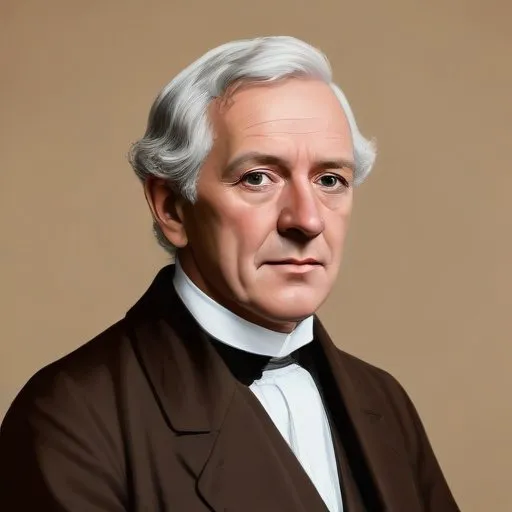
Hugh Stowell Brown

Hugh Stowell Brown

Hugh Stowell Brown was born on August 10th, 1823

Full Name: Hugh Stowell Brown
Profession: Minister and Reformer
Place of Birth: Douglas, Isle of Man
Zodiac Sign: Unknown
Denomination: Congregationalist
Known for: Social Reforms
Notable Work: Sunday Schools
Nationality: British

A prominent 19th-century social reformer and minister who advocated for education, social justice, and women's rights, leaving a lasting impact on Liverpool's community development.

Written by: Victor Malone Victor Malone

Hugh Stowell Brown: The Renowned Christian Minister and Social Reformer

A Beacon of Hope in Liverpool's Nineteenth Century

Hugh Stowell Brown was a Christian minister, preacher, and social reformer who left an indelible mark on Liverpool in the nineteenth century. His public lectures and tireless work among the poor earned him great renown, culminating in a statue being raised in his honor, a rare distinction bestowed upon only three Liverpool clergymen.

Early Life and Education

Born on August 10, 1823, in Douglas, Isle of Man, Brown was the second son of Robert Brown and his wife Dorothy Thomson. His younger brother, Thomas Edward Brown, would later become a notable Manx poet. Brown's father, an evangelical with low-church views, played a significant role in shaping his early life. As a child, Brown would read to his father for four to five hours daily, as he became almost blind. This experience instilled in him a deep appreciation for literature and scripture.

After his father's untimely death in 1846, Brown was apprenticed to a land surveyor at the age of 15. He worked on tithe commutation and ordnance surveys in Cheshire, Shrewsbury, and York, earning a meager four to eight shillings a week. Undeterred, Brown began studying Greek in his spare time, using a firebox as a makeshift blackboard.

A Life of Service and Social Reform

Brown's calling to the ministry became clear, and he eventually entered the London and Birmingham Railways works at Wolverton, Buckinghamshire. It was during this period that he started preaching to his fellow workers, showcasing his exceptional oratory skills. In 1849, Brown was ordained as a minister and began his tenure at Myrtle Street Baptist Chapel in Liverpool.

As a minister, Brown's focus on social reform and community service earned him widespread recognition. He worked tirelessly among the poor, establishing a soup kitchen, a nursery, and a school. His public lectures, which often drew large crowds, addressed pressing social issues of the time, such as poverty, temperance, and education.

Philosophical Contributions and Beliefs

Brown's theological stance was characterized by his emphasis on social justice, compassion, and equality. He envisioned a society where the marginalized were empowered, and the affluent were accountable. His sermons often highlighted the importance of education, moral rectitude, and community engagement.

Brown's Christian convictions were rooted in his belief that faith should lead to action. He advocated for the establishment of institutions that catered to the needs of the underprivileged, such as orphanages, hospitals, and rescue missions.

Legacy and Honors

Upon his passing on February 24, 1886, Hugh Stowell Brown was eulogized as a champion of the oppressed and a beacon of hope in Liverpool. A statue was erected in his honor, a testament to his enduring impact on the community. His brother, Thomas Edward Brown, penned a poignant tribute to Hugh, which was later published as a booklet.

Quotes and Memorable Sayings

A Testament to His Enduring Impact

Hugh Stowell Brown's life and teachings continue to resonate with people from all walks of life. His commitment to social reform, his passionate advocacy for the marginalized, and his unwavering faith in the power of community serve as a beacon of hope in an often chaotic world. As we reflect on his remarkable journey, we are reminded that the true test of our character lies not in our achievements, but in the positive impact we have on the lives of others.
Timeline
1823
Born in Belfast
Hugh Stowell Brown was born in Belfast, Ireland, to a family of Scottish descent.
1846
Became a Minister
Brown became a minister of the Congregational Church in Liverpool, England, where he advocated for social reform and education.
1859
Founded the Liverpool Institute
Brown founded the Liverpool Institute, a school that provided education to working-class children.
1871
Became a Popular Lecturer
Brown became a popular lecturer, speaking on topics such as literature, history, and social issues.
1886
Died in Liverpool
Brown died in Liverpool, England, leaving behind a legacy as an English minister and reformer.
Hugh Stowell Brown

Hugh Stowell Brown Quiz

What was Hugh Stowell Brown primarily known for?

Score: 0/5
FAQ
What was Hugh Stowell Browns role in social reform?
Hugh Stowell Brown was a prominent social reformer who advocated for improvements in education, housing, and working conditions. He worked closely with local authorities to address social issues in Liverpool and beyond.
How did Hugh Stowell Browns ministry impact the community?
Hugh Stowell Browns ministry had a profound impact on the community, as he worked tirelessly to promote social justice and improve the lives of the working class. His sermons and writings inspired many to action.
What was Hugh Stowell Browns stance on education?
Hugh Stowell Brown was a strong advocate for education, believing it was key to social mobility and personal improvement. He worked to establish schools and educational programs for the poor and marginalized.
How did Hugh Stowell Browns reforms address poverty?
Hugh Stowell Browns reforms aimed to address the root causes of poverty, such as inadequate housing, poor working conditions, and limited access to education. He worked to create opportunities for social mobility and improve the lives of the disadvantaged.
What is Hugh Stowell Browns legacy in social reform?
Hugh Stowell Browns legacy in social reform is one of dedication and compassion. He inspired a generation of social reformers and continues to be remembered as a champion of social justice and human rights.

Related People:

Charles Dickens

Born in 1812

A renowned author of timeless classics, crafting vivid stories that exposed social injustices and explored the human condition, leaving an indelible mark on literature.

Florence Nightingale

Born in 1820

Pioneering nurse and statistician who revolutionized healthcare by introducing sanitation practices and data-driven decision making, becoming the founder of modern nursing.

John Ruskin

Born in 1819

A prominent art critic and social reformer who championed the Pre-Raphaelite movement and advocated for social justice, leaving a lasting impact on art, architecture, and literature.

Thomas Carlyle

Born in 1795

A 19th-century historian, philosopher, and academic who wrote influential works on history, politics, and society, particularly "The French Revolution" and "On Heroes, Hero-Worship, and The Heroic in History".

Charles Spurgeon

Born in 1834

A renowned Baptist preacher and prolific writer, known for his powerful sermons and numerous published works that still inspire and influence Christians today.

Josephine Butler

Born in 1828

A pioneering advocate for women's rights and social justice, particularly in the areas of prostitution and sex trafficking, who fought to improve the lives of vulnerable women and children.

William Booth

Born in 1829

Founded a Christian organization that provides humanitarian aid, disaster relief, and social services, known for its brass bands and red kettles.

Octavia Hill

Born in 1838

A pioneering social reformer and writer who championed affordable housing, open spaces, and social justice, leaving a lasting legacy in urban planning and community development.