


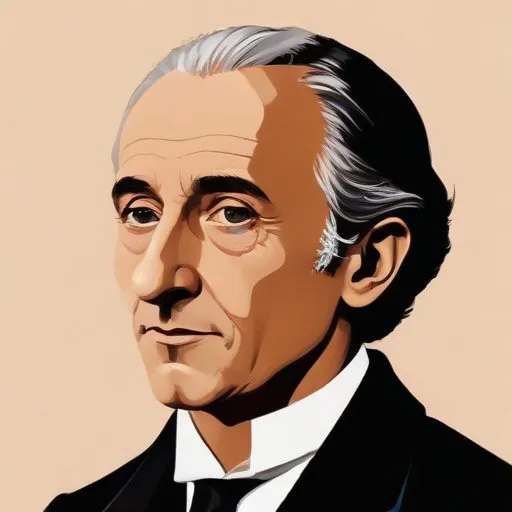
An Italian-English poet and civil servant who wrote lyrical poetry and served as a translator and editor, known for his unique style blending Italian and English influences.
Humbert Wolfe, an Italian-born British poet, man of letters, and civil servant, is best known for his remarkable literary works that captivated the hearts of many in the 1920s. His poetry, infused with witty humor and profound insights, earned him a reputation as one of the most popular British authors of his time.
Wolfe was born on January 5, 1885, in Milan, Italy, to a Jewish family background. His father, Martin Wolff, was of German descent, while his mother, Consuela, was Italian. The family later settled in Bradford, West Riding of Yorkshire, where Wolfe attended Bradford Grammar School. He went on to study at Wadham College, University of Oxford, laying the foundation for his future literary pursuits.
Wolfe's poetry is characterized by its unique blend of wit, satire, and introspection. His verses have been set to music by renowned composers, including Gustav Holst, who created the 12 Humbert Wolfe Songs, Op. 48 in 1929. As a translator, Wolfe worked on the works of Heinrich Heine, Edmond Fleg, and Eugene Heltai, showcasing his linguistic proficiency and cultural understanding.
Wolfe's career in the Civil Service began at the Board of Trade, followed by a stint at the Ministry of Labour. By 1940, he had risen to a position of high responsibility, earning him recognition with a CBE (Commander of the Order of the British Empire) and later a CB (Companion of the Order of the Bath).
Wolfe's personal life was marked by a long-term affair with novelist Pamela Frankau, while remaining married. This aspect of his life has often been the subject of controversy and public scrutiny. In an interview with Twentieth Century Authors, Wolfe revealed his政治 ideology, stating that he was of no political creed, except that his general view is that "money and its possessors should be abolished."
Though Wolfe's works are less widely read today, his legacy endures through his iconic epigram from The Uncelestial City: "You cannot hope to bribe or twist, thank God the British journalist. But, seeing what the man will do, unbribed, there's no occasion to." This quote continues to be widely known and quoted, showcasing his wit and insight into human nature.
To mark the 75th anniversary of Wolfe's death, five busts of the poet were created and sited by sculptor Anthony Padgett in 2014-2015. These busts can be found at locations significant to Wolfe's life, including 75 Eccleston Square, London, Wadham College, Oxford, New York Public Library, and Bradford Library.
Despite his passing on his 55th birthday, Humbert Wolfe's literary contributions and legacy continue to inspire and intrigue readers to this day.
Born in 1888
A renowned poet, playwright, and critic who reshaped modern poetry with works like "The Waste Land" and "Old Possum's Book of Practical Cats", influencing literature and art with their unique style.
Born in 1885
A pioneering modernist poet and critic who transformed 20th-century literature with innovative styles and provocative ideas, shaping the course of modern poetry.
Born in 1865
A renowned Irish wordsmith and dramatist, celebrated for his mystical and nationalistic verse that explores the human condition, as well as his contributions to the Irish Literary Revival.
Born in 1895
A renowned poet, novelist, and critic, best known for his historical novels, particularly "I, Claudius" and "Count Belisarius", which vividly brought ancient civilizations to life.
Born in 1896
A British literary figure who wrote poetry and criticism, and is best known for his vivid and poignant portrayals of World War I. His works are considered some of the most evocative and powerful accounts of the war.
Born in 1886
A decorated World War I officer turned anti-war poet, known for his vivid and haunting accounts of trench life, influencing modern war literature.
Born in 1887
A celebrated poet of the Georgian school, known for his romantic and patriotic verse, particularly his sonnets that captured the spirit of World War I.
Born in 1893
A soldier-poet who captured the horrors of World War I through vivid and powerful verse, conveying the brutal reality of war and its effects on humanity.
