


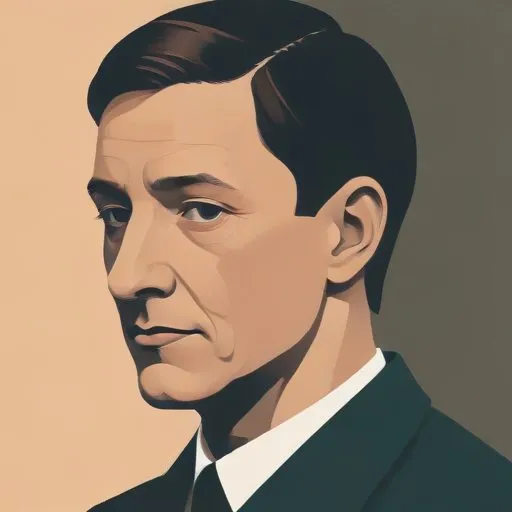
A British literary figure who wrote poetry and criticism, and is best known for his vivid and poignant portrayals of World War I. His works are considered some of the most evocative and powerful accounts of the war.
Edmund Blunden, a renowned English poet, author, and critic, is best known for his poignant and evocative works that captured the essence of World War I. Alongside his friend Siegfried Sassoon, Blunden wrote extensively about his experiences in the Great War, leaving an indelible mark on the literary world.
Born on November 1, 1896, in London, Edmund Blunden was the eldest of nine children to Charles Edmund Blunden and Georgina Margaret Blunden, both headteachers of Yalding school. His early years were marked by a love for literature, which would later become the cornerstone of his life's work.
In September 1915, Blunden was commissioned as a temporary second lieutenant into the British Army's Royal Sussex Regiment. He served on the Western Front, taking part in several pivotal battles, including Ypres and the Somme. His bravery in the face of danger earned him the Military Cross in January 1917.
Blunden's experiences during the war would have a profound impact on his writing, shaping his unique voice and style. His poetry, in particular, became a reflection of the horrors and futility of war, as seen in his acclaimed collection, Undertones of War.
After the war, Blunden pursued a career in academia, becoming a reviewer for English publications and eventually, a professor of poetry at the University of Oxford. His literary talents were recognized with six nominations for the Nobel Prize in Literature.
Blunden's literary contributions extend beyond his own work. He was a vocal advocate for the preservation of literary heritage, playing a crucial role in the formation of the English Faculty Library at Oxford University.
Edmund Blunden's impact on modern society is multifaceted. His poetry and prose have inspired generations of writers, poets, and critics. His work has also contributed significantly to the preservation of World War I history, ensuring that the sacrifices of those who fought and died are never forgotten.
Blunden's legacy extends beyond the literary world. He played a key role in promoting Anglo-Japanese cultural relations, serving as a professor in Tokyo and later, Hong Kong. His work helped bridge the cultural divide between East and West, fostering greater understanding and cooperation.
Blunden married twice, first to Claire Poynting in 1918 and then to Sylva Norman in 1945. He had four children, including a daughter, Lucy, who would later become a poet in her own right.
Throughout his life, Blunden was known for his humility, kindness, and dedication to his craft. He passed away on January 20, 1974, leaving behind a legacy that continues to inspire and educate generations of readers and writers.
Born in 1886
A decorated World War I officer turned anti-war poet, known for his vivid and haunting accounts of trench life, influencing modern war literature.
Born in 1895
A renowned poet, novelist, and critic, best known for his historical novels, particularly "I, Claudius" and "Count Belisarius", which vividly brought ancient civilizations to life.
Born in 1887
A celebrated poet of the Georgian school, known for his romantic and patriotic verse, particularly his sonnets that captured the spirit of World War I.
Born in 1893
A soldier-poet who captured the horrors of World War I through vivid and powerful verse, conveying the brutal reality of war and its effects on humanity.
Born in 1885
A pioneering modernist poet and critic who transformed 20th-century literature with innovative styles and provocative ideas, shaping the course of modern poetry.
Born in 1888
A renowned poet, playwright, and critic who reshaped modern poetry with works like "The Waste Land" and "Old Possum's Book of Practical Cats", influencing literature and art with their unique style.
Born in 1907
A renowned poet, playwright, and composer who explored themes of love, morality, and social justice through his works, leaving a lasting impact on 20th-century literature.
Born in 1904
A renowned poet laureate and author of mystery novels, known for his vivid imagery and exploration of human nature, as well as his pseudonym Nicholas Blake.
