


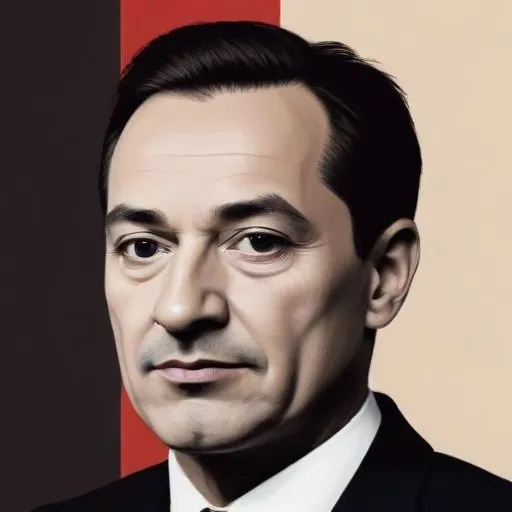
A Hungarian lawyer and politician who served as Minister of Justice, known for her efforts to reform the country's judiciary and strengthen human rights.
Ibolya Dvid, a Hungarian lawyer and politician, is best known for her trailblazing career as the President of the Hungarian Democratic Forum (MDF) from 1999 to 2010, and as the Minister of Justice between 1998 and 2002.
Ibolya Dvid was born in 1954 in Baja, Hungary. She pursued higher education in law, which laid the foundation for her future endeavors in politics and public service.
Dvid's entry into politics marked a significant milestone in her career. She became the President of the Hungarian Democratic Forum (MDF) in 1999, a position she held until 2010. Concurrently, she served as the Minister of Justice from 1998 to 2002, making her the only female Minister in the government of Viktor Orbn.
In 1998, as the Minister of Justice, Dvid made a landmark decision that sent ripples in the Hungarian political landscape. She refused to sign off on the presidential pardon of Peter Kunos, the CEO of a bank, despite it being a customary practice for the Minister of Justice to approve such pardons. This bold move marked the first time in the history of democratic Hungary that a Minister of Justice did not approve a presidential pardon.
Dvid's tenure as President of MDF was not without controversy. Her decision to nominate Lajos Bokros, a former minister in Gyula Horn's MSZP government, to the European Parliament election on the MDF party list sparked outrage among some party members, leading to their departure.
Ibolya Dvid's contributions to Hungarian politics and society are multifaceted. She played a pivotal role in shaping the country's legal framework and judiciary system during her tenure as Minister of Justice. Her leadership of the MDF demonstrated her unwavering commitment to democratic values and principles. Despite the challenges she faced, Dvid remains an iconic figure in Hungarian politics, inspiring generations of women to pursue careers in public service.
In 2010, following the Hungarian parliamentary election, the MDF failed to reach the 5% electoral threshold, resulting in Dvid's resignation as party president. Karoly Herenyi succeeded her as the acting president. This marked a turning point in Dvid's political career, but her legacy continues to resonate in Hungarian politics.
Ibolya Dvid's political philosophy is rooted in democratic values, justice, and equality. Her actions and decisions, both as Minister of Justice and President of MDF, reflect her commitment to upholding these principles in the face of adversity.
Ibolya Dvid's remarkable career has left an indelible mark on Hungarian society. She has inspired numerous women to pursue careers in politics and public service, paving the way for a more inclusive and diverse political landscape.
"Justice is not a privilege, but a right." - Ibolya Dvid
Ibolya Dvid's contributions to Hungarian politics and society are a testament to her unwavering dedication to democratic values and principles. Her legacy continues to shape the country's legal framework and inspire future generations of leaders.
Remembering Ibolya Dvid's remarkable journey, we are reminded of the power of courage, perseverance, and conviction in shaping the course of history.
63 Years Old
The 38th Prime Minister of Hungary, known for his nationalist and conservative policies, has been a dominant figure in Hungarian politics for over two decades, shaping the country's identity and relationship with the EU.
58 Years Old
The 7th Prime Minister of Hungary, a key figure in the country's economic reforms, known for his efforts to stabilize the economy during the 2008 financial crisis.
65 Years Old
Hungary's 6th Prime Minister, a key figure in the country's transition to democracy, known for his economic reforms and leadership during the 2006 protests.
