


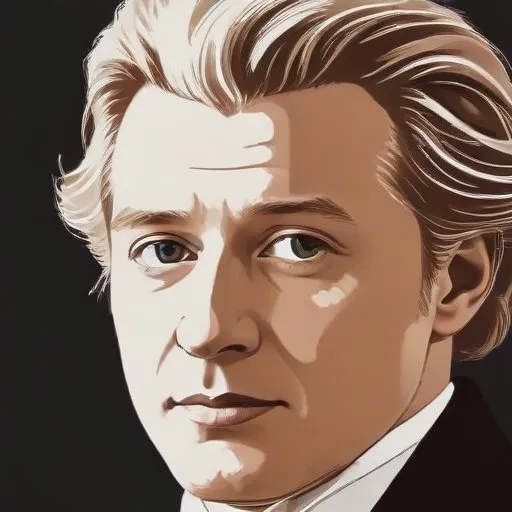
A renowned pianist and composer who bridged the Classical and Romantic eras with his expressive, lyrical music, leaving a lasting impact on the development of piano sonatas and chamber music.
Ignaz Pleyel was a multifaceted musical genius, renowned for his contributions as a composer, music publisher, and piano builder of the Classical period. With over 2,000 works to his name, including symphonies, string quartets, and operas, Pleyel left an indelible mark on the world of classical music.
Born on June 18, 1757, in Ruppersthal, Lower Austria, Pleyel was the eighth and last child of Martin Pleyl, a schoolmaster, and his first wife, Anna Theresia ne Forster. His musical talents were evident from a young age, and he likely studied with Johann Baptist Wanhal before becoming a pupil of Joseph Haydn in Eisenstadt in 1772.
Pleyel's exceptional skills earned him the sponsorship of Count Ladislaus Erddy, which facilitated his musical growth and exposure. His close relationship with Haydn, whom he considered a mentor, led to his involvement in various musical projects, including the composition of the puppet opera Die Fee Urgele in 1776.
Pleyel's first professional position was as Kapellmeister for Count Erddy, although this is not confirmed. During the early 1780s, he visited Italy, where he composed an opera, Ifigenia in Aulide, and works commissioned by the king of Naples, Ferdinand I. In 1783, he moved to Strasbourg, France, to work as an organist at the Strasbourg Cathedral, a position that allowed him to collaborate with Franz Xaver Richter.
In addition to his compositional endeavors, Pleyel was a pioneering music publisher and piano builder. He founded his own publishing house in 1797, which became a hub for publishing the works of prominent composers, including Haydn and Ludwig van Beethoven. His piano-building business, established in 1807, produced instruments of exceptional quality, sought after by many prominent musicians.
Pleyel's contributions to classical music are multifaceted and far-reaching. His compositions, though not as well-known as those of his contemporaries, exhibit a mastery of form and melodic innovation. His music publishing business played a vital role in disseminating the works of prominent composers, and his pianos were instrumental in shaping the sound of classical music. Today, Pleyel's legacy is a testament to his unwavering dedication to the world of classical music.
Despite his professional accomplishments, Pleyel's personal life was marked by challenges, including the loss of his wife, Françoise-Élisabeth, in 1811. He died on November 14, 1831, in Paris, leaving behind a rich cultural heritage that continues to inspire and influence musicians to this day.
Born in 1756
A child prodigy and master of classical music, he composed over 600 works, including symphonies, operas, and chamber music, that continue to inspire and influence musicians today.
Born in 1770
A musical genius who expanded the possibilities of classical music, creating iconic symphonies and piano sonatas that continue to inspire and influence generations of artists.
Born in 1714
A pioneering opera composer who revolutionized the art form with his innovative and expressive works, blending music and drama in a way that captivated audiences.
Born in 1782
A virtuosic violinist and composer who revolutionized the instrument's technical possibilities, leaving an indelible mark on classical music.
Born in 1833
A renowned pianist and composer, he crafted complex, expressive works that blended traditional and innovative techniques, leaving an indelible mark on classical music.
Born in 1811
A virtuosic pianist and composer who revolutionized classical music with his technically demanding and emotionally expressive works, blending Hungarian folk influences with Romantic-era drama.
Born in 1810
A renowned Romantic-era composer and influential music critic, known for his expressive and emotionally charged works, including symphonies, piano music, and art songs.
