


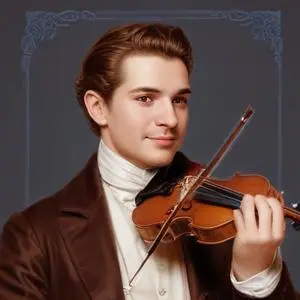
A renowned violinist and leader of the Vienna String Quartet, known for premiering and popularizing Beethoven's string quartets.
Known for his remarkable talent and dedication to the world of music, Ignaz Schuppanzigh was an Austrian violinist and leader of Count Razumovsky's private string quartet. He is renowned for premiering many of Beethoven's string quartets, revolutionizing the way quartet music was performed and composed.
Born on July 20, 1776, in Vienna, Schuppanzigh was the son of a professor of Italian at the Theresian Military Academy. He abandoned his early preference for the viola and established himself as a virtuoso violist and violinist, as well as a conductor, before the age of 21.
Schuppanzigh's friendship with Beethoven was a significant aspect of his life. He gave violin lessons to the great composer and remained a close friend until Beethoven's death. Their collaboration led to the creation of some of Beethoven's most iconic works, including the late string quartets.
In 1808, Schuppanzigh founded the Razumovsky quartet, considered to be the first professional string quartet. This marked a significant shift in the way quartet music was performed, as it was no longer played primarily by amateurs or professionals on an ad hoc basis. The quartet premiered many works by Beethoven, as well as other composers, including Franz Schubert's A minor Rosamunde quartet, dedicated to Schuppanzigh.
Schuppanzigh's dedication to his quartet playing played a pivotal role in the transition of quartet performance and composition. Beethoven's quartets, starting with the three of Op. 59, introduced many new technical difficulties that required dedicated rehearsal. These difficulties included synchronized complex runs, cross-rhythms, and hemiolas, and difficult harmonies that required special attention to intonation.
Schuppanzigh's impact on the world of music is still felt today. He was a true pioneer, paving the way for future generations of musicians and composers. His friendship with Beethoven and his dedication to his craft have left an indelible mark on the world of classical music.
"Does he really believe that I think about his silly fiddle when the muse strikes me to compose?" - Beethoven, in response to Schuppanzigh's complaints about a difficult passage.
Ignaz Schuppanzigh's life was a testament to the power of music and friendship. His legacy continues to inspire and influence musicians and composers to this day.
Born in 1770
A musical genius who expanded the possibilities of classical music, creating iconic symphonies and piano sonatas that continue to inspire and influence generations of artists.
Born in 1797
A renowned composer of symphonies, operas, and chamber music, particularly famous for his emotional and expressive lieder (art songs) that showcased his mastery of melody and harmony.
Born in 1833
A renowned pianist and composer, he crafted complex, expressive works that blended traditional and innovative techniques, leaving an indelible mark on classical music.
Born in 1811
A virtuosic pianist and composer who revolutionized classical music with his technically demanding and emotionally expressive works, blending Hungarian folk influences with Romantic-era drama.
Born in 1782
A virtuosic violinist and composer who revolutionized the instrument's technical possibilities, leaving an indelible mark on classical music.
Born in 1678
A virtuosic violinist and prolific composer, he crafted over 400 concertos, including "The Four Seasons," which remains a beloved and iconic masterpiece of classical music.
Born in 1756
A child prodigy and master of classical music, he composed over 600 works, including symphonies, operas, and chamber music, that continue to inspire and influence musicians today.
Born in 1732
A renowned composer and pianist of the Classical period, known for his symphonies, operas, and chamber music that showcased his innovative and expressive style. He played a significant role in shaping the Classical music era.
