


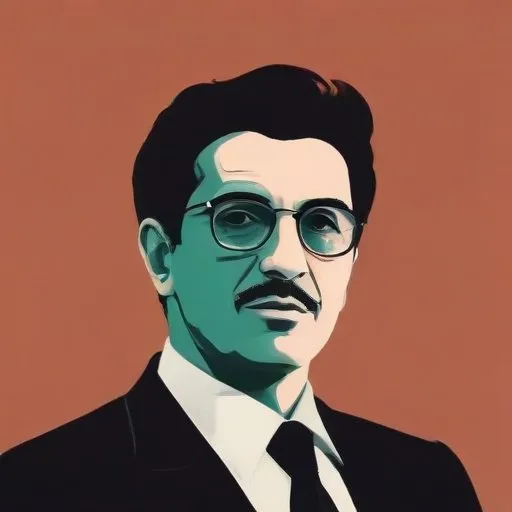
A prominent figure in the Italian Resistance during World War II, he wrote influential novels and essays that exposed the harsh realities of fascism and communism. His most famous work, "Bread and Wine", is a powerful critique of totalitarianism.
Ignazio Silone, born Secondino Tranquilli, was a celebrated Italian novelist, essayist, playwright, and short-story writer, renowned for his powerful antifascist novels that denounced poverty, injustice, and social oppression during World War II. His iconic novel, Fontamara, became a symbol of resistance against fascism and has been translated into numerous languages.
Silone was born on May 1, 1900, in Pescina, near L'Aquila, in the Abruzzo region of Italy. His father, Paolo Tranquilli, died in 1911, and Silone lost many family members, including his mother, Marianna Delli Quadri, in the 1915 Avezzano earthquake. He left his hometown and finished high school in Rome.
In 1917, Silone joined the Young Socialists group of the Italian Socialist Party (PSI), rising to become their leader. In 1920, he met Alfonso Leonetti, a fellow socialist, and together they became involved in the Italian Communist Party (PCdI). However, Silone's dissidence with the Stalinist party line led to his expulsion in 1931. He later adopted democratic socialist positions.
Silone's involvement in Italian politics continued, and he participated actively in various phases of the country's politics, including being one of the founders of the Italian Communist Party in 1921. After World War II, Silone's break with the Italian Communist Party led to controversy and opposition from Italian critics, but he was highly regarded abroad.
Silone's literary career was marked by powerful novels that addressed social and political issues. Some of his notable works include:
Silone's literary contributions earned him numerous nominations for the Nobel Prize in Literature from 1946 to 1963.
Ignazio Silone's literary works and political activism have had a lasting impact on Italian politics and culture. He played a significant role in animating the cultural life of Italy in the post-war period and was an influential figure in European intellectual circles.
Despite controversy surrounding his relations with the Italian fascist secret police, Silone's contributions to literature and politics have been belatedly recognized and rehabilitated. Today, he is celebrated as one of the most well-known and read Italian intellectuals in Europe and the world.
Silone's writings are filled with poignant quotes and memorable sayings that continue to inspire generations. Some of his notable quotes include:
Ignazio Silone's remarkable life and works continue to inspire readers and scholars around the world, cementing his place as one of the most important Italian intellectuals of the 20th century.
Born in 1893
An Italian politician who played a crucial role in shaping the country's post-WWII government and was a key figure in the Italian Communist Party, known for his efforts to reform the justice system.
Born in 1891
An Italian philosopher and politician who developed the concept of cultural hegemony, arguing that power is maintained through cultural and ideological means, rather than just economic or political control.
Born in 1879
Founded the Red Army and played a crucial role in the Russian Revolution, shaping the course of modern communism. A key figure in 20th-century politics and ideology.
Born in 1878
The Soviet Union's ruthless leader who ruled with an iron fist, implementing policies that led to widespread famine and purges, while also playing a crucial role in defeating Nazi Germany in World War II.
Born in 1888
A prominent figure in the Russian Revolution, he was a key architect of the Soviet economy and a vocal critic of Stalin's regime, ultimately falling victim to his purges.
Born in 1818
A 19th-century philosopher who developed the theory of communism, arguing that capitalism would eventually be replaced by a socialist society. He's known for his critique of capitalism and the concept of class struggle.
