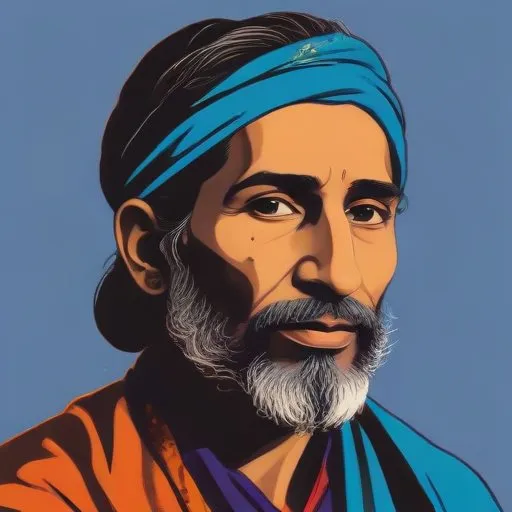
Inayat Khan: Pioneering Sufi Master and Musicologist
Early Life and Lineage
Inayat Khan, a renowned Indian professor of musicology, singer, exponent of the saraswati vina, poet, philosopher, and pioneer of Sufism transmission to the West, was born on July 5, 1882, in Baroda, India, to a noble Mughal family. His paternal ancestors, comprising yzkhans (Central Asian lords) and bakshys (shamans), were Turkmen from the Chagatai Khanate who settled in Sialkot, Punjab during the reign of Amir Timur.
Inayat Khan's maternal grandfather, Sangit Ratna Maulabakhsh Sholay Khan, was a Hindustani classical musician and educator known as the "Beethoven of India." His maternal grandmother, Qasim Bibi, was from the royal house of Tipu Sultan of Mysore.
Sufism and Spiritual Lineage
Inayat Khan's Sufi sources included both the traditions of his paternal ancestors remembered as the Mahashaikhan and the tutelage he received from Sayyid Abu Hashim Madani. From the latter, he inherited four transmissions, constituting succession in the Chishti, Suhrawardi, Qadiri, and Naqshbandi orders of Sufism. Of these, the Chishti lineage, traced through the Delhi-based legacy of Shah Kalim Allah Jahanabadi, was primary.
Travels and Teachings
Inayat Khan toured the United States with his brother Maheboob Khan and cousin Mohammed Ali Khan between 1910 and 1912. Further travels took him to England, France, and Russia. During the First World War, living in London, he oversaw the founding of an order of Sufism under his guidance. Following the war, he traveled widely, establishing centers throughout Europe and North America, and publishing multiple volumes of his teachings.
Philosophical Contributions and Beliefs
Inayat Khan's philosophical contributions centered on the universal message of Sufism, emphasizing the unity of all beings and the oneness of existence. He believed that the essence of Sufism lay in the development of the heart, which he considered the gateway to spiritual growth and self-realization.
Establishment of the Sufi Order
At the urging of his students, Inayat Khan established the Sufi Order in London in 1914, marking the beginning of a new era in the transmission of Sufism to the West. By the time of his death in 1927, centers had been established throughout Europe and North America, and multiple volumes of his teachings had been published.
Influence on Modern Society
Inayat Khan's teachings have had a profound impact on modern society, influencing numerous spiritual and cultural movements. His emphasis on the universal message of Sufism has inspired a diverse range of individuals, from spiritual seekers to artists and intellectuals.
Quotes and Memorable Sayings
- "The soul is here for its own joy." - Inayat Khan
- "The highest wisdom is to understand that all is nothing." - Inayat Khan
Historical Context and Legacy
Inayat Khan's pioneering work in transmitting Sufism to the West has left an indelible mark on the spiritual landscape of modern society. His legacy continues to inspire and guide countless individuals on their spiritual journeys, fostering a deeper understanding of the unity and interconnectedness of all beings.
FAQ
What is Inayat Khans spiritual philosophy?
Inayat Khan was a Sufi mystic who developed a spiritual philosophy that emphasized the unity of all religions and the importance of love, compassion, and self-realization. He founded the Sufi Order in the West, which aimed to promote spirituality and inner growth.
How did Inayat Khans music influence his teachings?
Inayat Khan was a talented musician and composer, and his music played a significant role in his teachings. He believed that music could awaken the soul and bring people closer to the divine.
What is the significance of Inayat Khans UNIVERSAL WORSHIP?
Inayat Khans UNIVERSAL WORSHIP was a ceremony that brought together people of different faiths to promote unity and understanding. It emphasized the shared values and principles of all religions, rather than their differences.
How did Inayat Khans travels influence his teachings?
Inayat Khans travels to the West exposed him to different cultural and spiritual traditions, which he incorporated into his teachings. He was particularly drawn to the mysticism of Christianity and the spirituality of Native American cultures.
Where can I find Inayat Khans writings and teachings?
Inayat Khans writings and teachings can be found in various books, articles, and online resources, including the Sufi Order in the Wests website and archives.