


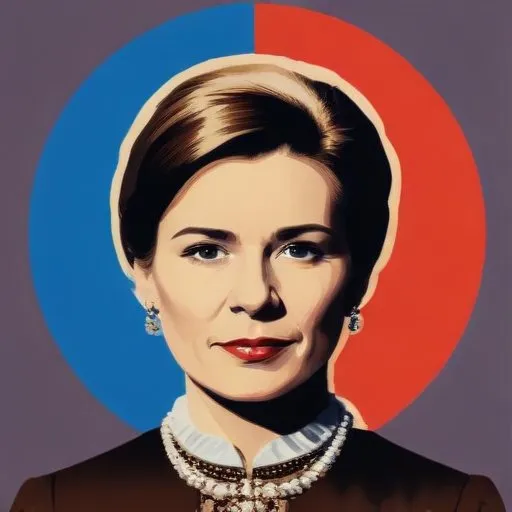
Estonian philologist and academic who served as the First Lady of Estonia from 2001 to 2006, known for promoting Estonian culture and education. She was a strong advocate for women's rights and social welfare.
Ingrid Rütel, a renowned Estonian folklorist and philologist, has left an indelible mark on the world of cultural studies. Born on November 3, 1935, she is married to the former President of Estonia, Arnold Rütel, and has dedicated her life to the preservation and promotion of Estonian folklore and language.
Ingrid Rütel was born in Tallinn, Estonia, to a family of intellectuals. Her father, Neeme Ruus, was a communist politician, and her mother, Linda Karin Ruus, was an actress. Tragedy struck early in her life when her father was killed by the Nazi German occupation authorities in 1942. This event would later shape her perspective on the importance of cultural heritage and national identity.
Rütel's academic pursuits led her to specialize in folklore and philology, earning her a reputation as a leading expert in the field. Her research and publications have focused on Estonian folklore, traditional music, and the preservation of cultural heritage. Her work has been instrumental in promoting Estonian culture and language, both nationally and internationally.
In recognition of her contributions, Rütel has received numerous honors and awards, including:
Ingrid Rütel's personal life has been marked by her strong family ties and her dedication to her husband and children. She and Arnold Rütel have two daughters and six grandchildren. Her legacy extends beyond her academic achievements, as she has inspired a new generation of scholars and cultural enthusiasts to appreciate and preserve Estonia's rich cultural heritage.
Ingrid Rütel's contributions to the field of folklore and philology have been profound and far-reaching. Her tireless efforts to promote Estonian culture and language have earned her a place among the most respected scholars in her field. As a testament to her dedication and expertise, her work will continue to inspire and educate generations to come.
72 Years Old
A Swedish-Estonian journalist and politician who served as the 4th President of Estonia, known for his efforts to promote e-government and digitalization in the country. He's a strong advocate for a free and open internet.
56 Years Old
The first female President of Estonia, serving from 2016 to 2021, known for her strong advocacy for climate action, digitalization, and e-government. She has been a vocal critic of authoritarianism and a champion of liberal democracy.
98 Years Old
Estonian agronomist and politician who served as President of Estonia from 2001 to 2006, known for his efforts to modernize the country's agriculture and strengthen its economy. He played a key role in Estonia's transition from Soviet rule to independence.
70 Years Old
Estonia's first Prime Minister to serve two consecutive terms, he led the country's digital revolution, making Estonia a global leader in e-government and digital innovation.
48 Years Old
The 42nd Mayor of Tallinn, Estonia's capital, who served from 2005 to 2007 and later became the country's Prime Minister from 2016 to 2021, known for his efforts to strengthen Estonia's economy and digital infrastructure.
66 Years Old
Estonian historian and politician who served as Prime Minister of Estonia, leading the country's transition from Soviet rule to independence and implementing free-market reforms. He's known for his role in Estonia's rapid modernization and digitalization.
78 Years Old
The first Estonian to hold a high-ranking position in the European Commission, known for his efforts to modernize and integrate Estonia into the European Union. He played a key role in Estonia's accession to the EU and the eurozone.
